
About This Book
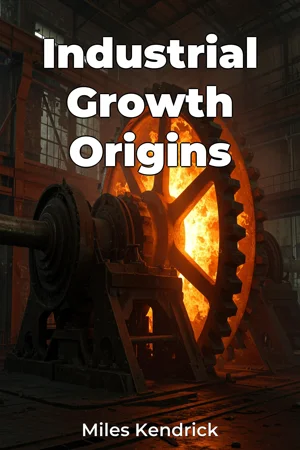
How did the convergence of population growth and economic transformation ignite the Industrial Revolution? "Industrial Growth Origins" investigates the intertwined histories of population dynamics and economic development during the early rise of industrialization, primarily focusing on the period from the mid-18th to the mid-19th century. This era marked a significant departure from agrarian societies, laying the foundation for modern industrial economies and dramatically reshaping global population distributions. The book will address the crucial interplay between demographic shifts, technological advancements, and evolving economic structures, revealing how these factors collectively propelled the first Industrial Revolution. The core of "Industrial Growth Origins" revolves around three main topics: the demographic revolution characterized by unprecedented population growth and altered mortality rates, the technological innovations that revolutionized production processes, and the emergence of new economic systems that facilitated industrial expansion. These topics are important because they provide a comprehensive understanding of the foundational changes that ushered in the modern world. Without understanding these origins, we cannot fully grasp the complexities of contemporary economic and demographic challenges. The book's central argument posits that the Industrial Revolution was not solely a result of technological breakthroughs but rather a synergistic outcome of demographic transformations and evolving economic frameworks. It contends that population growth fueled demand for goods and labor, incentivizing technological innovation, while new economic structures, such as factories and market-based systems, enabled the efficient production and distribution of these goods. This argument is critical because it moves beyond simplistic, technology-centered explanations of industrialization, offering a more holistic and nuanced perspective. “Industrial Growth Origins” unfolds in a structured manner. Initially, it introduces the pre-industrial demographic and economic landscape, setting the stage for the subsequent disruptions. It then examines the key drivers of population growth, including advancements in agricultural productivity and sanitation, and analyzes their impact on labor supply and consumer demand. The book further details the critical technological innovations—such as the steam engine, the power loom, and advancements in iron production—and their transformative effects on various industries. Finally, it examines the emergence of new economic systems, including the factory system, wage labor, and market economies, and their role in facilitating industrial expansion. The book culminates by discussing the broader societal implications of these changes, including urbanization, social stratification, and the rise of new social classes. The book draws upon a wide range of primary and secondary sources, including census data, economic statistics, contemporary accounts, and scholarly analyses. It employs quantitative methods to analyze demographic and economic trends, as well as qualitative approaches to interpret historical narratives and contextualize the findings. "Industrial Growth Origins" connects to various disciplines, including sociology, political science, and environmental studies. It highlights the social consequences of industrialization, such as inequality and urbanization; the political implications, such as the rise of new ideologies and social movements; and the environmental impact, such as pollution and resource depletion. "Industrial Growth Origins" offers a distinctive perspective by emphasizing the interplay between population, technology, and economic systems. This perspective moves beyond traditional, single-factor explanations of the Industrial Revolution, providing a more integrated and comprehensive account. The book adopts a fact-based and analytical tone, presenting information in a clear and accessible manner. It is aimed at students, researchers, and general readers interested in economic history, demographic trends, and the origins of the modern world. The book will be valuable to anyone seeking a deeper understanding of the forces that have shaped contemporary societies. The scope of "Industrial Growth Origins" is intentionally limited to the early phase of industrialization, primarily focusing on Great Britain and selected regions of Europe and North America. This focus allows for a detailed examination of the initial transformative processes and their specific contexts. While the book acknowledges the global implications of industrialization, it does not attempt to provide a comprehensive account of its worldwide spread. The insights from "Industrial Growth Origins" can be applied to understanding contemporary development challenges, such as urbanization, inequality, and environmental sustainability. By examining the historical roots of these issues, the book offers valuable lessons for policymakers and researchers seeking to address these challenges in the present.
How did the convergence of population growth and economic transformation ignite the Industrial Revolution? "Industrial Growth Origins" investigates the intertwined histories of population dynamics and economic development during the early rise of industrialization, primarily focusing on the period from the mid-18th to the mid-19th century. This era marked a significant departure from agrarian societies, laying the foundation for modern industrial economies and dramatically reshaping global population distributions. The book will address the crucial interplay between demographic shifts, technological advancements, and evolving economic structures, revealing how these factors collectively propelled the first Industrial Revolution. The core of "Industrial Growth Origins" revolves around three main topics: the demographic revolution characterized by unprecedented population growth and altered mortality rates, the technological innovations that revolutionized production processes, and the emergence of new economic systems that facilitated industrial expansion. These topics are important because they provide a comprehensive understanding of the foundational changes that ushered in the modern world. Without understanding these origins, we cannot fully grasp the complexities of contemporary economic and demographic challenges. The book's central argument posits that the Industrial Revolution was not solely a result of technological breakthroughs but rather a synergistic outcome of demographic transformations and evolving economic frameworks. It contends that population growth fueled demand for goods and labor, incentivizing technological innovation, while new economic structures, such as factories and market-based systems, enabled the efficient production and distribution of these goods. This argument is critical because it moves beyond simplistic, technology-centered explanations of industrialization, offering a more holistic and nuanced perspective. “Industrial Growth Origins” unfolds in a structured manner. Initially, it introduces the pre-industrial demographic and economic landscape, setting the stage for the subsequent disruptions. It then examines the key drivers of population growth, including advancements in agricultural productivity and sanitation, and analyzes their impact on labor supply and consumer demand. The book further details the critical technological innovations—such as the steam engine, the power loom, and advancements in iron production—and their transformative effects on various industries. Finally, it examines the emergence of new economic systems, including the factory system, wage labor, and market economies, and their role in facilitating industrial expansion. The book culminates by discussing the broader societal implications of these changes, including urbanization, social stratification, and the rise of new social classes. The book draws upon a wide range of primary and secondary sources, including census data, economic statistics, contemporary accounts, and scholarly analyses. It employs quantitative methods to analyze demographic and economic trends, as well as qualitative approaches to interpret historical narratives and contextualize the findings. "Industrial Growth Origins" connects to various disciplines, including sociology, political science, and environmental studies. It highlights the social consequences of industrialization, such as inequality and urbanization; the political implications, such as the rise of new ideologies and social movements; and the environmental impact, such as pollution and resource depletion. "Industrial Growth Origins" offers a distinctive perspective by emphasizing the interplay between population, technology, and economic systems. This perspective moves beyond traditional, single-factor explanations of the Industrial Revolution, providing a more integrated and comprehensive account. The book adopts a fact-based and analytical tone, presenting information in a clear and accessible manner. It is aimed at students, researchers, and general readers interested in economic history, demographic trends, and the origins of the modern world. The book will be valuable to anyone seeking a deeper understanding of the forces that have shaped contemporary societies. The scope of "Industrial Growth Origins" is intentionally limited to the early phase of industrialization, primarily focusing on Great Britain and selected regions of Europe and North America. This focus allows for a detailed examination of the initial transformative processes and their specific contexts. While the book acknowledges the global implications of industrialization, it does not attempt to provide a comprehensive account of its worldwide spread. The insights from "Industrial Growth Origins" can be applied to understanding contemporary development challenges, such as urbanization, inequality, and environmental sustainability. By examining the historical roots of these issues, the book offers valuable lessons for policymakers and researchers seeking to address these challenges in the present.
"Industrial Growth Origins" explores the complex relationship between population growth and economic transformation during the Industrial Revolution. Focusing on the period from the mid-18th to the mid-19th century, the book reveals how demographic shifts, technological innovation, and evolving economic systems converged to spark unprecedented industrial expansion. One intriguing insight is how increasing agricultural productivity and improved sanitation led to lower mortality rates, contributing to a larger labor supply and increased consumer demand. The book challenges simple explanations of industrialization by emphasizing the synergistic effects of these factors. The books approach is to initially set the stage by describing the pre-industrial world, then it progressively examines the drivers of population growth and the critical technological innovations such as the steam engine and power loom. It further details the emergence of new economic systems, like the factory system and wage labor. By drawing on diverse sources and employing both quantitative and qualitative methods, "Industrial Growth Origins" provides a holistic understanding. It is valuable for students and general readers alike.
Book Details
ISBN
9788235234841
Publisher
Publifye AS
Your Licenses
You don't own any licenses for this book
Purchase a license below to unlock this book and download the EPUB.
Purchase License
Select a tier to unlock this book
Need bulk licensing?
Contact us for enterprise agreements.