
About This Book
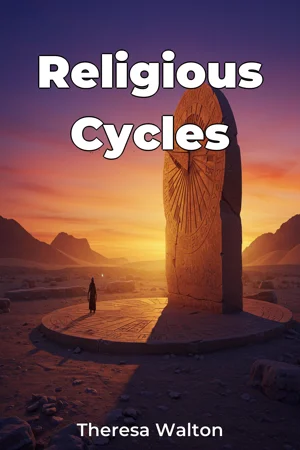
How have calendars shaped not just our perception of time, but also the very fabric of our religious beliefs and practices? "Religious Cycles" delves into the intricate ways in which diverse faiths across centuries have structured their calendars, meticulously aligning them with religious events, periods of fasting, and sacred observances. This book explores the profound impact of these calendrical systems on ritual, community, and the individual spiritual journey. Two pivotal themes emerge: the role of calendars in defining religious identity and the function of these temporal structures in reinforcing communal solidarity. The book also examines the fascinating interplay between astronomical phenomena and religious interpretation, showing how celestial events were often imbued with spiritual significance and used to dictate the timing of key religious dates. Understanding these topics is vital because they reveal religion's fundamental connection to the natural world and how it organizes human experience. To fully appreciate the complexities of religious calendars required understanding some prerequisite knowledge. Therefore, the book provides historical context on the development of different calendar systems, from lunar to solar to lunisolar models, and the cultural factors influencing their adoption, with explanations of common astronomical concepts. "Religious Cycles" argues that these calendars are not merely tools for tracking time, but powerful instruments that shape religious consciousness and social behavior by dictating the rhythm of religious life. This understanding is important because by examining these calendars, one can understand the interplay between social life, celestial movements, and religious beliefs. This book unveils the structure of religious calendars, starting with an introduction to key concepts, like the sacred year, holy days, and cycles of remembrance. It develops these ideas through three major focal points. First, an analysis of the solar calendars, examining how agricultural cycles and seasonal changes were integrated into the religious practices of ancient civilizations such as those in Egypt and Mesopotamia. Second, a deep dive into lunar calendars, focusing on the Islamic calendar and its implications for fixed versus movable religious festivals. Third, the exploration of lunisolar calendars, where the Jewish calendar serves as a prime example of balancing lunar months with the solar year to align agricultural seasons with religious observances, thereby helping maintain the integrity of ritual. This book builds towards the conclusion; calendars have served as linchpins in preserving cultural continuity and fostering social cohesion within religious communities. Evidence and research presented in this book relies on a diverse array of sources, including primary texts like religious scriptures, liturgical manuals, and historical chronicles. Ancient astronomical records, archaeological findings, and comparative analyses of different calendrical systems and modern anthropological studies provide rich insights. Interdisciplinary connections are critical to this study. The book draws from fields such as anthropology, to understand the social functions of religious calendars; astronomy, for knowledge of celestial mechanics and its religious interpretation; and history, for tracing the evolution and diffusion of calendrical practices. These connections enrich the analysis. "Religious Cycles" offers a unique perspective by examining religious calendars as dynamic, evolving systems shaped by both astronomical events and sociocultural needs. The book also addresses practical real-world applications, such as how understanding different religious calendars is essential for promoting interfaith dialogue, managing workplace diversity, and accommodating religious practices in secular settings. Written in a scholarly yet accessible tone, this book is aimed at students of religion, history, and cultural studies, as well as anyone interested in understanding the intersection of time, culture, and religious life. The scope of this book encompasses a wide range of religious traditions and historical periods but acknowledges limitations in covering every single religious calendar in exhaustive detail. While the book does not delve into specific contemporary controversies, it does touch on historical debates, such as disagreements over calendar reforms and the interpretation of sacred texts.
How have calendars shaped not just our perception of time, but also the very fabric of our religious beliefs and practices? "Religious Cycles" delves into the intricate ways in which diverse faiths across centuries have structured their calendars, meticulously aligning them with religious events, periods of fasting, and sacred observances. This book explores the profound impact of these calendrical systems on ritual, community, and the individual spiritual journey. Two pivotal themes emerge: the role of calendars in defining religious identity and the function of these temporal structures in reinforcing communal solidarity. The book also examines the fascinating interplay between astronomical phenomena and religious interpretation, showing how celestial events were often imbued with spiritual significance and used to dictate the timing of key religious dates. Understanding these topics is vital because they reveal religion's fundamental connection to the natural world and how it organizes human experience. To fully appreciate the complexities of religious calendars required understanding some prerequisite knowledge. Therefore, the book provides historical context on the development of different calendar systems, from lunar to solar to lunisolar models, and the cultural factors influencing their adoption, with explanations of common astronomical concepts. "Religious Cycles" argues that these calendars are not merely tools for tracking time, but powerful instruments that shape religious consciousness and social behavior by dictating the rhythm of religious life. This understanding is important because by examining these calendars, one can understand the interplay between social life, celestial movements, and religious beliefs. This book unveils the structure of religious calendars, starting with an introduction to key concepts, like the sacred year, holy days, and cycles of remembrance. It develops these ideas through three major focal points. First, an analysis of the solar calendars, examining how agricultural cycles and seasonal changes were integrated into the religious practices of ancient civilizations such as those in Egypt and Mesopotamia. Second, a deep dive into lunar calendars, focusing on the Islamic calendar and its implications for fixed versus movable religious festivals. Third, the exploration of lunisolar calendars, where the Jewish calendar serves as a prime example of balancing lunar months with the solar year to align agricultural seasons with religious observances, thereby helping maintain the integrity of ritual. This book builds towards the conclusion; calendars have served as linchpins in preserving cultural continuity and fostering social cohesion within religious communities. Evidence and research presented in this book relies on a diverse array of sources, including primary texts like religious scriptures, liturgical manuals, and historical chronicles. Ancient astronomical records, archaeological findings, and comparative analyses of different calendrical systems and modern anthropological studies provide rich insights. Interdisciplinary connections are critical to this study. The book draws from fields such as anthropology, to understand the social functions of religious calendars; astronomy, for knowledge of celestial mechanics and its religious interpretation; and history, for tracing the evolution and diffusion of calendrical practices. These connections enrich the analysis. "Religious Cycles" offers a unique perspective by examining religious calendars as dynamic, evolving systems shaped by both astronomical events and sociocultural needs. The book also addresses practical real-world applications, such as how understanding different religious calendars is essential for promoting interfaith dialogue, managing workplace diversity, and accommodating religious practices in secular settings. Written in a scholarly yet accessible tone, this book is aimed at students of religion, history, and cultural studies, as well as anyone interested in understanding the intersection of time, culture, and religious life. The scope of this book encompasses a wide range of religious traditions and historical periods but acknowledges limitations in covering every single religious calendar in exhaustive detail. While the book does not delve into specific contemporary controversies, it does touch on historical debates, such as disagreements over calendar reforms and the interpretation of sacred texts.
"Religious Cycles" explores how calendars have profoundly shaped religious beliefs and practices across diverse faiths and historical periods. The book argues that religious calendars are not merely time-tracking tools but powerful instruments that shape religious consciousness and social behavior. Calendars define religious identity, reinforce communal solidarity, and link religious life to the natural world. The book begins with an introduction to key concepts, like the sacred year and holy days. Then, it analyzes solar calendars, such as those used in ancient Egypt and Mesopotamia, highlighting the integration of agricultural cycles into religious practices. Next, the book examines lunar calendars, focusing on the Islamic calendar and its impact on religious festivals. Finally, it explores lunisolar calendars, using the Jewish calendar as an example of balancing lunar months with the solar year. This book stands out by examining religious calendars as dynamic, evolving systems shaped by both astronomical events and sociocultural needs. By tracing the development and diffusion of calendrical practices, "Religious Cycles" ultimately reveals how calendars have served as linchpins in preserving cultural continuity and fostering social cohesion within religious communities.
Book Details
ISBN
9788235234711
Publisher
Publifye AS
Your Licenses
You don't own any licenses for this book
Purchase a license below to unlock this book and download the EPUB.
Purchase License
Select a tier to unlock this book
Need bulk licensing?
Contact us for enterprise agreements.