
About This Book
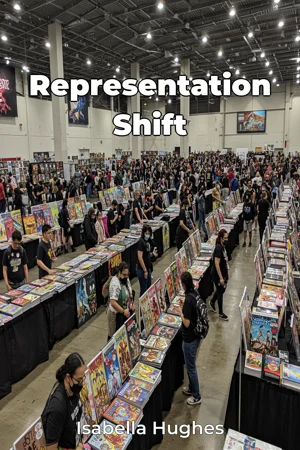
How has the landscape of comic book culture evolved to represent LGBTQ identities, and what impact has this shift had on both the industry and society? "Representation Shift" explores the multifaceted evolution of LGBTQ representation within comic books, graphic novels, and related media over recent decades. This book examines the creators who championed inclusivity, the characters who broke barriers, and the significant publication trends that have shaped the contemporary comic book world. These factors are crucial as they reflect broader societal attitudes and influence cultural perceptions of LGBTQ individuals. This study provides a necessary historical context, tracing the often-overlooked early instances of queer coding and subtext to the increasingly visible and diverse representation seen today. It assumes a general familiarity with comic book history and terminology but offers clear definitions of key concepts related to gender and sexuality studies. The central argument of "Representation Shift" is that the increased visibility and complexity of LGBTQ characters and narratives in comics is not simply a trend, but a reflection of ongoing social progress and a driving force for further change. The book demonstrates that authentic representation can foster understanding, challenge prejudice, and empower marginalized communities. The book unfolds in a structured manner, beginning with an exploration of the historical underpinnings of LGBTQ representation in comics, identifying early examples, and analyzing the social climate that influenced these depictions. It then delves into specific case studies of influential creators and characters, examining their impact on the industry. This includes a detailed analysis of major publishing houses and independent presses, highlighting the shifts in editorial policies and creative approaches toward LGBTQ content. This culminates in an examination of the current state of LGBTQ representation, assessing its strengths, weaknesses, and future potential. Finally, the book explores the practical implications of representation both for the creators and for the audience. The analysis is supported by a range of evidence, including comic book texts, creator interviews, industry publications, and audience reception studies. Particular attention is given to independent and alternative comics, which have often been at the forefront of LGBTQ representation. "Representation Shift" connects to several interdisciplinary fields, including sociology, media studies, and gender studies. By drawing on insights from these areas, the book offers a nuanced understanding of the cultural and social forces that have shaped LGBTQ representation in comics. These connections enrich the analysis and provide a broader perspective on the subject matter. This book stands out by adopting a holistic approach, combining textual analysis with historical context and sociological insights. It goes beyond simply cataloging LGBTQ characters to examine the deeper meanings and implications of their representation. Written in an accessible yet scholarly style, "Representation Shift" is aimed at a diverse audience, including comic book enthusiasts, students, educators, and anyone interested in the intersection of popular culture and social justice. It offers valuable insights for creators seeking to improve representation, educators looking to incorporate comics into their curriculum, and readers wanting to deepen their understanding of LGBTQ issues. As a work of social science, "Representation Shift" adheres to rigorous research standards, presenting factual information and analysis in a clear and objective manner. The book's scope is limited to LGBTQ representation in comics published primarily in North America, Europe, and Japan, acknowledging that other regions may offer different cultural contexts and artistic traditions. It will address the ongoing debates surrounding issues such as tokenism, stereotyping, and the commercialization of LGBTQ identities within the comic book industry, providing a balanced and informed perspective on these complex issues. Readers can apply the lessons learned from "Representation Shift" to critically analyze other forms of media and to advocate for more inclusive and authentic representation in all areas of culture.
How has the landscape of comic book culture evolved to represent LGBTQ identities, and what impact has this shift had on both the industry and society? "Representation Shift" explores the multifaceted evolution of LGBTQ representation within comic books, graphic novels, and related media over recent decades. This book examines the creators who championed inclusivity, the characters who broke barriers, and the significant publication trends that have shaped the contemporary comic book world. These factors are crucial as they reflect broader societal attitudes and influence cultural perceptions of LGBTQ individuals. This study provides a necessary historical context, tracing the often-overlooked early instances of queer coding and subtext to the increasingly visible and diverse representation seen today. It assumes a general familiarity with comic book history and terminology but offers clear definitions of key concepts related to gender and sexuality studies. The central argument of "Representation Shift" is that the increased visibility and complexity of LGBTQ characters and narratives in comics is not simply a trend, but a reflection of ongoing social progress and a driving force for further change. The book demonstrates that authentic representation can foster understanding, challenge prejudice, and empower marginalized communities. The book unfolds in a structured manner, beginning with an exploration of the historical underpinnings of LGBTQ representation in comics, identifying early examples, and analyzing the social climate that influenced these depictions. It then delves into specific case studies of influential creators and characters, examining their impact on the industry. This includes a detailed analysis of major publishing houses and independent presses, highlighting the shifts in editorial policies and creative approaches toward LGBTQ content. This culminates in an examination of the current state of LGBTQ representation, assessing its strengths, weaknesses, and future potential. Finally, the book explores the practical implications of representation both for the creators and for the audience. The analysis is supported by a range of evidence, including comic book texts, creator interviews, industry publications, and audience reception studies. Particular attention is given to independent and alternative comics, which have often been at the forefront of LGBTQ representation. "Representation Shift" connects to several interdisciplinary fields, including sociology, media studies, and gender studies. By drawing on insights from these areas, the book offers a nuanced understanding of the cultural and social forces that have shaped LGBTQ representation in comics. These connections enrich the analysis and provide a broader perspective on the subject matter. This book stands out by adopting a holistic approach, combining textual analysis with historical context and sociological insights. It goes beyond simply cataloging LGBTQ characters to examine the deeper meanings and implications of their representation. Written in an accessible yet scholarly style, "Representation Shift" is aimed at a diverse audience, including comic book enthusiasts, students, educators, and anyone interested in the intersection of popular culture and social justice. It offers valuable insights for creators seeking to improve representation, educators looking to incorporate comics into their curriculum, and readers wanting to deepen their understanding of LGBTQ issues. As a work of social science, "Representation Shift" adheres to rigorous research standards, presenting factual information and analysis in a clear and objective manner. The book's scope is limited to LGBTQ representation in comics published primarily in North America, Europe, and Japan, acknowledging that other regions may offer different cultural contexts and artistic traditions. It will address the ongoing debates surrounding issues such as tokenism, stereotyping, and the commercialization of LGBTQ identities within the comic book industry, providing a balanced and informed perspective on these complex issues. Readers can apply the lessons learned from "Representation Shift" to critically analyze other forms of media and to advocate for more inclusive and authentic representation in all areas of culture.
"Representation Shift" delves into the evolution of LGBTQ representation in comic books, examining its profound impact on the industry and society. It explores how comic book culture has changed, highlighting early instances of queer coding and the increasing visibility of diverse LGBTQ identities. The book reveals how increased representation reflects social progress and drives further change, fostering understanding and challenging prejudice. The book adopts a holistic approach, combining textual analysis with historical context and sociological insights. Examining influential creators, characters, and publication trends, "Representation Shift" analyzes shifts in editorial policies and creative approaches. The study progresses from historical underpinnings to specific case studies, culminating in an assessment of the current state and future potential of LGBTQ representation in comics. This exploration is valuable for anyone interested in the intersection of popular culture and social justice. By connecting media studies, gender studies, and sociology, it provides a nuanced understanding of cultural forces shaping LGBTQ representation.
Book Details
ISBN
9788235234704
Publisher
Publifye AS
Your Licenses
You don't own any licenses for this book
Purchase a license below to unlock this book and download the EPUB.
Purchase License
Select a tier to unlock this book
Need bulk licensing?
Contact us for enterprise agreements.