
About This Book
What if a single poetic form could unlock centuries of cultural values and societal shifts? *Ode Traditions* explores the rich and evolving history of the ode, tracing its development from formal expressions of public praise to vehicles for personal reflection and complex social commentary. This book delves into the ode’s multifaceted role as both a structured art form and a dynamic reflection of its historical context. We will examine key themes, including the ode's function as a tool for expressing power dynamics, its adaptation across different historical periods, and its enduring capacity to convey profound emotional and intellectual insights. This study necessitates an understanding of classical poetic forms and their societal functions, particularly within ancient Greece and Rome, where the ode first took root. It also requires a familiarity with major historical periods and their corresponding aesthetic values. The central argument of *Ode Traditions* is that the ode, far from being a static poetic form, has consistently adapted to reflect and shape the prevailing social, political, and intellectual currents of its time. Understanding this evolution provides a valuable lens through which to analyze the cultural values of different eras. The book is structured to provide a comprehensive exploration of this argument. We begin by establishing the foundational characteristics of the ode, examining its origins in ancient Greece and Rome, and identifying its core structural elements and thematic concerns. We then trace its development through the medieval period and the Renaissance, highlighting how poets adapted the classical form to express new religious, philosophical, and aesthetic ideals. A significant portion of the book is dedicated to analyzing the ode's flourishing in the 17th and 18th centuries, with particular attention paid to its use in celebrating national identity, commemorating historical events, and engaging in political discourse. The 19th and 20th centuries witnessed a further diversification of the ode, with poets using the form to explore personal experiences, challenge social norms, and experiment with new poetic techniques. The concluding chapters examine the ode's continued relevance in contemporary poetry and its potential for addressing contemporary issues. The analysis presented in *Ode Traditions* draws upon a wide range of primary and secondary sources, including original poetic texts, historical documents, literary criticism, and cultural studies. We will examine odes from various eras and cultural contexts, providing close readings and detailed analyses of their form, content, and historical significance. The study of ode traditions naturally intersects with several other academic fields. It connects with history by providing insights into the cultural and political values of different eras. It engages with sociology by examining the ode's role in shaping and reflecting social norms. Finally, it contributes to the field of literary criticism by offering new perspectives on the interpretation and analysis of poetry. *Ode Traditions* distinguishes itself by providing a comprehensive and interdisciplinary analysis of the ode's historical development. It offers a nuanced understanding of how the ode has been used to express a wide range of human experiences and to engage with complex social and political issues. The book adopts an academic yet accessible writing style, making it suitable for both scholars and general readers with an interest in poetry, history, and culture. The primary target audience for this book includes students and scholars of literature, history, and cultural studies, as well as general readers with an appreciation for poetry and its historical context. The book will be valuable to readers seeking a deeper understanding of the ode's evolution and its significance as a reflection of cultural values and societal change. As a work in literary history and criticism, *Ode Traditions* adheres to the conventions of scholarly inquiry, including rigorous research, clear argumentation, and thorough documentation. While the book aims to provide a comprehensive overview of the ode's historical development, it acknowledges the limitations of its scope. It focuses primarily on the Western tradition of the ode, with limited discussion of non-Western forms. The insights presented in *Ode Traditions* have practical applications for contemporary readers, especially those interested in creative writing and cultural analysis. By understanding the ode's historical development and its capacity to adapt to different contexts, readers can gain a deeper appreciation for the power of poetry to shape and reflect human experience. The study of the ode is not without its debates. Scholars continue to discuss the relative importance of form and content, the influence of social and political factors on poetic expression, and the relevance of classical traditions in contemporary poetry. *Ode Traditions* engages with these debates, offering new perspectives and contributing to a richer understanding of the ode's enduring legacy.
What if a single poetic form could unlock centuries of cultural values and societal shifts? *Ode Traditions* explores the rich and evolving history of the ode, tracing its development from formal expressions of public praise to vehicles for personal reflection and complex social commentary. This book delves into the ode’s multifaceted role as both a structured art form and a dynamic reflection of its historical context. We will examine key themes, including the ode's function as a tool for expressing power dynamics, its adaptation across different historical periods, and its enduring capacity to convey profound emotional and intellectual insights. This study necessitates an understanding of classical poetic forms and their societal functions, particularly within ancient Greece and Rome, where the ode first took root. It also requires a familiarity with major historical periods and their corresponding aesthetic values. The central argument of *Ode Traditions* is that the ode, far from being a static poetic form, has consistently adapted to reflect and shape the prevailing social, political, and intellectual currents of its time. Understanding this evolution provides a valuable lens through which to analyze the cultural values of different eras. The book is structured to provide a comprehensive exploration of this argument. We begin by establishing the foundational characteristics of the ode, examining its origins in ancient Greece and Rome, and identifying its core structural elements and thematic concerns. We then trace its development through the medieval period and the Renaissance, highlighting how poets adapted the classical form to express new religious, philosophical, and aesthetic ideals. A significant portion of the book is dedicated to analyzing the ode's flourishing in the 17th and 18th centuries, with particular attention paid to its use in celebrating national identity, commemorating historical events, and engaging in political discourse. The 19th and 20th centuries witnessed a further diversification of the ode, with poets using the form to explore personal experiences, challenge social norms, and experiment with new poetic techniques. The concluding chapters examine the ode's continued relevance in contemporary poetry and its potential for addressing contemporary issues. The analysis presented in *Ode Traditions* draws upon a wide range of primary and secondary sources, including original poetic texts, historical documents, literary criticism, and cultural studies. We will examine odes from various eras and cultural contexts, providing close readings and detailed analyses of their form, content, and historical significance. The study of ode traditions naturally intersects with several other academic fields. It connects with history by providing insights into the cultural and political values of different eras. It engages with sociology by examining the ode's role in shaping and reflecting social norms. Finally, it contributes to the field of literary criticism by offering new perspectives on the interpretation and analysis of poetry. *Ode Traditions* distinguishes itself by providing a comprehensive and interdisciplinary analysis of the ode's historical development. It offers a nuanced understanding of how the ode has been used to express a wide range of human experiences and to engage with complex social and political issues. The book adopts an academic yet accessible writing style, making it suitable for both scholars and general readers with an interest in poetry, history, and culture. The primary target audience for this book includes students and scholars of literature, history, and cultural studies, as well as general readers with an appreciation for poetry and its historical context. The book will be valuable to readers seeking a deeper understanding of the ode's evolution and its significance as a reflection of cultural values and societal change. As a work in literary history and criticism, *Ode Traditions* adheres to the conventions of scholarly inquiry, including rigorous research, clear argumentation, and thorough documentation. While the book aims to provide a comprehensive overview of the ode's historical development, it acknowledges the limitations of its scope. It focuses primarily on the Western tradition of the ode, with limited discussion of non-Western forms. The insights presented in *Ode Traditions* have practical applications for contemporary readers, especially those interested in creative writing and cultural analysis. By understanding the ode's historical development and its capacity to adapt to different contexts, readers can gain a deeper appreciation for the power of poetry to shape and reflect human experience. The study of the ode is not without its debates. Scholars continue to discuss the relative importance of form and content, the influence of social and political factors on poetic expression, and the relevance of classical traditions in contemporary poetry. *Ode Traditions* engages with these debates, offering new perspectives and contributing to a richer understanding of the ode's enduring legacy.
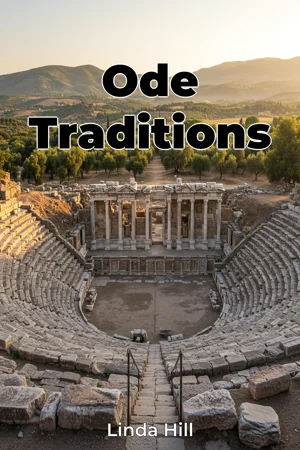
"Ode Traditions" explores the captivating journey of the ode, a poetic form that mirrors centuries of cultural values and societal shifts. From its roots in ancient Greece and Rome as formal expressions of public praise, the ode evolved into a versatile tool for personal reflection and complex social commentary. The book highlights how odes served as vehicles for expressing power dynamics and adapted across historical periods, revealing the enduring capacity to convey profound emotional and intellectual insights. The book begins by establishing the foundational characteristics of the ode, then traces its development through the medieval period and the Renaissance. A significant portion of "Ode Traditions" analyzes the ode's flourishing in the 17th and 18th centuries, with particular attention paid to its use in celebrating national identity, commemorating historical events, and engaging in political discourse. This literary history examines various odes, providing close readings and detailed analyses of their form, content, and historical significance. Offering an interdisciplinary analysis of the ode's historical development, the book is valuable to those seeking a deeper understanding of poetry's evolution and its significance as a reflection of cultural values and societal change.
Book Details
ISBN
9788235234643
Publisher
Publifye AS
Your Licenses
You don't own any licenses for this book
Purchase a license below to unlock this book and download the EPUB.
Purchase License
Select a tier to unlock this book
Need bulk licensing?
Contact us for enterprise agreements.