
About This Book
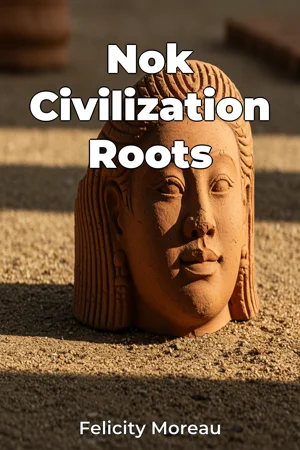
What can fragments of fired clay tell us about a society long vanished? "Nok Civilization Roots" delves into the heart of central Nigeria to explore the technological prowess and artistic legacy of the Nok culture, a civilization that flourished from approximately 1500 BCE to 500 CE. This book examines the Nok people through the lens of their material culture, focusing primarily on their sophisticated ironworking techniques and the iconic terracotta sculptures that have captivated scholars and art enthusiasts alike. These artifacts are not merely objects of aesthetic beauty; they are invaluable clues to understanding Nok society, its beliefs, and its place in the broader history of West Africa. Understanding the Nok culture is vital for several reasons. First, the Nok represent some of the earliest evidence of iron technology in sub-Saharan Africa, challenging previous assumptions about the diffusion of metallurgy and potentially reshaping our understanding of technological innovation on the continent. Second, their terracotta sculptures are not only aesthetically remarkable but also provide unique insights into Nok social structures, religious practices, and artistic expression. Finally, studying the Nok helps to decolonize the narrative of African history, moving away from Eurocentric perspectives and highlighting indigenous achievements. This book argues that the Nok culture, as revealed through archaeological excavation and material analysis, demonstrates a high degree of technological and artistic sophistication, indicating a complex social organization and a significant contribution to the cultural heritage of West Africa. We will examine the archaeological evidence from key Nok sites, analyzing the iron implements, smelting furnaces, and terracotta figures discovered therein. The book is structured to provide a comprehensive overview of the Nok civilization. It begins with an introduction to the geographical and historical context of the Nok culture, followed by a detailed examination of their ironworking technology, including the methods of ore extraction, smelting, and forging. We will analyze the evidence for early iron production and its potential impact on Nok society and economy. Central to the book is an in-depth analysis of Nok terracotta sculptures, exploring their stylistic characteristics, symbolic meanings, and social functions. Chapters will be dedicated to specific themes, such as the representation of human figures, the role of animals in Nok art, and the possible connections between the sculptures and religious beliefs. The book culminates in a discussion of the decline of the Nok culture and its legacy in later West African societies. The evidence presented will be drawn from a variety of sources, including archaeological reports, scientific analyses of artifacts, and comparative studies of other ancient cultures. The book incorporates both established scholarship and recent findings from ongoing excavations, offering a balanced and up-to-date assessment of our current knowledge of the Nok civilization. "Nok Civilization Roots" connects to several other fields of study, including archaeology, art history, anthropology, and metallurgy. By integrating these perspectives, the book provides a holistic understanding of the Nok culture and its significance. The book offers a fresh perspective by combining detailed analyses of material culture with broader interpretations of social and cultural dynamics. We move beyond simple description. The tone of the book is scholarly yet accessible, aiming to engage both academic specialists and general readers interested in African history, archaeology, and art. This book would be valuable to students, researchers, and anyone seeking a deeper understanding of this fascinating and important civilization. The scope of the book is limited to the core area of the Nok culture in central Nigeria, focusing primarily on the periods from 1500 BCE to 500 CE. While acknowledging the potential connections between the Nok and other West African societies, the book deliberately avoids speculative claims and focuses on well-documented evidence. The insights gained from studying the Nok culture have practical applications for contemporary society. By understanding the ingenuity and resilience of past civilizations, we can gain a better appreciation for the diversity of human experience and the importance of preserving cultural heritage. The study of ancient technologies can also inspire innovation and sustainable practices in the modern world. The interpretation of Nok art and technology is not without its controversies. There is ongoing debate about the precise dating of Nok artifacts, the origins of their ironworking technology, and the meaning of their terracotta sculptures. This book addresses these debates by presenting different perspectives and critically evaluating the available evidence.
What can fragments of fired clay tell us about a society long vanished? "Nok Civilization Roots" delves into the heart of central Nigeria to explore the technological prowess and artistic legacy of the Nok culture, a civilization that flourished from approximately 1500 BCE to 500 CE. This book examines the Nok people through the lens of their material culture, focusing primarily on their sophisticated ironworking techniques and the iconic terracotta sculptures that have captivated scholars and art enthusiasts alike. These artifacts are not merely objects of aesthetic beauty; they are invaluable clues to understanding Nok society, its beliefs, and its place in the broader history of West Africa. Understanding the Nok culture is vital for several reasons. First, the Nok represent some of the earliest evidence of iron technology in sub-Saharan Africa, challenging previous assumptions about the diffusion of metallurgy and potentially reshaping our understanding of technological innovation on the continent. Second, their terracotta sculptures are not only aesthetically remarkable but also provide unique insights into Nok social structures, religious practices, and artistic expression. Finally, studying the Nok helps to decolonize the narrative of African history, moving away from Eurocentric perspectives and highlighting indigenous achievements. This book argues that the Nok culture, as revealed through archaeological excavation and material analysis, demonstrates a high degree of technological and artistic sophistication, indicating a complex social organization and a significant contribution to the cultural heritage of West Africa. We will examine the archaeological evidence from key Nok sites, analyzing the iron implements, smelting furnaces, and terracotta figures discovered therein. The book is structured to provide a comprehensive overview of the Nok civilization. It begins with an introduction to the geographical and historical context of the Nok culture, followed by a detailed examination of their ironworking technology, including the methods of ore extraction, smelting, and forging. We will analyze the evidence for early iron production and its potential impact on Nok society and economy. Central to the book is an in-depth analysis of Nok terracotta sculptures, exploring their stylistic characteristics, symbolic meanings, and social functions. Chapters will be dedicated to specific themes, such as the representation of human figures, the role of animals in Nok art, and the possible connections between the sculptures and religious beliefs. The book culminates in a discussion of the decline of the Nok culture and its legacy in later West African societies. The evidence presented will be drawn from a variety of sources, including archaeological reports, scientific analyses of artifacts, and comparative studies of other ancient cultures. The book incorporates both established scholarship and recent findings from ongoing excavations, offering a balanced and up-to-date assessment of our current knowledge of the Nok civilization. "Nok Civilization Roots" connects to several other fields of study, including archaeology, art history, anthropology, and metallurgy. By integrating these perspectives, the book provides a holistic understanding of the Nok culture and its significance. The book offers a fresh perspective by combining detailed analyses of material culture with broader interpretations of social and cultural dynamics. We move beyond simple description. The tone of the book is scholarly yet accessible, aiming to engage both academic specialists and general readers interested in African history, archaeology, and art. This book would be valuable to students, researchers, and anyone seeking a deeper understanding of this fascinating and important civilization. The scope of the book is limited to the core area of the Nok culture in central Nigeria, focusing primarily on the periods from 1500 BCE to 500 CE. While acknowledging the potential connections between the Nok and other West African societies, the book deliberately avoids speculative claims and focuses on well-documented evidence. The insights gained from studying the Nok culture have practical applications for contemporary society. By understanding the ingenuity and resilience of past civilizations, we can gain a better appreciation for the diversity of human experience and the importance of preserving cultural heritage. The study of ancient technologies can also inspire innovation and sustainable practices in the modern world. The interpretation of Nok art and technology is not without its controversies. There is ongoing debate about the precise dating of Nok artifacts, the origins of their ironworking technology, and the meaning of their terracotta sculptures. This book addresses these debates by presenting different perspectives and critically evaluating the available evidence.
"Nok Civilization Roots" explores the captivating story of the Nok Civilization, which thrived in central Nigeria between 1500 BCE and 500 CE. This civilization, known for its sophisticated ironworking technology and remarkable terracotta sculptures, offers crucial insights into West African history and challenges Eurocentric views by highlighting indigenous achievements. The book delves into the material culture of the Nok people, using archaeological findings to reconstruct their society, beliefs, and artistic expressions. One intriguing fact is that the Nok represent some of the earliest known iron technology in sub-Saharan Africa. The book progresses systematically, starting with the geographical and historical context, then examining ironworking techniques like ore extraction and smelting. It dedicates chapters to analyzing the terracotta sculptures, exploring their stylistic characteristics and symbolic meanings. By integrating perspectives from archaeology, art history, and other fields, "Nok Civilization Roots" provides a holistic understanding of this significant yet often overlooked culture. The book offers value by combining analysis of artifacts with broader interpretations of social and cultural dynamics.
Book Details
ISBN
9788235234551
Publisher
Publifye AS
Your Licenses
You don't own any licenses for this book
Purchase a license below to unlock this book and download the EPUB.
Purchase License
Select a tier to unlock this book
Need bulk licensing?
Contact us for enterprise agreements.