
About This Book
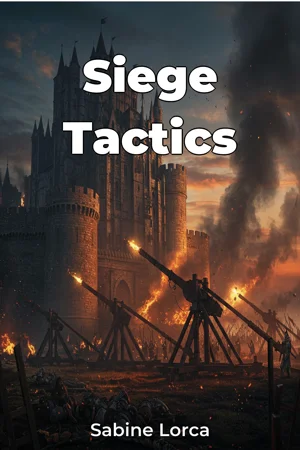
How have innovations in siege warfare shaped not only military strategies but also the very fabric of urban development and societal resilience throughout history? "Siege Tactics" explores the multifaceted evolution of siege warfare, from the rudimentary assaults on medieval castles to the complex dynamics of modern urban combat. This book delves into the strategic, technological, and societal impacts of siegecraft, revealing its enduring influence on the course of civilizations. At the heart of this exploration are three essential concepts: the technological arms race between offensive siege engines and defensive fortifications, the psychological warfare inherent in prolonged sieges, and the socio-economic consequences for both the besieged and the besiegers. These topics are important because they demonstrate how siege warfare has consistently pushed the boundaries of innovation, driven the development of increasingly sophisticated weaponry, and profoundly impacted civilian populations and economies. To fully understand these dynamics, "Siege Tactics" provides critical historical context, tracing the development of siege warfare from ancient times through the medieval period, the gunpowder era, and into the modern age. The book assumes a general understanding of military history but offers detailed explanations of specific events, technologies, and strategies to ensure accessibility for a broad audience. The central argument of this book is that siege warfare, far from being a static set of tactics, has been a dynamic and adaptive process, continuously shaped by technological advancements, strategic thinking, and social conditions. Its importance lies in understanding how these factors have intertwined to influence military outcomes and broader historical trajectories. "Siege Tactics" is structured to provide a comprehensive overview of the subject. It begins by introducing the fundamental principles of siege warfare, including fortification design, siege engines, and basic assault tactics. It then develops these ideas through focused chapters examining key historical periods and specific sieges, such as the siege of Constantinople, the sieges of the English Civil War, and urban sieges in the 20th and 21st centuries. The book culminates by analyzing the long-term impact of siege warfare on military doctrine, urban planning, and societal resilience. The analysis presented in "Siege Tactics" is supported by diverse evidence, including primary source accounts from historical sieges, archaeological findings from siege sites, and technical analyses of siege weaponry and fortifications. This book features data from military archives, engineering studies of fortifications, and firsthand accounts from soldiers and civilians involved in sieges. "Siege Tactics" also connects to other fields, such as engineering through the study of fortification design and siege engine technology, sociology through the examination of the impact of sieges on civilian populations and social structures, and political science through the analysis of how sieges have influenced the outcomes of conflicts and the balance of power between nations. A unique aspect of this book is its integrated approach to understanding siege warfare, combining technological, strategic, and social perspectives to provide a holistic analysis. Each element is considered in relation to the others, offering a more nuanced and complete picture of siege warfare’s impact. The tone of "Siege Tactics" is both academic and accessible. While based on rigorous research, the book is written in a clear and engaging style that avoids excessive jargon and technical language, making it accessible to readers without specialized knowledge of military history or engineering. The target audience includes military history enthusiasts, students of military strategy, urban planners interested in the history of fortifications, and anyone curious about the interplay between technology, warfare, and society. This book is valuable because it offers a comprehensive and insightful exploration of a critical aspect of human conflict, one that has shaped the world in profound ways. As a work of military history, "Siege Tactics" adheres to the genre's conventions of factual accuracy, detailed analysis, and objective presentation. It provides thorough documentation of sources and careful consideration of alternative interpretations to present a balanced and authoritative account. The scope of "Siege Tactics" is broad, covering a wide range of historical periods and geographical regions. However, it is intentionally limited to a focus on the tactical and strategic aspects of siege warfare, rather than delving into the broader political or economic contexts of the conflicts in which sieges occurred. The knowledge presented in "Siege Tactics" can be applied to understanding modern urban warfare scenarios, analyzing the vulnerabilities of urban infrastructure, and designing strategies for mitigating the impact of sieges on civilian populations. It also offers insights into the psychological aspects of prolonged conflicts and the importance of societal resilience in the face of adversity. While siege warfare may seem like a relic of the past, its principles and tactics continue to evolve and adapt to modern conflicts. "Siege Tactics" will explore these important evolutions as well as any ongoing debates in the historical community.
How have innovations in siege warfare shaped not only military strategies but also the very fabric of urban development and societal resilience throughout history? "Siege Tactics" explores the multifaceted evolution of siege warfare, from the rudimentary assaults on medieval castles to the complex dynamics of modern urban combat. This book delves into the strategic, technological, and societal impacts of siegecraft, revealing its enduring influence on the course of civilizations. At the heart of this exploration are three essential concepts: the technological arms race between offensive siege engines and defensive fortifications, the psychological warfare inherent in prolonged sieges, and the socio-economic consequences for both the besieged and the besiegers. These topics are important because they demonstrate how siege warfare has consistently pushed the boundaries of innovation, driven the development of increasingly sophisticated weaponry, and profoundly impacted civilian populations and economies. To fully understand these dynamics, "Siege Tactics" provides critical historical context, tracing the development of siege warfare from ancient times through the medieval period, the gunpowder era, and into the modern age. The book assumes a general understanding of military history but offers detailed explanations of specific events, technologies, and strategies to ensure accessibility for a broad audience. The central argument of this book is that siege warfare, far from being a static set of tactics, has been a dynamic and adaptive process, continuously shaped by technological advancements, strategic thinking, and social conditions. Its importance lies in understanding how these factors have intertwined to influence military outcomes and broader historical trajectories. "Siege Tactics" is structured to provide a comprehensive overview of the subject. It begins by introducing the fundamental principles of siege warfare, including fortification design, siege engines, and basic assault tactics. It then develops these ideas through focused chapters examining key historical periods and specific sieges, such as the siege of Constantinople, the sieges of the English Civil War, and urban sieges in the 20th and 21st centuries. The book culminates by analyzing the long-term impact of siege warfare on military doctrine, urban planning, and societal resilience. The analysis presented in "Siege Tactics" is supported by diverse evidence, including primary source accounts from historical sieges, archaeological findings from siege sites, and technical analyses of siege weaponry and fortifications. This book features data from military archives, engineering studies of fortifications, and firsthand accounts from soldiers and civilians involved in sieges. "Siege Tactics" also connects to other fields, such as engineering through the study of fortification design and siege engine technology, sociology through the examination of the impact of sieges on civilian populations and social structures, and political science through the analysis of how sieges have influenced the outcomes of conflicts and the balance of power between nations. A unique aspect of this book is its integrated approach to understanding siege warfare, combining technological, strategic, and social perspectives to provide a holistic analysis. Each element is considered in relation to the others, offering a more nuanced and complete picture of siege warfare’s impact. The tone of "Siege Tactics" is both academic and accessible. While based on rigorous research, the book is written in a clear and engaging style that avoids excessive jargon and technical language, making it accessible to readers without specialized knowledge of military history or engineering. The target audience includes military history enthusiasts, students of military strategy, urban planners interested in the history of fortifications, and anyone curious about the interplay between technology, warfare, and society. This book is valuable because it offers a comprehensive and insightful exploration of a critical aspect of human conflict, one that has shaped the world in profound ways. As a work of military history, "Siege Tactics" adheres to the genre's conventions of factual accuracy, detailed analysis, and objective presentation. It provides thorough documentation of sources and careful consideration of alternative interpretations to present a balanced and authoritative account. The scope of "Siege Tactics" is broad, covering a wide range of historical periods and geographical regions. However, it is intentionally limited to a focus on the tactical and strategic aspects of siege warfare, rather than delving into the broader political or economic contexts of the conflicts in which sieges occurred. The knowledge presented in "Siege Tactics" can be applied to understanding modern urban warfare scenarios, analyzing the vulnerabilities of urban infrastructure, and designing strategies for mitigating the impact of sieges on civilian populations. It also offers insights into the psychological aspects of prolonged conflicts and the importance of societal resilience in the face of adversity. While siege warfare may seem like a relic of the past, its principles and tactics continue to evolve and adapt to modern conflicts. "Siege Tactics" will explore these important evolutions as well as any ongoing debates in the historical community.
"Siege Tactics" explores the dynamic evolution of siege warfare throughout history, examining its impact on military strategy, urban development, and societal resilience. This book argues that siege warfare is not a static set of tactics but a continuously adapting process shaped by technology, strategy, and social conditions. One intriguing aspect is the constant arms race between offensive siege engines and defensive fortifications, which drove innovation and shaped urban landscapes. The book also highlights the psychological warfare inherent in prolonged sieges, demonstrating how these conflicts profoundly impacted civilian populations and economies. The book traces the development of siege warfare from ancient times through the medieval period, the gunpowder era, and into the modern age. Beginning with the fundamental principles of siege warfare, including fortification design and assault tactics, it progresses through key historical periods and specific sieges like Constantinople and those of the English Civil War. This approach provides a holistic analysis of siege warfare's impact, combining technological, strategic, and social perspectives, making it valuable for military history enthusiasts and those interested in the interplay between technology, weaponry, and society.
Book Details
ISBN
9788235234391
Publisher
Publifye AS
Your Licenses
You don't own any licenses for this book
Purchase a license below to unlock this book and download the EPUB.
Purchase License
Select a tier to unlock this book
Need bulk licensing?
Contact us for enterprise agreements.