
About This Book
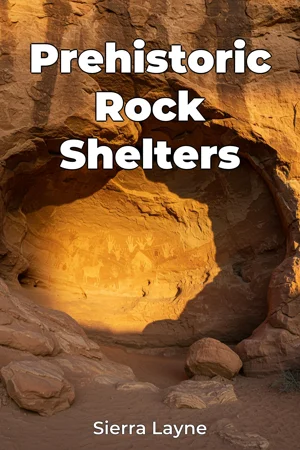
What secrets do ancient rock formations hold about the lives, beliefs, and survival strategies of early indigenous peoples? "Prehistoric Rock Shelters" delves into the profound relationship between these groups and the natural rock shelters they inhabited, examining how these geological features were integral to their existence, offering protection, and serving as spaces for ceremonial practices. This book explores three key topics: the geological formation and characteristics of rock shelters suitable for habitation, the archaeological evidence found within these shelters that reveals details about early indigenous cultures, and the symbolic significance of these spaces in shaping indigenous belief systems. Understanding these facets is crucial for appreciating the depth of early human adaptation and the lasting impact of indigenous cultures on our world. The context for our exploration is rooted in both Earth Sciences and history. A basic understanding of geological processes, such as erosion and weathering, is useful for comprehending the creation of rock shelters. Likewise, familiarity with basic historical concepts, like cultural evolution and migration patterns, will help when examining the archaeological record. The central argument of "Prehistoric Rock Shelters" is that these natural formations were not merely passive spaces of shelter but active agents in shaping early indigenous societies' cultural, social, and spiritual development. This understanding provides a unique perspective on the symbiotic relationship between humans and their environment, challenging traditional views that focus solely on human agency. The book is organized to systematically build upon these ideas. It begins by introducing the geological processes that create habitable rock shelters, followed by an analysis of archaeological findings – tools, artifacts, and rock art – which serve as tangible links to early indigenous life. The book proceeds to examine the ceremonial uses of rock shelters, drawing from ethnographic studies and interpretations of rock art. Finally, it culminates in a discussion of the contemporary implications and ethical considerations associated with preserving and interpreting these sites. Evidence presented throughout the book includes geological surveys, archaeological excavation reports, radiocarbon dating analyses, and ethnographic accounts from indigenous communities. Unique data sources include rarely published rock art analyses and newly discovered shelter sites. "Prehistoric Rock Shelters" connects to diverse fields, including anthropology, geology, and art history. Anthropological perspectives inform our understanding of social structures and belief systems. Geological insights explain the formation and stability of shelters. Art historical analyses provide context for interpreting the meaning of rock art. These interdisciplinary connections enrich the book's argument, offering a holistic view of early indigenous life. This book distinguishes itself by integrating traditionally separate disciplines to offer a nuanced understanding of prehistoric rock shelters. It adopts a holistic approach, combining hard scientific data with interpretive cultural analyses to illuminate the complex interaction between humans and their environment. The book utilizes a fact-based and accessible style, aiming for clarity and precision while avoiding overly technical jargon. Descriptions and explanations are detailed and intended to be engaging for a broad audience. The target audience includes students and researchers in archaeology, anthropology, and geology, as well as history enthusiasts and anyone interested in learning about early indigenous cultures and the environments they inhabited. It offers valuable insights into the intersection of human history and natural history. As a work of non-fiction, "Prehistoric Rock Shelters" carefully documents sources and methods, adhering to academic standards of accuracy and transparency. It aims to present a balanced and objective account, considering multiple perspectives and interpretations. The scope of the book encompasses a global perspective, examining rock shelters from various continents and cultural contexts. However, it acknowledges limitations in the availability of data for certain regions and focuses primarily on well-documented sites. The information within "Prehistoric Rock Shelters" provides applied knowledge for professionals involved in heritage management, conservation, and tourism. It also serves as a valuable resource for indigenous communities seeking to understand and preserve their cultural heritage. While this book presents a synthesis of current knowledge, it also acknowledges areas of ongoing debate, such as the precise dating of rock art and the interpretation of its symbolic meaning. By addressing these controversies, the book encourages critical thinking and further research.
What secrets do ancient rock formations hold about the lives, beliefs, and survival strategies of early indigenous peoples? "Prehistoric Rock Shelters" delves into the profound relationship between these groups and the natural rock shelters they inhabited, examining how these geological features were integral to their existence, offering protection, and serving as spaces for ceremonial practices. This book explores three key topics: the geological formation and characteristics of rock shelters suitable for habitation, the archaeological evidence found within these shelters that reveals details about early indigenous cultures, and the symbolic significance of these spaces in shaping indigenous belief systems. Understanding these facets is crucial for appreciating the depth of early human adaptation and the lasting impact of indigenous cultures on our world. The context for our exploration is rooted in both Earth Sciences and history. A basic understanding of geological processes, such as erosion and weathering, is useful for comprehending the creation of rock shelters. Likewise, familiarity with basic historical concepts, like cultural evolution and migration patterns, will help when examining the archaeological record. The central argument of "Prehistoric Rock Shelters" is that these natural formations were not merely passive spaces of shelter but active agents in shaping early indigenous societies' cultural, social, and spiritual development. This understanding provides a unique perspective on the symbiotic relationship between humans and their environment, challenging traditional views that focus solely on human agency. The book is organized to systematically build upon these ideas. It begins by introducing the geological processes that create habitable rock shelters, followed by an analysis of archaeological findings – tools, artifacts, and rock art – which serve as tangible links to early indigenous life. The book proceeds to examine the ceremonial uses of rock shelters, drawing from ethnographic studies and interpretations of rock art. Finally, it culminates in a discussion of the contemporary implications and ethical considerations associated with preserving and interpreting these sites. Evidence presented throughout the book includes geological surveys, archaeological excavation reports, radiocarbon dating analyses, and ethnographic accounts from indigenous communities. Unique data sources include rarely published rock art analyses and newly discovered shelter sites. "Prehistoric Rock Shelters" connects to diverse fields, including anthropology, geology, and art history. Anthropological perspectives inform our understanding of social structures and belief systems. Geological insights explain the formation and stability of shelters. Art historical analyses provide context for interpreting the meaning of rock art. These interdisciplinary connections enrich the book's argument, offering a holistic view of early indigenous life. This book distinguishes itself by integrating traditionally separate disciplines to offer a nuanced understanding of prehistoric rock shelters. It adopts a holistic approach, combining hard scientific data with interpretive cultural analyses to illuminate the complex interaction between humans and their environment. The book utilizes a fact-based and accessible style, aiming for clarity and precision while avoiding overly technical jargon. Descriptions and explanations are detailed and intended to be engaging for a broad audience. The target audience includes students and researchers in archaeology, anthropology, and geology, as well as history enthusiasts and anyone interested in learning about early indigenous cultures and the environments they inhabited. It offers valuable insights into the intersection of human history and natural history. As a work of non-fiction, "Prehistoric Rock Shelters" carefully documents sources and methods, adhering to academic standards of accuracy and transparency. It aims to present a balanced and objective account, considering multiple perspectives and interpretations. The scope of the book encompasses a global perspective, examining rock shelters from various continents and cultural contexts. However, it acknowledges limitations in the availability of data for certain regions and focuses primarily on well-documented sites. The information within "Prehistoric Rock Shelters" provides applied knowledge for professionals involved in heritage management, conservation, and tourism. It also serves as a valuable resource for indigenous communities seeking to understand and preserve their cultural heritage. While this book presents a synthesis of current knowledge, it also acknowledges areas of ongoing debate, such as the precise dating of rock art and the interpretation of its symbolic meaning. By addressing these controversies, the book encourages critical thinking and further research.
"Prehistoric Rock Shelters" unveils the profound connection between early indigenous cultures and the natural rock formations they called home. It explores how these geological features provided essential shelter, protection, and spaces for ceremonial practices. Intriguingly, archaeological evidence within these shelters reveals not only tools and artifacts but also rock art, offering tangible links to early indigenous life and belief systems. The book argues that these shelters actively shaped the cultural, social, and spiritual development of these societies, challenging conventional views. The book begins by examining the geological processes behind the formation of habitable rock shelters, touching on earth sciences and geography. It then analyzes archaeological findings and rock art, using history and anthropology to interpret their significance. Progressing through chapters, the book culminates in a discussion of the contemporary implications of preserving these sites, offering a holistic view of early human adaptation and the lasting impact of indigenous cultures.
Book Details
ISBN
9788235234360
Publisher
Publifye AS
Your Licenses
You don't own any licenses for this book
Purchase a license below to unlock this book and download the EPUB.
Purchase License
Select a tier to unlock this book
Need bulk licensing?
Contact us for enterprise agreements.