
About This Book
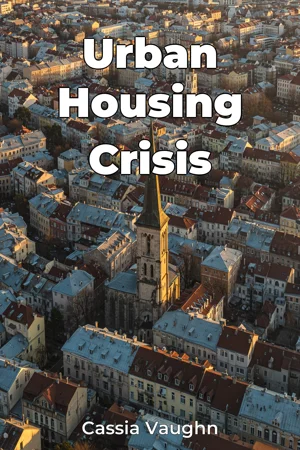
In rapidly expanding urban centers, why is decent and affordable housing increasingly out of reach for a significant portion of the population, and what can be done to reverse this trend? "Urban Housing Crisis" tackles this pressing issue head-on, dissecting the complex interplay of market forces, policy shortcomings, and potential solutions that shape the current affordable housing landscape. This book is a multi-faceted examination of a challenge that affects cities globally. The central argument of this book is that the affordable housing crisis is not a natural outcome of urban growth but rather a consequence of policy choices and market failures that exacerbate inequalities. Understanding the roots of this crisis is essential for crafting effective strategies to ensure equitable access to housing for all residents. The book begins by establishing the historical context of urban development and housing policy, tracing the evolution of housing markets from post-war initiatives to contemporary challenges. It introduces key concepts such as gentrification, exclusionary zoning, and the financialization of housing, providing a foundation for understanding the drivers of unaffordability. The core of the book is structured around three major themes. First, it analyzes the detrimental impact of unchecked market forces, including real estate speculation, land scarcity, and the commodification of housing. Second, it critically examines the performance of existing housing policies, from ineffective subsidies to regulatory barriers that stifle the development of affordable units. This section explores how well-intentioned policies often fall short of their goals, sometimes even contributing to the problem. Third, the book explores potential solutions, advocating for innovative approaches such as inclusionary zoning, community land trusts, and public-private partnerships that prioritize affordability and equity. To support its arguments, "Urban Housing Crisis" draws upon a wealth of empirical data from housing authorities, urban development researchers, and government agencies. It presents statistical analyses of housing costs, income levels, and demographic trends, providing a clear picture of the scale and scope of the crisis. Case studies from diverse cities are used to illustrate both the challenges and successes of different policy interventions. The book connects to several other fields of study, including economics, sociology, and political science. By integrating insights from these disciplines, it offers a holistic understanding of the social, economic, and political dimensions of the affordable housing crisis. Furthermore, urban planning and public policy are heavily integrated into the solutions proposed. "Urban Housing Crisis" adopts an analytical approach, presenting complex information in a clear and accessible manner. While rigorous and data-driven, the book avoids jargon and employs real-world examples to engage a broad audience. The target audience includes policymakers, urban planners, housing advocates, academics, and concerned citizens who seek a deeper understanding of the affordable housing crisis and potential solutions. It will be a valuable resource for students in urban studies, public policy, and related fields. In line with the conventions of social science and political science writing, the book emphasizes evidence-based arguments, critical analysis, and policy recommendations. It aims to contribute to the ongoing debate about affordable housing and to inform policy decisions at the local, regional, and national levels. While the book focuses on the challenges faced by rapidly growing cities, it acknowledges that the affordable housing crisis manifests differently in various contexts. It does not offer a one-size-fits-all solution but rather provides a framework for analyzing the underlying causes and developing tailored strategies. Ultimately, this book strives to empower readers with the knowledge and tools they need to engage in meaningful discussions about affordable housing and to advocate for policies that promote equitable and sustainable urban development. It is not merely an academic exercise but a call to action, urging readers to become active participants in shaping the future of their communities.
In rapidly expanding urban centers, why is decent and affordable housing increasingly out of reach for a significant portion of the population, and what can be done to reverse this trend? "Urban Housing Crisis" tackles this pressing issue head-on, dissecting the complex interplay of market forces, policy shortcomings, and potential solutions that shape the current affordable housing landscape. This book is a multi-faceted examination of a challenge that affects cities globally. The central argument of this book is that the affordable housing crisis is not a natural outcome of urban growth but rather a consequence of policy choices and market failures that exacerbate inequalities. Understanding the roots of this crisis is essential for crafting effective strategies to ensure equitable access to housing for all residents. The book begins by establishing the historical context of urban development and housing policy, tracing the evolution of housing markets from post-war initiatives to contemporary challenges. It introduces key concepts such as gentrification, exclusionary zoning, and the financialization of housing, providing a foundation for understanding the drivers of unaffordability. The core of the book is structured around three major themes. First, it analyzes the detrimental impact of unchecked market forces, including real estate speculation, land scarcity, and the commodification of housing. Second, it critically examines the performance of existing housing policies, from ineffective subsidies to regulatory barriers that stifle the development of affordable units. This section explores how well-intentioned policies often fall short of their goals, sometimes even contributing to the problem. Third, the book explores potential solutions, advocating for innovative approaches such as inclusionary zoning, community land trusts, and public-private partnerships that prioritize affordability and equity. To support its arguments, "Urban Housing Crisis" draws upon a wealth of empirical data from housing authorities, urban development researchers, and government agencies. It presents statistical analyses of housing costs, income levels, and demographic trends, providing a clear picture of the scale and scope of the crisis. Case studies from diverse cities are used to illustrate both the challenges and successes of different policy interventions. The book connects to several other fields of study, including economics, sociology, and political science. By integrating insights from these disciplines, it offers a holistic understanding of the social, economic, and political dimensions of the affordable housing crisis. Furthermore, urban planning and public policy are heavily integrated into the solutions proposed. "Urban Housing Crisis" adopts an analytical approach, presenting complex information in a clear and accessible manner. While rigorous and data-driven, the book avoids jargon and employs real-world examples to engage a broad audience. The target audience includes policymakers, urban planners, housing advocates, academics, and concerned citizens who seek a deeper understanding of the affordable housing crisis and potential solutions. It will be a valuable resource for students in urban studies, public policy, and related fields. In line with the conventions of social science and political science writing, the book emphasizes evidence-based arguments, critical analysis, and policy recommendations. It aims to contribute to the ongoing debate about affordable housing and to inform policy decisions at the local, regional, and national levels. While the book focuses on the challenges faced by rapidly growing cities, it acknowledges that the affordable housing crisis manifests differently in various contexts. It does not offer a one-size-fits-all solution but rather provides a framework for analyzing the underlying causes and developing tailored strategies. Ultimately, this book strives to empower readers with the knowledge and tools they need to engage in meaningful discussions about affordable housing and to advocate for policies that promote equitable and sustainable urban development. It is not merely an academic exercise but a call to action, urging readers to become active participants in shaping the future of their communities.
"Urban Housing Crisis" examines why affordable housing is increasingly unattainable in growing cities, attributing the issue to policy choices and market failures. The book argues that the crisis isn't a natural outcome but a consequence of factors like real estate speculation and exclusionary zoning. Understanding these roots is crucial for equitable housing solutions. The book traces the history of housing policy and introduces concepts like gentrification. It analyzes the impact of market forces, the shortcomings of existing policies (such as ineffective subsidies), and potential solutions like community land trusts. It utilizes empirical data and case studies to support its arguments. By integrating insights from economics, sociology, and political science, the book offers a holistic view of the crisis. It adopts an analytical approach, presenting complex information clearly and engagingly. The book progresses by first establishing historical context, then dissecting market failures and policy shortcomings, and finally proposing innovative solutions for urban development.
Book Details
ISBN
9788235234292
Publisher
Publifye AS
Your Licenses
You don't own any licenses for this book
Purchase a license below to unlock this book and download the EPUB.
Purchase License
Select a tier to unlock this book
Need bulk licensing?
Contact us for enterprise agreements.