
About This Book
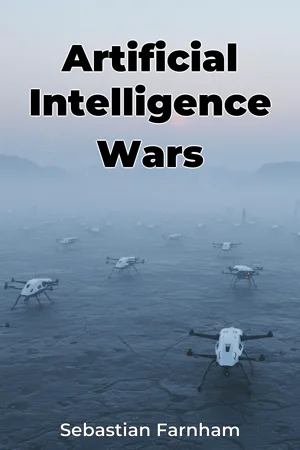
Is the future of warfare destined to be waged by machines, and at what cost to humanity? "Artificial Intelligence Wars" delves into the rapidly evolving role of AI in military strategy, the rise of autonomous weapons, and the profound ethical dilemmas posed by automated warfare. This book provides a comprehensive analysis of how artificial intelligence is reshaping the battlefield, from strategic planning to the deployment of lethal force, and why understanding these changes is crucial for policymakers, military professionals, and concerned citizens alike. The book examines three central themes: the integration of AI into military decision-making, the development and deployment of autonomous weapon systems, and the ethical and legal frameworks struggling to keep pace with these technological advancements. These topics are critical because they challenge traditional notions of warfare, raise questions about accountability, and force us to confront the potential for unintended consequences on a global scale. "Artificial Intelligence Wars" begins by establishing the historical context of technological innovation in warfare, tracing the evolution from early mechanical inventions to the complex AI systems of today. It explores the underlying principles of AI, including machine learning, neural networks, and natural language processing, providing readers with the foundational knowledge needed to understand the technology's capabilities and limitations. The central argument posits that while AI offers potential advantages in terms of efficiency, precision, and reduced human risk, its unchecked deployment could lead to unintended escalation, algorithmic bias, and a loss of human control over critical decisions. The book is structured in three parts. The first part introduces the core concepts of AI and its current applications in areas such as intelligence gathering, surveillance, and logistics. The second part delves into the development and potential deployment of lethal autonomous weapon systems (LAWS), examining the technical challenges, strategic implications, and the ongoing debate surrounding their legality and morality. The third part addresses the ethical considerations, exploring issues of accountability, bias, and the potential for unintended consequences in automated warfare. It concludes by proposing policy recommendations and guidelines for the responsible development and deployment of AI in the military domain. The arguments presented are supported by analysis of military doctrines, case studies of AI applications in recent conflicts, and expert interviews with military strategists, AI researchers, and ethicists. The research draws upon open-source intelligence data, academic publications, and government reports to provide a balanced and evidence-based assessment of the current state of AI in warfare. "Artificial Intelligence Wars" connects to the fields of international relations, political science, and technology ethics. Its analysis of AI's impact on military strategy informs discussions about global power dynamics and the future of international security. The ethical considerations raised by autonomous weapons intersect with debates about human rights, moral responsibility, and the laws of war. Furthermore, the book offers a unique perspective by combining technical expertise with a deep understanding of military history and strategic thinking. It challenges conventional wisdom by exploring not only the potential benefits of AI in warfare but also the inherent risks and limitations. The tone is both informative and analytical, presenting complex information in a clear and accessible manner. The writing style is designed to engage a broad audience, including military professionals, policymakers, academics, and anyone interested in the intersection of technology and national security. The book aims to provide readers with the knowledge and tools they need to critically evaluate the implications of AI in warfare and to participate in informed discussions about its future. The target audience includes military strategists, policymakers, technology analysts, academics in security studies and AI ethics, and informed citizens interested in the future of warfare. This book would be valuable to them because it provides a comprehensive and nuanced understanding of the complex issues surrounding AI in the military, offering insights into both the potential benefits and the inherent risks. As a work of technology, military history and military history, it adheres to genre conventions by emphasizing factual accuracy, rigorous analysis, and clear explanations of technical concepts. The scope is intentionally broad, covering a wide range of AI applications in the military domain, but it is limited to the analysis of existing and near-term technologies, rather than speculative future scenarios. The information presented can be applied practically by readers in government, military, and technology sectors to inform policy decisions, risk assessments, and strategic planning. The book also addresses ongoing debates surrounding the development and deployment of lethal autonomous weapon systems, including disagreements about their legality, ethical implications, and potential impact on international security. By presenting different perspectives and analyzing the available evidence, "Artificial Intelligence Wars" aims to contribute to a more informed and nuanced understanding of these complex issues, and the critical decisions that lie ahead.
Is the future of warfare destined to be waged by machines, and at what cost to humanity? "Artificial Intelligence Wars" delves into the rapidly evolving role of AI in military strategy, the rise of autonomous weapons, and the profound ethical dilemmas posed by automated warfare. This book provides a comprehensive analysis of how artificial intelligence is reshaping the battlefield, from strategic planning to the deployment of lethal force, and why understanding these changes is crucial for policymakers, military professionals, and concerned citizens alike. The book examines three central themes: the integration of AI into military decision-making, the development and deployment of autonomous weapon systems, and the ethical and legal frameworks struggling to keep pace with these technological advancements. These topics are critical because they challenge traditional notions of warfare, raise questions about accountability, and force us to confront the potential for unintended consequences on a global scale. "Artificial Intelligence Wars" begins by establishing the historical context of technological innovation in warfare, tracing the evolution from early mechanical inventions to the complex AI systems of today. It explores the underlying principles of AI, including machine learning, neural networks, and natural language processing, providing readers with the foundational knowledge needed to understand the technology's capabilities and limitations. The central argument posits that while AI offers potential advantages in terms of efficiency, precision, and reduced human risk, its unchecked deployment could lead to unintended escalation, algorithmic bias, and a loss of human control over critical decisions. The book is structured in three parts. The first part introduces the core concepts of AI and its current applications in areas such as intelligence gathering, surveillance, and logistics. The second part delves into the development and potential deployment of lethal autonomous weapon systems (LAWS), examining the technical challenges, strategic implications, and the ongoing debate surrounding their legality and morality. The third part addresses the ethical considerations, exploring issues of accountability, bias, and the potential for unintended consequences in automated warfare. It concludes by proposing policy recommendations and guidelines for the responsible development and deployment of AI in the military domain. The arguments presented are supported by analysis of military doctrines, case studies of AI applications in recent conflicts, and expert interviews with military strategists, AI researchers, and ethicists. The research draws upon open-source intelligence data, academic publications, and government reports to provide a balanced and evidence-based assessment of the current state of AI in warfare. "Artificial Intelligence Wars" connects to the fields of international relations, political science, and technology ethics. Its analysis of AI's impact on military strategy informs discussions about global power dynamics and the future of international security. The ethical considerations raised by autonomous weapons intersect with debates about human rights, moral responsibility, and the laws of war. Furthermore, the book offers a unique perspective by combining technical expertise with a deep understanding of military history and strategic thinking. It challenges conventional wisdom by exploring not only the potential benefits of AI in warfare but also the inherent risks and limitations. The tone is both informative and analytical, presenting complex information in a clear and accessible manner. The writing style is designed to engage a broad audience, including military professionals, policymakers, academics, and anyone interested in the intersection of technology and national security. The book aims to provide readers with the knowledge and tools they need to critically evaluate the implications of AI in warfare and to participate in informed discussions about its future. The target audience includes military strategists, policymakers, technology analysts, academics in security studies and AI ethics, and informed citizens interested in the future of warfare. This book would be valuable to them because it provides a comprehensive and nuanced understanding of the complex issues surrounding AI in the military, offering insights into both the potential benefits and the inherent risks. As a work of technology, military history and military history, it adheres to genre conventions by emphasizing factual accuracy, rigorous analysis, and clear explanations of technical concepts. The scope is intentionally broad, covering a wide range of AI applications in the military domain, but it is limited to the analysis of existing and near-term technologies, rather than speculative future scenarios. The information presented can be applied practically by readers in government, military, and technology sectors to inform policy decisions, risk assessments, and strategic planning. The book also addresses ongoing debates surrounding the development and deployment of lethal autonomous weapon systems, including disagreements about their legality, ethical implications, and potential impact on international security. By presenting different perspectives and analyzing the available evidence, "Artificial Intelligence Wars" aims to contribute to a more informed and nuanced understanding of these complex issues, and the critical decisions that lie ahead.
"Artificial Intelligence Wars" explores the increasing role of artificial intelligence in military strategy and the ethical challenges of automated conflict. It examines how AI is transforming the battlefield, from strategic planning to the deployment of lethal force, underscoring why understanding these shifts is vital for policymakers and concerned citizens. The book delves into the integration of AI in military decision-making, autonomous weapon systems, and the legal frameworks struggling to adapt to these technologies. The book charts the evolution from early mechanical inventions to today's AI systems, explaining machine learning, neural networks, and natural language processing. While AI offers potential advantages like efficiency and precision, the book cautions that unchecked deployment could lead to unintended escalation and algorithmic bias. For example, AI could enhance surveillance and logistics. Structured in three parts, the book first introduces core AI concepts and their current applications. It then discusses lethal autonomous weapon systems (LAWS), examining the technical challenges, strategic implications, and ethical debates. Finally, it addresses accountability, bias, and potential unintended consequences, proposing policy recommendations for responsible AI development in the military, providing a comprehensive understanding of AI's complex issues.
Book Details
ISBN
9788235234230
Publisher
Publifye AS
Your Licenses
You don't own any licenses for this book
Purchase a license below to unlock this book and download the EPUB.
Purchase License
Select a tier to unlock this book
Need bulk licensing?
Contact us for enterprise agreements.