
About This Book
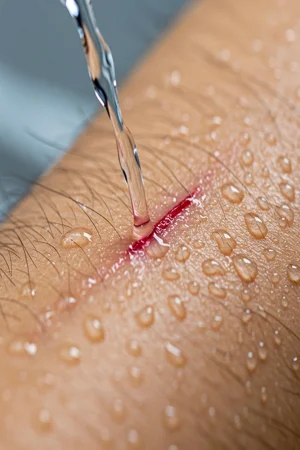
Are you prepared to handle everyday injuries effectively? This book, "Wound Care," provides essential knowledge and practical skills for managing cuts, burns, bruises, and other common wounds. We focus on equipping you with the tools to promote faster healing and prevent infection. This book addresses three critical areas: first aid basics, wound healing stages, and infection prevention. These topics are paramount because proper initial care significantly impacts recovery time and reduces the risk of complications. Understanding the phases of wound healing allows for targeted care at each stage, maximizing the body's natural regenerative processes. Preventing infection is crucial to avoid serious health problems, prolonged healing, and potential scarring. Throughout history, wound management practices have evolved from rudimentary methods to sophisticated techniques based on scientific understanding. Social factors, such as access to healthcare and hygiene standards, greatly influence wound outcomes. This book incorporates current scientific research on wound physiology, microbiology, and immunology to provide evidence-based guidelines. Some basic knowledge of human anatomy and physiology will be helpful, but not essential, for understanding the concepts presented. The central argument of "Wound Care" is that proactive and informed wound management, based on a solid understanding of biological processes and practical techniques, leads to improved healing outcomes and reduced incidence of infection. This argument is crucial because many common wound care practices are based on outdated or incorrect information, potentially hindering recovery. The book begins with an introduction to wound types, classifications, and the body's natural defense mechanisms. It then delves into three major sections. First, the book elucidates first aid essentials, covering immediate care for various wounds – cuts, burns (thermal, chemical, and sunburns), abrasions, puncture wounds, and bruises. This includes proper cleaning techniques, bandaging methods, and when to seek professional medical attention. Second, we explore the stages of wound healing – hemostasis, inflammation, proliferation, and remodeling – detailing the biological processes that occur at each stage and providing specific care recommendations to optimize healing. The final section addresses infection prevention through proper wound cleaning, antiseptic use, barrier methods, and recognizing the signs of infection. The last chapter explores the long-term care of scars including treatments and therapies to consider and when to seek professional help. The information presented is based on a thorough review of medical literature, clinical guidelines from organizations such as the American Academy of Dermatology and the Wound Healing Society, and evidence-based research articles. The book also incorporates case studies and practical examples to illustrate key concepts and techniques. "Wound Care" connects to several interdisciplinary fields. Microbiology is crucial for understanding wound infections. Nutrition plays a key role in providing the body with the resources needed for healing. Public health principles inform strategies for preventing wound infections and promoting access to care. This book distinguishes itself by offering a practical, accessible, and evidence-based approach to wound care, empowering individuals to manage common injuries effectively. The writing style adopts a conversational tone, making complex scientific information understandable and engaging for a broad audience. The target audience includes individuals, families, caregivers, athletes, outdoor enthusiasts, and anyone interested in acquiring essential skills for managing common wounds. The book will equip readers with the knowledge and confidence to provide appropriate care for themselves and others. As a non-fiction medical reference, "Wound Care" adheres to established guidelines for accuracy, clarity, and objectivity. It focuses on providing reliable information and practical advice, avoiding anecdotal evidence or unsubstantiated claims. The book's scope covers the management of common acute wounds. It does not delve into the complexities of chronic wounds, surgical wounds requiring specialized care, or rare medical conditions. The knowledge gained from this book can be directly applied in real-world situations, from treating minor cuts and scrapes at home to providing immediate care in emergency situations. Readers will learn how to assess wounds, provide appropriate first aid, promote optimal healing, and prevent infection. While the principles of wound care are generally well-established, there are ongoing debates regarding specific treatment modalities, such as the use of certain antiseptic agents or advanced wound dressings. This book presents a balanced perspective on these controversies, highlighting the available evidence and acknowledging the limitations of current knowledge.
Are you prepared to handle everyday injuries effectively? This book, "Wound Care," provides essential knowledge and practical skills for managing cuts, burns, bruises, and other common wounds. We focus on equipping you with the tools to promote faster healing and prevent infection. This book addresses three critical areas: first aid basics, wound healing stages, and infection prevention. These topics are paramount because proper initial care significantly impacts recovery time and reduces the risk of complications. Understanding the phases of wound healing allows for targeted care at each stage, maximizing the body's natural regenerative processes. Preventing infection is crucial to avoid serious health problems, prolonged healing, and potential scarring. Throughout history, wound management practices have evolved from rudimentary methods to sophisticated techniques based on scientific understanding. Social factors, such as access to healthcare and hygiene standards, greatly influence wound outcomes. This book incorporates current scientific research on wound physiology, microbiology, and immunology to provide evidence-based guidelines. Some basic knowledge of human anatomy and physiology will be helpful, but not essential, for understanding the concepts presented. The central argument of "Wound Care" is that proactive and informed wound management, based on a solid understanding of biological processes and practical techniques, leads to improved healing outcomes and reduced incidence of infection. This argument is crucial because many common wound care practices are based on outdated or incorrect information, potentially hindering recovery. The book begins with an introduction to wound types, classifications, and the body's natural defense mechanisms. It then delves into three major sections. First, the book elucidates first aid essentials, covering immediate care for various wounds – cuts, burns (thermal, chemical, and sunburns), abrasions, puncture wounds, and bruises. This includes proper cleaning techniques, bandaging methods, and when to seek professional medical attention. Second, we explore the stages of wound healing – hemostasis, inflammation, proliferation, and remodeling – detailing the biological processes that occur at each stage and providing specific care recommendations to optimize healing. The final section addresses infection prevention through proper wound cleaning, antiseptic use, barrier methods, and recognizing the signs of infection. The last chapter explores the long-term care of scars including treatments and therapies to consider and when to seek professional help. The information presented is based on a thorough review of medical literature, clinical guidelines from organizations such as the American Academy of Dermatology and the Wound Healing Society, and evidence-based research articles. The book also incorporates case studies and practical examples to illustrate key concepts and techniques. "Wound Care" connects to several interdisciplinary fields. Microbiology is crucial for understanding wound infections. Nutrition plays a key role in providing the body with the resources needed for healing. Public health principles inform strategies for preventing wound infections and promoting access to care. This book distinguishes itself by offering a practical, accessible, and evidence-based approach to wound care, empowering individuals to manage common injuries effectively. The writing style adopts a conversational tone, making complex scientific information understandable and engaging for a broad audience. The target audience includes individuals, families, caregivers, athletes, outdoor enthusiasts, and anyone interested in acquiring essential skills for managing common wounds. The book will equip readers with the knowledge and confidence to provide appropriate care for themselves and others. As a non-fiction medical reference, "Wound Care" adheres to established guidelines for accuracy, clarity, and objectivity. It focuses on providing reliable information and practical advice, avoiding anecdotal evidence or unsubstantiated claims. The book's scope covers the management of common acute wounds. It does not delve into the complexities of chronic wounds, surgical wounds requiring specialized care, or rare medical conditions. The knowledge gained from this book can be directly applied in real-world situations, from treating minor cuts and scrapes at home to providing immediate care in emergency situations. Readers will learn how to assess wounds, provide appropriate first aid, promote optimal healing, and prevent infection. While the principles of wound care are generally well-established, there are ongoing debates regarding specific treatment modalities, such as the use of certain antiseptic agents or advanced wound dressings. This book presents a balanced perspective on these controversies, highlighting the available evidence and acknowledging the limitations of current knowledge.
"Wound Care" offers practical guidance on managing everyday injuries, emphasizing faster healing and infection prevention. By understanding first aid basics, readers can significantly impact recovery time. The book highlights the importance of proper wound cleaning and bandaging techniques, as well as when to seek professional medical help. Interestingly, the book notes how wound management has evolved from rudimentary methods to sophisticated, science-based approaches. The book takes you through wound types, classifications, and the body's defense mechanisms. It then elucidates first aid essentials, covering immediate care for cuts, burns, abrasions, puncture wounds, and bruises. A key focus is on the stages of wound healing, namely hemostasis, inflammation, proliferation, and remodeling, detailing the biological processes at each stage. The book's approach is practical and evidence-based, empowering readers to manage common injuries effectively. The final section addresses infection prevention through proper wound cleaning, antiseptic use, and recognizing signs of infection. The last chapter explores the long-term care of scars including treatments and therapies to consider and when to seek professional help. This resource is valuable for anyone seeking knowledge and confidence in providing appropriate care for themselves and others.
Book Details
ISBN
9788235234209
Publisher
Publifye AS
Your Licenses
You don't own any licenses for this book
Purchase a license below to unlock this book and download the EPUB.
Purchase License
Select a tier to unlock this book
Need bulk licensing?
Contact us for enterprise agreements.