
About This Book
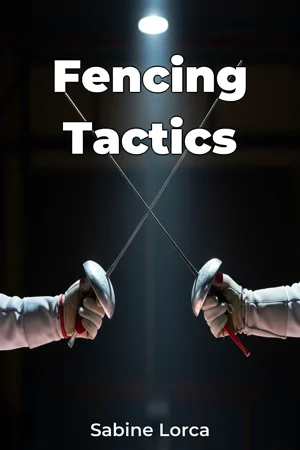
How do fencers consistently outmaneuver their opponents, transforming a seemingly simple duel into a complex interplay of strategy and athleticism? "Fencing Tactics" delves into the strategic depths of fencing, demonstrating how victory on the strip is not merely a matter of speed and reflexes, but a carefully constructed plan executed with precision. We explore the critical role of tactical thinking, the development of reflex actions, and the efficient use of movement – the three pillars upon which successful fencing is built. These topics are significant because they bridge the gap between basic fencing techniques and high-level competitive performance. Understanding tactical principles allows fencers to anticipate their opponent’s actions, transforming defense into offense and maximizing opportunities for scoring. Reflex development enables instantaneous reactions to changing circumstances, while optimized movement economizes energy and creates advantageous positions. This book situates modern fencing tactics within a historical context, tracing the evolution of fencing from its origins as a martial art to its contemporary status as a dynamic Olympic sport. Understanding the historical roots of various techniques and strategies provides valuable insight into their strengths and weaknesses. No prior knowledge of advanced fencing theory is required; we start with foundational concepts and build complexity gradually. However, a basic understanding of fencing rules and terminology will be helpful. The central argument of "Fencing Tactics" is that a deep understanding and effective application of tactical principles, combined with refined reflexes and efficient movement, are paramount for achieving consistent success in fencing. This argument is crucial because it moves beyond the common emphasis on pure athleticism, highlighting the intellectual and strategic dimensions of the sport that are often overlooked. The book unfolds in a structured manner. First, we introduce core fencing concepts and the fundamental principles of tactical thinking, covering topics such as distance management, right-of-way (where applicable), and blade work. Next, we develop these ideas through detailed analysis of specific fencing actions and strategies, organized into chapters focused on offense, defense, and counter-offense. We analyze common attack combinations, parry variations, and ripostes, examining their effectiveness in various scenarios. The culmination of the argument lies in demonstrating how these tactical elements can be integrated into a comprehensive game plan, tailored to individual fencing styles and opponent characteristics. Throughout the book, practical drills and exercises are provided to help readers implement the concepts discussed. The analysis presented relies on a combination of sources, including historical fencing manuals, contemporary coaching methodologies, and statistical analysis of competitive fencing bouts. Unique data is drawn from video analysis of high-level fencing matches, providing concrete examples of tactical principles in action. This book connects to other fields such as sports psychology, biomechanics, and military strategy. Understanding the psychological aspects of competition, such as managing pressure and maintaining focus, is essential for tactical execution. Biomechanical analysis of movement patterns optimizes efficiency and reduces the risk of injury. Drawing parallels with military strategy provides a broader framework for understanding concepts such as planning, adaptation, and exploiting vulnerabilities. "Fencing Tactics" offers a unique perspective by blending historical context with modern analytical techniques. It moves beyond rote memorization of techniques, emphasizing the development of critical thinking skills and the ability to adapt to unpredictable situations. The writing style is informative yet accessible, balancing technical detail with clear explanations and illustrative examples. Diagrams and illustrations are used extensively to clarify complex concepts. The target audience includes competitive fencers of all levels, fencing coaches, and students of martial arts and military history. This book would be valuable to them because it provides a comprehensive and practical guide to tactical thinking in fencing, enabling them to improve their performance and deepen their understanding of the sport. As a work in the genre of Sports and Military History, this book adheres to the conventions of rigorous analysis and historical accuracy. Fencing actions are described in detail, and historical claims are supported by credible sources. The book aims to provide a balanced and objective account of fencing tactics, avoiding subjective opinions or anecdotal evidence. The scope of the book is limited to tactical considerations in foil, épée and sabre fencing. While physical conditioning and technical skill are acknowledged as important factors, they are not the primary focus of this work. The information in this book can be applied practically by fencers to analyze their own performance, develop personalized training plans, and improve their decision-making during competition. Coaches can use the concepts presented to design more effective drills and provide more insightful feedback to their students. While fencing is a sport steeped in tradition, there are ongoing debates regarding the optimal approach to training and competition. This book addresses some of these controversies by presenting a range of perspectives and encouraging readers to develop their own informed opinions.
How do fencers consistently outmaneuver their opponents, transforming a seemingly simple duel into a complex interplay of strategy and athleticism? "Fencing Tactics" delves into the strategic depths of fencing, demonstrating how victory on the strip is not merely a matter of speed and reflexes, but a carefully constructed plan executed with precision. We explore the critical role of tactical thinking, the development of reflex actions, and the efficient use of movement – the three pillars upon which successful fencing is built. These topics are significant because they bridge the gap between basic fencing techniques and high-level competitive performance. Understanding tactical principles allows fencers to anticipate their opponent’s actions, transforming defense into offense and maximizing opportunities for scoring. Reflex development enables instantaneous reactions to changing circumstances, while optimized movement economizes energy and creates advantageous positions. This book situates modern fencing tactics within a historical context, tracing the evolution of fencing from its origins as a martial art to its contemporary status as a dynamic Olympic sport. Understanding the historical roots of various techniques and strategies provides valuable insight into their strengths and weaknesses. No prior knowledge of advanced fencing theory is required; we start with foundational concepts and build complexity gradually. However, a basic understanding of fencing rules and terminology will be helpful. The central argument of "Fencing Tactics" is that a deep understanding and effective application of tactical principles, combined with refined reflexes and efficient movement, are paramount for achieving consistent success in fencing. This argument is crucial because it moves beyond the common emphasis on pure athleticism, highlighting the intellectual and strategic dimensions of the sport that are often overlooked. The book unfolds in a structured manner. First, we introduce core fencing concepts and the fundamental principles of tactical thinking, covering topics such as distance management, right-of-way (where applicable), and blade work. Next, we develop these ideas through detailed analysis of specific fencing actions and strategies, organized into chapters focused on offense, defense, and counter-offense. We analyze common attack combinations, parry variations, and ripostes, examining their effectiveness in various scenarios. The culmination of the argument lies in demonstrating how these tactical elements can be integrated into a comprehensive game plan, tailored to individual fencing styles and opponent characteristics. Throughout the book, practical drills and exercises are provided to help readers implement the concepts discussed. The analysis presented relies on a combination of sources, including historical fencing manuals, contemporary coaching methodologies, and statistical analysis of competitive fencing bouts. Unique data is drawn from video analysis of high-level fencing matches, providing concrete examples of tactical principles in action. This book connects to other fields such as sports psychology, biomechanics, and military strategy. Understanding the psychological aspects of competition, such as managing pressure and maintaining focus, is essential for tactical execution. Biomechanical analysis of movement patterns optimizes efficiency and reduces the risk of injury. Drawing parallels with military strategy provides a broader framework for understanding concepts such as planning, adaptation, and exploiting vulnerabilities. "Fencing Tactics" offers a unique perspective by blending historical context with modern analytical techniques. It moves beyond rote memorization of techniques, emphasizing the development of critical thinking skills and the ability to adapt to unpredictable situations. The writing style is informative yet accessible, balancing technical detail with clear explanations and illustrative examples. Diagrams and illustrations are used extensively to clarify complex concepts. The target audience includes competitive fencers of all levels, fencing coaches, and students of martial arts and military history. This book would be valuable to them because it provides a comprehensive and practical guide to tactical thinking in fencing, enabling them to improve their performance and deepen their understanding of the sport. As a work in the genre of Sports and Military History, this book adheres to the conventions of rigorous analysis and historical accuracy. Fencing actions are described in detail, and historical claims are supported by credible sources. The book aims to provide a balanced and objective account of fencing tactics, avoiding subjective opinions or anecdotal evidence. The scope of the book is limited to tactical considerations in foil, épée and sabre fencing. While physical conditioning and technical skill are acknowledged as important factors, they are not the primary focus of this work. The information in this book can be applied practically by fencers to analyze their own performance, develop personalized training plans, and improve their decision-making during competition. Coaches can use the concepts presented to design more effective drills and provide more insightful feedback to their students. While fencing is a sport steeped in tradition, there are ongoing debates regarding the optimal approach to training and competition. This book addresses some of these controversies by presenting a range of perspectives and encouraging readers to develop their own informed opinions.
"Fencing Tactics" explores the intricate strategies behind the sport of fencing, revealing how tactical thinking, reflex development, and efficient movement are crucial for success. It demonstrates that a fencer's prowess extends beyond mere athleticism, delving into the intellectual and strategic elements often overlooked. Did you know that understanding historical fencing manuals can provide insights into the strengths and weaknesses of modern techniques? Or that biomechanical analysis optimizes movement efficiency and reduces injury risk? The book progresses systematically, starting with core fencing concepts such as distance management and blade work. It then analyzes offensive, defensive, and counter-offensive tactics, including attack combinations and parry variations. Connecting fencing to broader fields, "Fencing Tactics" draws parallels with military strategy and sports psychology, enhancing understanding of planning, adaptation, and managing pressure. This approach, blending historical context with modern analysis, offers a unique perspective for competitive fencers and coaches.
Book Details
ISBN
9788235234117
Publisher
Publifye AS
Your Licenses
You don't own any licenses for this book
Purchase a license below to unlock this book and download the EPUB.
Purchase License
Select a tier to unlock this book
Need bulk licensing?
Contact us for enterprise agreements.