
About This Book
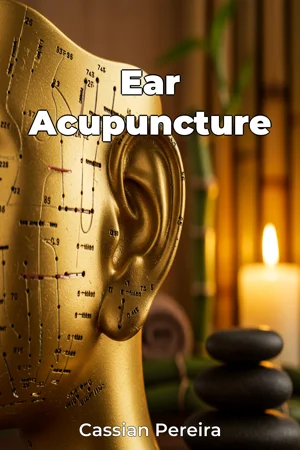
Are you searching for a natural method to alleviate stress, enhance mental clarity, and promote overall well-being? "Ear Acupuncture" delves into the principles and practices of auriculotherapy, also known as ear acupuncture, offering a comprehensive guide to understanding how stimulating specific points on the ear can trigger profound healing responses throughout the body. This book explores the intersection of traditional Chinese medicine and modern understanding of the nervous system to reveal the therapeutic potential of this accessible and effective technique. This book will illuminate two key areas: the detailed mapping of acupoints on the ear and the physiological mechanisms by which their stimulation influences the body. Understanding the specific locations of points corresponding to different organs and systems is essential for targeted treatment. Furthermore, we will explore the neurological pathways that connect the ear to the brain and other areas, explaining how auriculotherapy can impact pain management, stress reduction, and even cognitive function. These topics are significant because they provide the foundation for both understanding and effectively applying auriculotherapy. The practice of ear acupuncture has roots in ancient civilizations, with variations found across different cultures. It was significantly developed and systematized in France in the mid-20th century by Dr. Paul Nogier, who observed a direct correlation between specific ear points and corresponding anatomical locations. This book builds on Nogier’s foundational work, incorporating contemporary research and clinical applications. No prior knowledge of acupuncture or Chinese medicine is required, as the book will provide all necessary background information. The central argument of "Ear Acupuncture" is that the ear serves as a potent microsystem, reflecting the entire body, and that skillful stimulation of specific auricular points offers a non-invasive means to address a wide range of health concerns. This argument is important because it empowers individuals and practitioners alike with a readily accessible tool for promoting health and well-being, potentially reducing reliance on pharmaceutical interventions for certain conditions. The book is structured to guide the reader from foundational concepts to practical application. It begins with an introduction to the history and theoretical basis of auriculotherapy, followed by a detailed anatomical map of the ear and the corresponding points associated with various body parts and functions. Subsequent sections will focus on specific therapeutic protocols for common ailments such as pain, anxiety, addiction, and digestive disorders. The culmination of the book will explore advanced techniques and integration with other holistic healing modalities. The book will conclude with real world case studies that demonstrate the efficacy of ear acupuncture. The evidence presented in this book draws upon a range of sources, including clinical trials, systematic reviews, and case studies published in peer-reviewed journals. Furthermore, it incorporates insights from experienced practitioners and integrates both Western and Eastern perspectives. “Ear Acupuncture” inherently connects to several other fields, including neurology (understanding the nervous system pathways involved), psychology (addressing stress and emotional well-being), and physical therapy (integrating auriculotherapy into rehabilitation protocols). These connections enrich the understanding of auriculotherapy's multifaceted effects. This book offers a practical guide, bridging the gap between theoretical knowledge and real-world application. It is written in a clear and accessible style, suitable for both healthcare professionals and individuals seeking self-care strategies. The target audience includes acupuncturists, medical doctors, nurses, massage therapists, and anyone interested in exploring alternative and complementary therapies for health improvement. This book offers valuable insights and practical techniques that can be readily integrated into existing healthcare practices or personal wellness routines. As a book within the Health & Fitness and Medical General genres, it conforms to the expectation of providing evidence-based information, practical guidance, and clear explanations of medical concepts. The scope of "Ear Acupuncture" is focused on the principles, practice, and clinical applications of auriculotherapy. It does not delve into the broader field of traditional Chinese medicine in its entirety, but rather concentrates specifically on the ear as a microsystem. The information in this book can be applied in a variety of ways, from self-administered acupressure for stress relief and pain management to professionally administered acupuncture treatments for a wider range of conditions. While auriculotherapy is generally considered safe, some debates exist regarding the standardization of point location and the optimal stimulation techniques. This book will address these controversies by presenting different perspectives and promoting evidence-based practice.
Are you searching for a natural method to alleviate stress, enhance mental clarity, and promote overall well-being? "Ear Acupuncture" delves into the principles and practices of auriculotherapy, also known as ear acupuncture, offering a comprehensive guide to understanding how stimulating specific points on the ear can trigger profound healing responses throughout the body. This book explores the intersection of traditional Chinese medicine and modern understanding of the nervous system to reveal the therapeutic potential of this accessible and effective technique. This book will illuminate two key areas: the detailed mapping of acupoints on the ear and the physiological mechanisms by which their stimulation influences the body. Understanding the specific locations of points corresponding to different organs and systems is essential for targeted treatment. Furthermore, we will explore the neurological pathways that connect the ear to the brain and other areas, explaining how auriculotherapy can impact pain management, stress reduction, and even cognitive function. These topics are significant because they provide the foundation for both understanding and effectively applying auriculotherapy. The practice of ear acupuncture has roots in ancient civilizations, with variations found across different cultures. It was significantly developed and systematized in France in the mid-20th century by Dr. Paul Nogier, who observed a direct correlation between specific ear points and corresponding anatomical locations. This book builds on Nogier’s foundational work, incorporating contemporary research and clinical applications. No prior knowledge of acupuncture or Chinese medicine is required, as the book will provide all necessary background information. The central argument of "Ear Acupuncture" is that the ear serves as a potent microsystem, reflecting the entire body, and that skillful stimulation of specific auricular points offers a non-invasive means to address a wide range of health concerns. This argument is important because it empowers individuals and practitioners alike with a readily accessible tool for promoting health and well-being, potentially reducing reliance on pharmaceutical interventions for certain conditions. The book is structured to guide the reader from foundational concepts to practical application. It begins with an introduction to the history and theoretical basis of auriculotherapy, followed by a detailed anatomical map of the ear and the corresponding points associated with various body parts and functions. Subsequent sections will focus on specific therapeutic protocols for common ailments such as pain, anxiety, addiction, and digestive disorders. The culmination of the book will explore advanced techniques and integration with other holistic healing modalities. The book will conclude with real world case studies that demonstrate the efficacy of ear acupuncture. The evidence presented in this book draws upon a range of sources, including clinical trials, systematic reviews, and case studies published in peer-reviewed journals. Furthermore, it incorporates insights from experienced practitioners and integrates both Western and Eastern perspectives. “Ear Acupuncture” inherently connects to several other fields, including neurology (understanding the nervous system pathways involved), psychology (addressing stress and emotional well-being), and physical therapy (integrating auriculotherapy into rehabilitation protocols). These connections enrich the understanding of auriculotherapy's multifaceted effects. This book offers a practical guide, bridging the gap between theoretical knowledge and real-world application. It is written in a clear and accessible style, suitable for both healthcare professionals and individuals seeking self-care strategies. The target audience includes acupuncturists, medical doctors, nurses, massage therapists, and anyone interested in exploring alternative and complementary therapies for health improvement. This book offers valuable insights and practical techniques that can be readily integrated into existing healthcare practices or personal wellness routines. As a book within the Health & Fitness and Medical General genres, it conforms to the expectation of providing evidence-based information, practical guidance, and clear explanations of medical concepts. The scope of "Ear Acupuncture" is focused on the principles, practice, and clinical applications of auriculotherapy. It does not delve into the broader field of traditional Chinese medicine in its entirety, but rather concentrates specifically on the ear as a microsystem. The information in this book can be applied in a variety of ways, from self-administered acupressure for stress relief and pain management to professionally administered acupuncture treatments for a wider range of conditions. While auriculotherapy is generally considered safe, some debates exist regarding the standardization of point location and the optimal stimulation techniques. This book will address these controversies by presenting different perspectives and promoting evidence-based practice.
"Ear Acupuncture" explores the practice of auriculotherapy, a technique rooted in traditional Chinese medicine where stimulating specific ear points can trigger healing responses throughout the body. This book explains how the ear functions as a microsystem reflecting the entire body, and it highlights the therapeutic potential for stress relief, pain management, and enhanced mental clarity without relying on pharmaceutical interventions. Notably, auriculotherapy's modern form was significantly developed by Dr. Paul Nogier, who identified correlations between ear points and anatomical locations. The book begins with the history and theory behind ear acupuncture, then presents a detailed map of ear acupoints and their corresponding body parts. It progresses to therapeutic protocols for common issues like anxiety and digestive disorders, culminating in advanced techniques and case studies. By bridging theory and practice, "Ear Acupuncture" provides a practical guide for both healthcare professionals and individuals interested in alternative therapies.
Book Details
ISBN
9788235234032
Publisher
Publifye AS
Your Licenses
You don't own any licenses for this book
Purchase a license below to unlock this book and download the EPUB.
Purchase License
Select a tier to unlock this book
Need bulk licensing?
Contact us for enterprise agreements.