
About This Book
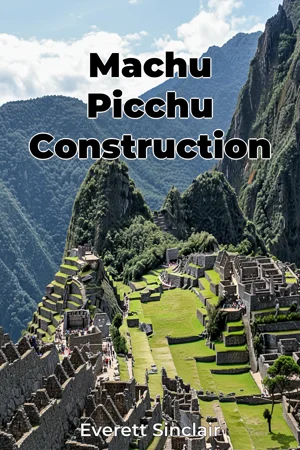
How did the Inca civilization, without iron tools or the wheel, construct the breathtaking citadel of Machu Picchu high in the Andes Mountains? This book, "Machu Picchu Construction," delves into the intricate engineering, architectural prowess, and societal organization that enabled the creation of this iconic site. We will explore the precise stone-cutting techniques employed, the sophisticated understanding of the environment, and the logistical challenges overcome to build and sustain this remarkable settlement. This book addresses three key topics: Inca stonework mastery, the intended purpose of Machu Picchu within the Inca Empire, and the innovative engineering solutions that allowed for its construction in such a challenging environment. Understanding these facets is crucial for appreciating the ingenuity and organizational capacity of the Inca people, offering insights into their worldview, social structure, and technological advancements. It provides a grounded look at how this isolated place was designed and built. The construction of Machu Picchu occurred during the height of the Inca Empire, roughly in the 15th century, a period marked by expansion, sophisticated governance, and impressive feats of engineering. Readers will benefit from a basic understanding of Inca social hierarchy, agricultural practices, and religious beliefs, all of which influenced the design and function of Machu Picchu. The central argument of this book is that Machu Picchu represents a pinnacle of Inca engineering and architectural adaptation to a challenging environment, reflecting not only technical skill but also a deep understanding of the natural world and a highly organized social system. This argument challenges romanticized notions of spontaneous creation and emphasizes the calculated planning and sustained effort required for such an undertaking. This book is structured to systematically unravel the mysteries of Machu Picchu's construction. First, it introduces the historical context and the geographical setting. Second, it examines the stone quarrying, transportation, and fitting techniques, complemented by visual aids and detailed analyses of the stonework. Third, it explores the potential uses of Machu Picchu, considering its astronomical alignments, agricultural terraces, and residential areas, drawing on archaeological evidence and ethnohistorical accounts. Finally, this book culminates in a discussion of the long-term maintenance and sustainability strategies employed by the Inca, and what modern researchers have been able to understand about the site. The analysis draws upon archaeological surveys, geological studies of the site, and ethnohistorical documents from the Spanish colonial period that shed light on Inca customs and practices. Unique data includes detailed photographic documentation of stonework patterns and sophisticated digital reconstructions of the site. This book links to several other disciplines, including geology (understanding the properties of the stone used), astronomy (analyzing the site's alignments with celestial events), and anthropology (interpreting the social and cultural significance of the site’s features). These interdisciplinary connections enrich our understanding of Machu Picchu as a multifaceted expression of Inca civilization. This book offers a fresh perspective by integrating archaeological evidence with engineering principles to demystify the construction process, moving past general admiration to a concrete comprehension of the how and why. It avoids romantic conjecture. The tone is factual and analytical, providing a rigorous and comprehensive overview of the current state of knowledge about Machu Picchu's construction. It uses clear language and avoids jargon wherever possible, making it accessible to a broad audience. The target audience includes students of history, archaeology, and architecture, as well as enthusiasts interested in Inca civilization and engineering marvels. The book offers value to those seeking a detailed and evidence-based account of how Machu Picchu was built and what its construction reveals about the Inca. In line with historical and architectural non-fiction, the book emphasizes factual accuracy, rigorous citation, and clear presentation of evidence. It avoids speculative storytelling and focuses on verifiable information. The scope of this book is limited to the construction and immediate function of Machu Picchu within the Inca Empire. It does not delve deeply into the broader history of the Inca or the later Spanish colonial period, focusing specifically on aspects related to building the site. The information in this book can be applied to understanding ancient construction techniques, sustainable design principles, and the relationship between engineering and culture. It offers lessons applicable to modern architecture and urban planning, particularly in environmentally sensitive areas. While the book presents current understandings of Machu Picchu's construction, it acknowledges ongoing debates about the precise purpose of the site and some of the finer details of Inca construction methods. These debates are addressed fairly, with different interpretations presented and evaluated.
How did the Inca civilization, without iron tools or the wheel, construct the breathtaking citadel of Machu Picchu high in the Andes Mountains? This book, "Machu Picchu Construction," delves into the intricate engineering, architectural prowess, and societal organization that enabled the creation of this iconic site. We will explore the precise stone-cutting techniques employed, the sophisticated understanding of the environment, and the logistical challenges overcome to build and sustain this remarkable settlement. This book addresses three key topics: Inca stonework mastery, the intended purpose of Machu Picchu within the Inca Empire, and the innovative engineering solutions that allowed for its construction in such a challenging environment. Understanding these facets is crucial for appreciating the ingenuity and organizational capacity of the Inca people, offering insights into their worldview, social structure, and technological advancements. It provides a grounded look at how this isolated place was designed and built. The construction of Machu Picchu occurred during the height of the Inca Empire, roughly in the 15th century, a period marked by expansion, sophisticated governance, and impressive feats of engineering. Readers will benefit from a basic understanding of Inca social hierarchy, agricultural practices, and religious beliefs, all of which influenced the design and function of Machu Picchu. The central argument of this book is that Machu Picchu represents a pinnacle of Inca engineering and architectural adaptation to a challenging environment, reflecting not only technical skill but also a deep understanding of the natural world and a highly organized social system. This argument challenges romanticized notions of spontaneous creation and emphasizes the calculated planning and sustained effort required for such an undertaking. This book is structured to systematically unravel the mysteries of Machu Picchu's construction. First, it introduces the historical context and the geographical setting. Second, it examines the stone quarrying, transportation, and fitting techniques, complemented by visual aids and detailed analyses of the stonework. Third, it explores the potential uses of Machu Picchu, considering its astronomical alignments, agricultural terraces, and residential areas, drawing on archaeological evidence and ethnohistorical accounts. Finally, this book culminates in a discussion of the long-term maintenance and sustainability strategies employed by the Inca, and what modern researchers have been able to understand about the site. The analysis draws upon archaeological surveys, geological studies of the site, and ethnohistorical documents from the Spanish colonial period that shed light on Inca customs and practices. Unique data includes detailed photographic documentation of stonework patterns and sophisticated digital reconstructions of the site. This book links to several other disciplines, including geology (understanding the properties of the stone used), astronomy (analyzing the site's alignments with celestial events), and anthropology (interpreting the social and cultural significance of the site’s features). These interdisciplinary connections enrich our understanding of Machu Picchu as a multifaceted expression of Inca civilization. This book offers a fresh perspective by integrating archaeological evidence with engineering principles to demystify the construction process, moving past general admiration to a concrete comprehension of the how and why. It avoids romantic conjecture. The tone is factual and analytical, providing a rigorous and comprehensive overview of the current state of knowledge about Machu Picchu's construction. It uses clear language and avoids jargon wherever possible, making it accessible to a broad audience. The target audience includes students of history, archaeology, and architecture, as well as enthusiasts interested in Inca civilization and engineering marvels. The book offers value to those seeking a detailed and evidence-based account of how Machu Picchu was built and what its construction reveals about the Inca. In line with historical and architectural non-fiction, the book emphasizes factual accuracy, rigorous citation, and clear presentation of evidence. It avoids speculative storytelling and focuses on verifiable information. The scope of this book is limited to the construction and immediate function of Machu Picchu within the Inca Empire. It does not delve deeply into the broader history of the Inca or the later Spanish colonial period, focusing specifically on aspects related to building the site. The information in this book can be applied to understanding ancient construction techniques, sustainable design principles, and the relationship between engineering and culture. It offers lessons applicable to modern architecture and urban planning, particularly in environmentally sensitive areas. While the book presents current understandings of Machu Picchu's construction, it acknowledges ongoing debates about the precise purpose of the site and some of the finer details of Inca construction methods. These debates are addressed fairly, with different interpretations presented and evaluated.
"Machu Picchu Construction" explores how the Inca civilization, renowned for Inca stonework, built the iconic citadel of Machu Picchu in the Andes Mountains without the use of iron tools or the wheel. The book examines the sophisticated engineering, architectural design, and the Inca's societal organization that made this feat possible. Readers gain insights into the intricate stone-cutting techniques, the profound understanding of the environment, and the logistical solutions employed to sustain this complex settlement. One intriguing aspect is how the Inca aligned certain structures with astronomical events, revealing their deep connection to the cosmos. The book systematically unveils the construction process, beginning with the historical and geographical context, and then moves into stone quarrying and fitting techniques. It also explores the potential uses of Machu Picchu, considering its agricultural terraces and residential areas, drawing on archaeological evidence. This methodical approach, combined with archaeological surveys, geological studies, and ethnohistorical documents, offers a fresh perspective on the Inca's capabilities in ancient construction techniques and their mastery of sustainable design. The book culminates by discussing the long-term maintenance strategies used by the Inca, providing a comprehensive understanding of this architectural marvel.
Book Details
ISBN
9788235233981
Publisher
Publifye AS
Your Licenses
You don't own any licenses for this book
Purchase a license below to unlock this book and download the EPUB.
Purchase License
Select a tier to unlock this book
Need bulk licensing?
Contact us for enterprise agreements.