
About This Book
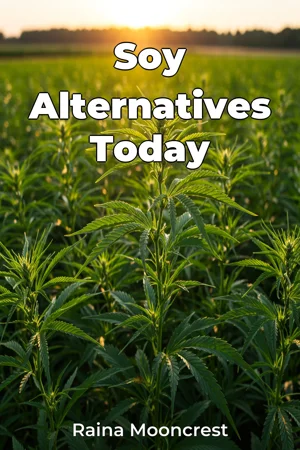
As global awareness of sustainable food systems grows, the reliance on soy as a primary protein source faces increasing scrutiny. Is soy truly the only viable option for meeting the world's protein demands? "Soy Alternatives Today" delves into the compelling world of plant-based protein, exploring nutritionally equivalent, and in some cases superior, alternatives to soy, covering their agricultural advantages and potential to reshape food production. This book addresses the critical need for diversified protein sources in our diets. It’s important because over-reliance on a single crop, like soy, creates vulnerabilities in our food supply chain, from ecological impacts due to monoculture farming to nutritional deficiencies in populations heavily dependent on it. We examine several of the most promising soy alternatives, highlighting their unique characteristics and potential benefits. We begin by providing crucial context in the history of soy cultivation and its rise to dominance in the 20th and 21st centuries, discussing the economic and agricultural policies that have shaped current trends. No prior advanced knowledge in nutrition or agriculture is required, but familiarity with basic concepts of food production and nutrition will enhance the reader's understanding. The central argument of "Soy Alternatives Today" is that a diversified approach to protein sourcing is essential for a sustainable and resilient food future. We contend that widespread adoption of soy alternatives can mitigate environmental risks associated with intensive soy farming, enhance biodiversity, and offer consumers a wider range of nutritionally beneficial food choices. The book is structured into three main parts. First, we introduce the primary soy alternatives – pea protein, lupin, and hemp – detailing their botanical origins, cultivation practices, and nutritional profiles. Second, we analyze the environmental impacts of each alternative compared to soy, focusing on land use, water consumption, and greenhouse gas emissions. Finally, we examine the practical applications of these protein sources in food manufacturing, exploring their use in various products and their potential to replace soy in existing formulations. Our analysis relies on data from agricultural research institutions, nutritional science studies, and environmental impact assessments. We draw upon government reports, academic publications, and industry data to provide a comprehensive and balanced perspective. A unique aspect of our research includes comparative life cycle assessments of soy and its alternatives, offering a detailed quantification of their environmental footprints. "Soy Alternatives Today" connects disciplines such as agriculture, nutrition, and environmental science. These interdisciplinary connections are central to understanding the holistic impact of our food choices. This book offers a comprehensive overview of the scientific and practical considerations surrounding soy alternatives, providing a balanced assessment of their potential benefits and challenges. Written in a clear and accessible style, "Soy Alternatives Today" is geared toward a diverse audience, including students in food science and agriculture, nutritionists, environmental advocates, and informed consumers interested in making sustainable food choices. It will be valuable for researchers, policymakers, and food industry professionals looking to understand the evolving landscape of protein production. As a work of science and life sciences, "Soy Alternatives Today" adheres to the highest standards of accuracy, objectivity, and evidence-based analysis. We present information in a factual and unbiased manner. The scope of this book is limited to the exploration of pea protein, lupin, and hemp as the most promising soy alternatives currently available. While other alternatives exist, these three represent a significant portion of the market. Readers will gain insights into how they can incorporate soy alternatives into their diets, make informed purchasing decisions, and support sustainable food systems. The book addresses ongoing debates surrounding the nutritional value and environmental impact of soy versus its alternatives. We present differing viewpoints and analyze the available evidence to provide a balanced perspective.
As global awareness of sustainable food systems grows, the reliance on soy as a primary protein source faces increasing scrutiny. Is soy truly the only viable option for meeting the world's protein demands? "Soy Alternatives Today" delves into the compelling world of plant-based protein, exploring nutritionally equivalent, and in some cases superior, alternatives to soy, covering their agricultural advantages and potential to reshape food production. This book addresses the critical need for diversified protein sources in our diets. It’s important because over-reliance on a single crop, like soy, creates vulnerabilities in our food supply chain, from ecological impacts due to monoculture farming to nutritional deficiencies in populations heavily dependent on it. We examine several of the most promising soy alternatives, highlighting their unique characteristics and potential benefits. We begin by providing crucial context in the history of soy cultivation and its rise to dominance in the 20th and 21st centuries, discussing the economic and agricultural policies that have shaped current trends. No prior advanced knowledge in nutrition or agriculture is required, but familiarity with basic concepts of food production and nutrition will enhance the reader's understanding. The central argument of "Soy Alternatives Today" is that a diversified approach to protein sourcing is essential for a sustainable and resilient food future. We contend that widespread adoption of soy alternatives can mitigate environmental risks associated with intensive soy farming, enhance biodiversity, and offer consumers a wider range of nutritionally beneficial food choices. The book is structured into three main parts. First, we introduce the primary soy alternatives – pea protein, lupin, and hemp – detailing their botanical origins, cultivation practices, and nutritional profiles. Second, we analyze the environmental impacts of each alternative compared to soy, focusing on land use, water consumption, and greenhouse gas emissions. Finally, we examine the practical applications of these protein sources in food manufacturing, exploring their use in various products and their potential to replace soy in existing formulations. Our analysis relies on data from agricultural research institutions, nutritional science studies, and environmental impact assessments. We draw upon government reports, academic publications, and industry data to provide a comprehensive and balanced perspective. A unique aspect of our research includes comparative life cycle assessments of soy and its alternatives, offering a detailed quantification of their environmental footprints. "Soy Alternatives Today" connects disciplines such as agriculture, nutrition, and environmental science. These interdisciplinary connections are central to understanding the holistic impact of our food choices. This book offers a comprehensive overview of the scientific and practical considerations surrounding soy alternatives, providing a balanced assessment of their potential benefits and challenges. Written in a clear and accessible style, "Soy Alternatives Today" is geared toward a diverse audience, including students in food science and agriculture, nutritionists, environmental advocates, and informed consumers interested in making sustainable food choices. It will be valuable for researchers, policymakers, and food industry professionals looking to understand the evolving landscape of protein production. As a work of science and life sciences, "Soy Alternatives Today" adheres to the highest standards of accuracy, objectivity, and evidence-based analysis. We present information in a factual and unbiased manner. The scope of this book is limited to the exploration of pea protein, lupin, and hemp as the most promising soy alternatives currently available. While other alternatives exist, these three represent a significant portion of the market. Readers will gain insights into how they can incorporate soy alternatives into their diets, make informed purchasing decisions, and support sustainable food systems. The book addresses ongoing debates surrounding the nutritional value and environmental impact of soy versus its alternatives. We present differing viewpoints and analyze the available evidence to provide a balanced perspective.
"Soy Alternatives Today" explores the growing need for diverse protein sources beyond soy, driven by concerns about sustainable food systems and environmental impact. The book highlights promising plant-based options like pea protein, lupin, and hemp, examining their nutritional benefits, cultivation practices, and potential to reshape food production. Did you know that diversifying protein sources can mitigate environmental risks associated with intensive soy farming and enhance biodiversity? Readers will gain insights into the history of soy cultivation and the economic factors that have shaped its dominance. The book assesses the environmental footprints of soy alternatives through comparative life cycle assessments, looking at land use, water consumption, and greenhouse gas emissions. It connects agriculture, nutrition, and environmental science to provide a holistic view of our food choices. For example, hemp offers unique advantages due to its minimal water requirements compared to soy. The book progresses by introducing each soy alternative, analyzing its environmental impact, and exploring its practical applications in food manufacturing, making it a valuable resource for anyone interested in sustainable eating.
Book Details
ISBN
9788235233868
Publisher
Publifye AS
Your Licenses
You don't own any licenses for this book
Purchase a license below to unlock this book and download the EPUB.
Purchase License
Select a tier to unlock this book
Need bulk licensing?
Contact us for enterprise agreements.