
About This Book
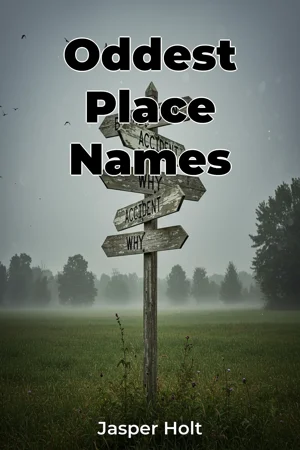
Have you ever wondered how a town ends up with a name like "Accident," or "Why," or even "Boogertown"? This book, *Oddest Place Names*, delves into the fascinating and sometimes bizarre world of toponymy, exploring the origins, meanings, and cultural significance behind the planet's most unusual place names. We don't just present a list of strange names; we uncover the stories woven into the very fabric of these locations. The book primarily examines three key areas. First, we investigate place names that are undeniably funny, peculiar, or even shocking. These names often reveal unexpected aspects of a region's history, folklore, or local humor. Second, we explore repetitive and redundant place names, like towns seemingly named by someone with a severe case of linguistic déjà vu; these instances are not always accidental and reveal interesting patterns of naming conventions and historical repetitions. Third, we analyze places named after unexpected or seemingly unrelated things, uncovering connections to historical figures, events, or even inside jokes that have been lost to time but preserved in the name. Understanding place names provides a unique window into the past. They can reveal migration patterns, linguistic shifts, economic activities, and even the personal quirks of the people who first settled a region. By studying toponymy, we gain insights into history, geography, linguistics, and cultural anthropology. The central argument of *Oddest Place Names* is that a place's name is more than just a label; it's a condensed narrative, a cultural artifact encapsulating a place's history, identity, and the values of its inhabitants. This book argues for the importance of toponymy as a lens through which to understand human history. The book is structured as follows. It begins with an introduction to the field of toponymy, explaining the basic principles and methodologies used in studying place names. The subsequent sections are organized thematically, with chapters dedicated to humorous names, repeated names, names derived from unexpected sources, and names that reflect specific historical events or cultural phenomena. Each chapter presents case studies of particular place names, analyzing their origins and significance. The book culminates in a discussion of the broader implications of toponymy, exploring how place names can inform our understanding of cultural identity, historical memory, and even political power. The book draws upon a range of sources, including historical documents, maps, linguistic databases, folklore archives, and on-site investigations. We examine census records, land deeds, and local histories to trace the evolution of place names over time. *Oddest Place Names* connects to multiple disciplines, including linguistics (examining the etymology and evolution of names), history (uncovering the historical events and figures associated with place names), and cultural anthropology (exploring the cultural values and beliefs reflected in place names). These interdisciplinary connections enrich the book's analysis and provide a more holistic understanding of the subject matter. What sets this book apart is its focus on the narrative potential of place names. Rather than simply presenting a catalog of odd names, *Oddest Place Names* delves into the stories behind those names, uncovering the hidden histories and cultural meanings they contain. The tone is accessible and engaging, blending scholarly research with anecdotal storytelling. It is aimed at a broad audience, including travel enthusiasts, history buffs, language lovers, and anyone curious about the world around them. The book will appeal to readers who enjoy exploring the hidden corners of history and culture. As a work of non-fiction, this book adheres to the principles of accuracy, objectivity, and evidence-based analysis. The claims are supported by credible sources and presented in a clear and unbiased manner. The book aims to provide a global overview of odd place names, but the majority of examples are from English-speaking countries such as the United States, Canada, and the United Kingdom. This is not to exclude other regions completely, where possible and pertinent examples will be used. The knowledge in *Oddest Place Names* can be applied in several ways. Travelers can gain a deeper appreciation for the places they visit by understanding the stories behind their names. Historians and researchers can use place names as a valuable source of information for understanding the past. And anyone can enjoy the sheer fun of discovering the strange and surprising stories embedded in the names of places around the world. While the interpretation of place name origins is generally based on available historical and linguistic evidence, there are occasional debates surrounding the accuracy or completeness of these interpretations. Where applicable, the book acknowledges these controversies and presents multiple perspectives.
Have you ever wondered how a town ends up with a name like "Accident," or "Why," or even "Boogertown"? This book, *Oddest Place Names*, delves into the fascinating and sometimes bizarre world of toponymy, exploring the origins, meanings, and cultural significance behind the planet's most unusual place names. We don't just present a list of strange names; we uncover the stories woven into the very fabric of these locations. The book primarily examines three key areas. First, we investigate place names that are undeniably funny, peculiar, or even shocking. These names often reveal unexpected aspects of a region's history, folklore, or local humor. Second, we explore repetitive and redundant place names, like towns seemingly named by someone with a severe case of linguistic déjà vu; these instances are not always accidental and reveal interesting patterns of naming conventions and historical repetitions. Third, we analyze places named after unexpected or seemingly unrelated things, uncovering connections to historical figures, events, or even inside jokes that have been lost to time but preserved in the name. Understanding place names provides a unique window into the past. They can reveal migration patterns, linguistic shifts, economic activities, and even the personal quirks of the people who first settled a region. By studying toponymy, we gain insights into history, geography, linguistics, and cultural anthropology. The central argument of *Oddest Place Names* is that a place's name is more than just a label; it's a condensed narrative, a cultural artifact encapsulating a place's history, identity, and the values of its inhabitants. This book argues for the importance of toponymy as a lens through which to understand human history. The book is structured as follows. It begins with an introduction to the field of toponymy, explaining the basic principles and methodologies used in studying place names. The subsequent sections are organized thematically, with chapters dedicated to humorous names, repeated names, names derived from unexpected sources, and names that reflect specific historical events or cultural phenomena. Each chapter presents case studies of particular place names, analyzing their origins and significance. The book culminates in a discussion of the broader implications of toponymy, exploring how place names can inform our understanding of cultural identity, historical memory, and even political power. The book draws upon a range of sources, including historical documents, maps, linguistic databases, folklore archives, and on-site investigations. We examine census records, land deeds, and local histories to trace the evolution of place names over time. *Oddest Place Names* connects to multiple disciplines, including linguistics (examining the etymology and evolution of names), history (uncovering the historical events and figures associated with place names), and cultural anthropology (exploring the cultural values and beliefs reflected in place names). These interdisciplinary connections enrich the book's analysis and provide a more holistic understanding of the subject matter. What sets this book apart is its focus on the narrative potential of place names. Rather than simply presenting a catalog of odd names, *Oddest Place Names* delves into the stories behind those names, uncovering the hidden histories and cultural meanings they contain. The tone is accessible and engaging, blending scholarly research with anecdotal storytelling. It is aimed at a broad audience, including travel enthusiasts, history buffs, language lovers, and anyone curious about the world around them. The book will appeal to readers who enjoy exploring the hidden corners of history and culture. As a work of non-fiction, this book adheres to the principles of accuracy, objectivity, and evidence-based analysis. The claims are supported by credible sources and presented in a clear and unbiased manner. The book aims to provide a global overview of odd place names, but the majority of examples are from English-speaking countries such as the United States, Canada, and the United Kingdom. This is not to exclude other regions completely, where possible and pertinent examples will be used. The knowledge in *Oddest Place Names* can be applied in several ways. Travelers can gain a deeper appreciation for the places they visit by understanding the stories behind their names. Historians and researchers can use place names as a valuable source of information for understanding the past. And anyone can enjoy the sheer fun of discovering the strange and surprising stories embedded in the names of places around the world. While the interpretation of place name origins is generally based on available historical and linguistic evidence, there are occasional debates surrounding the accuracy or completeness of these interpretations. Where applicable, the book acknowledges these controversies and presents multiple perspectives.
"Oddest Place Names" explores the captivating world of toponymy, revealing the stories and cultural significance behind unusual place names. This book isn't just a list of oddities; it's a journey into the histories and meanings embedded within these names. Did you know some towns were named due to linguistic mishaps and others after historical figures long forgotten? The book argues that a place's name is a condensed narrative, reflecting its history and the values of its inhabitants. The book progresses thematically, examining funny, repetitive, and unexpectedly sourced names. Each chapter delves into case studies, analyzing the origins and significance of specific place names. By studying these names, we uncover insights into migration patterns, linguistic shifts, and even the humor of early settlers. For instance, repetitive place names can reveal patterns in naming conventions, much like echoes in a historical hall. This approach sets the book apart, focusing on the narrative potential of place names rather than just cataloging them. Ultimately, "Oddest Place Names" provides a unique lens for understanding human history. It connects linguistics, history, and cultural anthropology, offering a holistic view of how place names shape our understanding of cultural identity and historical memory. The book aims to show how seemingly strange or funny place names are actually windows into the past.
Book Details
ISBN
9788235233653
Publisher
Publifye AS
Your Licenses
You don't own any licenses for this book
Purchase a license below to unlock this book and download the EPUB.
Purchase License
Select a tier to unlock this book
Need bulk licensing?
Contact us for enterprise agreements.