
About This Book
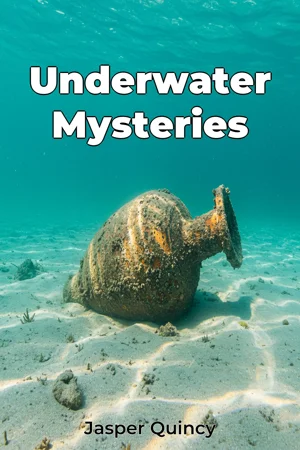
Have you ever wondered what secrets lie hidden beneath the waves, lost to time and the relentless sea? "Underwater Mysteries" delves into the captivating world of maritime archaeology, exploring sunken ships, lost treasure, and submerged sites that offer unique insights into human history. This book examines how the ocean floor serves as a submerged archive, preserving remnants of past civilizations and maritime activity, and why its exploration is vital for understanding our shared heritage. We will explore key themes such as shipwrecks as time capsules, the challenges of underwater preservation, and the ethical considerations surrounding the recovery of artifacts. These topics are important because they illuminate previously unknown aspects of trade, warfare, migration, and daily life in bygone eras. Understanding these underwater sites allows us to reconsider established historical narratives and appreciate the interconnectedness of global cultures. The book provides the historical and scientific context necessary to appreciate the significance of underwater discoveries. It reviews basic principles of nautical history, marine archaeology techniques, and the science of underwater preservation. No prior knowledge is required, as the concepts are presented in an accessible manner. The central argument is that underwater archaeological sites are not merely collections of artifacts but invaluable sources of historical data that can significantly enrich our understanding of the past. Furthermore, the book argues for responsible exploration and preservation of these fragile environments, recognizing their value for future generations. "Underwater Mysteries" unfolds in several stages. Part one introduces the field of maritime archaeology and the technological advancements that have made deep-sea exploration possible. Part two examines famous shipwrecks, such as the Titanic and the Mary Rose, analyzing their historical context and the artifacts recovered from them. Part three focuses on submerged cities and settlements, such as Pavlopetri in Greece and Port Royal in Jamaica, detailing what these sites reveal about ancient life and the impact of natural disasters. Part four explores the legal and ethical considerations surrounding underwater cultural heritage, including issues of ownership, preservation, and the impact of treasure hunting. We culminate with an exploration of future strategies for conservation and research, urging greater international cooperation. The book draws upon diverse sources, including archaeological reports, historical documents, firsthand accounts from divers and researchers, and cutting-edge scientific analyses of recovered artifacts. Unique data sources, such as 3D sonar mappings of underwater sites and isotopic analysis of recovered materials, will be presented to support the claims and arguments. "Underwater Mysteries" connects to diverse fields such as history, oceanography, law, and anthropology. By examining the intersection of these disciplines, the book provides a holistic understanding of underwater cultural heritage. The integration of oceanographic data, for example, helps explain the environmental factors affecting site preservation, while legal frameworks shape recovery and ownership of artifacts. What sets this book apart is its comprehensive and accessible approach. It combines rigorous academic research with captivating storytelling, making complex scientific and historical information engaging for a broad audience. The book also emphasizes the ethical dimensions of maritime archaeology, prompting readers to consider the responsibilities associated with exploring and preserving underwater heritage. Written in a clear and engaging style, "Underwater Mysteries" avoids jargon and presents complex information in an accessible manner. It aims to foster curiosity and inspire readers to learn more about the hidden history beneath the waves. The target audience includes history enthusiasts, archaeology buffs, divers, and anyone with an interest in maritime lore. It is of particular value to those seeking a comprehensive overview of underwater cultural heritage and the challenges of its preservation. As a work of non-fiction, "Underwater Mysteries" adheres to the conventions of accuracy, objectivity, and evidence-based analysis. It presents information in a balanced and unbiased manner, acknowledging different perspectives and interpretations. The scope of the book is broad, encompassing various geographical regions and historical periods. However, it focuses primarily on well-documented case studies and avoids speculative claims or unsupported theories. The limitations in scope are intentional, allowing for a deeper exploration of selected sites and themes. The insights from "Underwater Mysteries" have practical applications for policymakers, archaeologists, and the general public. Understanding the threats to underwater cultural heritage, such as pollution, coastal development, and looting, can inform conservation efforts and promote responsible stewardship of these valuable resources. The book addresses controversies such as the competing interests of archaeologists, treasure hunters, and governments in the exploration and exploitation of underwater sites, encouraging critical evaluation of these issues.
Have you ever wondered what secrets lie hidden beneath the waves, lost to time and the relentless sea? "Underwater Mysteries" delves into the captivating world of maritime archaeology, exploring sunken ships, lost treasure, and submerged sites that offer unique insights into human history. This book examines how the ocean floor serves as a submerged archive, preserving remnants of past civilizations and maritime activity, and why its exploration is vital for understanding our shared heritage. We will explore key themes such as shipwrecks as time capsules, the challenges of underwater preservation, and the ethical considerations surrounding the recovery of artifacts. These topics are important because they illuminate previously unknown aspects of trade, warfare, migration, and daily life in bygone eras. Understanding these underwater sites allows us to reconsider established historical narratives and appreciate the interconnectedness of global cultures. The book provides the historical and scientific context necessary to appreciate the significance of underwater discoveries. It reviews basic principles of nautical history, marine archaeology techniques, and the science of underwater preservation. No prior knowledge is required, as the concepts are presented in an accessible manner. The central argument is that underwater archaeological sites are not merely collections of artifacts but invaluable sources of historical data that can significantly enrich our understanding of the past. Furthermore, the book argues for responsible exploration and preservation of these fragile environments, recognizing their value for future generations. "Underwater Mysteries" unfolds in several stages. Part one introduces the field of maritime archaeology and the technological advancements that have made deep-sea exploration possible. Part two examines famous shipwrecks, such as the Titanic and the Mary Rose, analyzing their historical context and the artifacts recovered from them. Part three focuses on submerged cities and settlements, such as Pavlopetri in Greece and Port Royal in Jamaica, detailing what these sites reveal about ancient life and the impact of natural disasters. Part four explores the legal and ethical considerations surrounding underwater cultural heritage, including issues of ownership, preservation, and the impact of treasure hunting. We culminate with an exploration of future strategies for conservation and research, urging greater international cooperation. The book draws upon diverse sources, including archaeological reports, historical documents, firsthand accounts from divers and researchers, and cutting-edge scientific analyses of recovered artifacts. Unique data sources, such as 3D sonar mappings of underwater sites and isotopic analysis of recovered materials, will be presented to support the claims and arguments. "Underwater Mysteries" connects to diverse fields such as history, oceanography, law, and anthropology. By examining the intersection of these disciplines, the book provides a holistic understanding of underwater cultural heritage. The integration of oceanographic data, for example, helps explain the environmental factors affecting site preservation, while legal frameworks shape recovery and ownership of artifacts. What sets this book apart is its comprehensive and accessible approach. It combines rigorous academic research with captivating storytelling, making complex scientific and historical information engaging for a broad audience. The book also emphasizes the ethical dimensions of maritime archaeology, prompting readers to consider the responsibilities associated with exploring and preserving underwater heritage. Written in a clear and engaging style, "Underwater Mysteries" avoids jargon and presents complex information in an accessible manner. It aims to foster curiosity and inspire readers to learn more about the hidden history beneath the waves. The target audience includes history enthusiasts, archaeology buffs, divers, and anyone with an interest in maritime lore. It is of particular value to those seeking a comprehensive overview of underwater cultural heritage and the challenges of its preservation. As a work of non-fiction, "Underwater Mysteries" adheres to the conventions of accuracy, objectivity, and evidence-based analysis. It presents information in a balanced and unbiased manner, acknowledging different perspectives and interpretations. The scope of the book is broad, encompassing various geographical regions and historical periods. However, it focuses primarily on well-documented case studies and avoids speculative claims or unsupported theories. The limitations in scope are intentional, allowing for a deeper exploration of selected sites and themes. The insights from "Underwater Mysteries" have practical applications for policymakers, archaeologists, and the general public. Understanding the threats to underwater cultural heritage, such as pollution, coastal development, and looting, can inform conservation efforts and promote responsible stewardship of these valuable resources. The book addresses controversies such as the competing interests of archaeologists, treasure hunters, and governments in the exploration and exploitation of underwater sites, encouraging critical evaluation of these issues.
"Underwater Mysteries" unveils the hidden world of maritime archaeology, exploring shipwrecks, submerged cities, and lost treasures that offer invaluable insights into human history. Discover how the ocean floor acts as a time capsule, preserving remnants of past civilizations and maritime activity. The book highlights the importance of underwater preservation and the ethical considerations surrounding artifact recovery, shedding light on aspects of trade, warfare, and daily life in bygone eras. The book progresses from introducing maritime archaeology and deep-sea exploration to examining famous shipwrecks like the Titanic and submerged cities such as Pavlopetri. It then delves into the legal and ethical issues surrounding underwater cultural heritage, culminating in strategies for conservation and research. What makes it unique is its comprehensive yet accessible approach, blending rigorous research with captivating storytelling. It encourages responsible exploration and preservation, recognizing the value of these fragile environments for future generations, making it ideal for history enthusiasts and archaeology buffs alike.
Book Details
ISBN
9788235233608
Publisher
Publifye AS
Your Licenses
You don't own any licenses for this book
Purchase a license below to unlock this book and download the EPUB.
Purchase License
Select a tier to unlock this book
Need bulk licensing?
Contact us for enterprise agreements.