
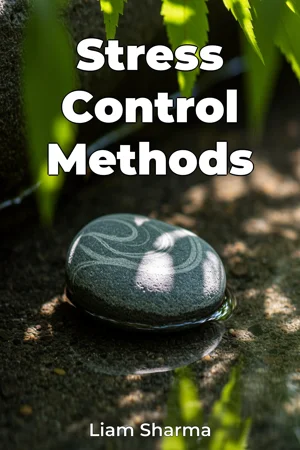
About This Book
Are you feeling overwhelmed by the relentless pressures of modern life? "Stress Control Methods" offers a comprehensive guide to regaining control and building resilience against the pervasive effects of stress. This book delves into the core principles of stress management, providing practical techniques grounded in psychological research and designed to empower readers to navigate challenges with greater ease and effectiveness. Two key topics explored within these pages are the physiological impact of stress and effective coping mechanisms. Understanding how stress affects the body and mind is crucial for implementing targeted strategies. We examine the science behind stress responses and provide actionable methods for managing the physical symptoms, such as muscle tension, rapid heart rate, and digestive issues. Furthermore, the book presents a wide array of coping strategies, from mindfulness and meditation to cognitive restructuring and problem-solving techniques, enabling readers to create a personalized toolkit for stress reduction. The historical context of stress research is also examined, tracing the evolution of our understanding of stress from early observations of the "fight or flight" response to contemporary models of chronic stress and its long-term health consequences. While no specific prerequisite knowledge is required, an openness to self-reflection and a willingness to experiment with different techniques will enhance the reader's experience. The central argument of "Stress Control Methods" is that stress is not an insurmountable obstacle but a manageable challenge. By integrating evidence-based techniques into daily life, individuals can cultivate resilience, improve overall well-being, and thrive even in demanding environments. This argument is supported by a synthesis of research findings from psychology, neuroscience, and behavioral medicine. The book is structured to guide readers through a systematic process of understanding and managing stress. It begins with an introduction to the core concepts of stress and its impact, followed by detailed explorations of various stress management techniques. Major sections include breathing exercises for immediate stress relief, time management strategies for reducing daily pressures, and lifestyle changes for long-term resilience. The book culminates with practical applications of these techniques in various real-world scenarios, such as work, relationships, and personal health. The evidence presented throughout the book is based on peer-reviewed research studies, clinical trials, and meta-analyses. Unique data sources, such as case studies and personal narratives, are used to illustrate the effectiveness of different stress management techniques in diverse populations. The methodologies employed include both quantitative and qualitative research approaches. "Stress Control Methods" connects to other fields such as neuroscience, by exploring the neural pathways involved in the stress response; behavioral economics, by analyzing how stress influences decision-making; and mindfulness studies, by examining the effects of mindfulness practices on reducing stress and improving mental clarity. These connections enrich the understanding of stress and provide a holistic approach to its management. This book offers a unique perspective by integrating both scientific rigor and practical applicability. It moves beyond generic advice by providing specific, actionable techniques supported by evidence and tailored to individual needs. The tone is professional yet accessible, designed to engage readers without overwhelming them with technical jargon. Concepts are explained clearly and concisely, making the book suitable for a wide range of readers. The target audience includes students, professionals, and anyone seeking effective strategies for managing stress and improving their mental well-being. This book offers valuable insights and practical tools for enhancing resilience and thriving in today's demanding world. As a self-help book grounded in psychology, "Stress Control Methods" aims to provide readers with the knowledge and skills they need to take control of their stress levels and improve their overall quality of life. It aligns with the conventions of the genre by offering practical advice, actionable steps, and evidence-based strategies. The scope of this book is limited to evidence-based stress management techniques. While it acknowledges the role of factors such as social support and environmental stressors, it primarily focuses on individual strategies for coping with stress. The information in this book can be applied in various real-world settings. Readers can use the breathing exercises for immediate stress relief, the time management strategies for improving productivity and reducing overwhelm, and the lifestyle changes for long-term resilience and well-being. While the effectiveness of stress management techniques is generally well-established, there are ongoing debates about the optimal approach for different individuals and situations. This book acknowledges these debates and encourages readers to experiment with different techniques to find what works best for them.
Are you feeling overwhelmed by the relentless pressures of modern life? "Stress Control Methods" offers a comprehensive guide to regaining control and building resilience against the pervasive effects of stress. This book delves into the core principles of stress management, providing practical techniques grounded in psychological research and designed to empower readers to navigate challenges with greater ease and effectiveness. Two key topics explored within these pages are the physiological impact of stress and effective coping mechanisms. Understanding how stress affects the body and mind is crucial for implementing targeted strategies. We examine the science behind stress responses and provide actionable methods for managing the physical symptoms, such as muscle tension, rapid heart rate, and digestive issues. Furthermore, the book presents a wide array of coping strategies, from mindfulness and meditation to cognitive restructuring and problem-solving techniques, enabling readers to create a personalized toolkit for stress reduction. The historical context of stress research is also examined, tracing the evolution of our understanding of stress from early observations of the "fight or flight" response to contemporary models of chronic stress and its long-term health consequences. While no specific prerequisite knowledge is required, an openness to self-reflection and a willingness to experiment with different techniques will enhance the reader's experience. The central argument of "Stress Control Methods" is that stress is not an insurmountable obstacle but a manageable challenge. By integrating evidence-based techniques into daily life, individuals can cultivate resilience, improve overall well-being, and thrive even in demanding environments. This argument is supported by a synthesis of research findings from psychology, neuroscience, and behavioral medicine. The book is structured to guide readers through a systematic process of understanding and managing stress. It begins with an introduction to the core concepts of stress and its impact, followed by detailed explorations of various stress management techniques. Major sections include breathing exercises for immediate stress relief, time management strategies for reducing daily pressures, and lifestyle changes for long-term resilience. The book culminates with practical applications of these techniques in various real-world scenarios, such as work, relationships, and personal health. The evidence presented throughout the book is based on peer-reviewed research studies, clinical trials, and meta-analyses. Unique data sources, such as case studies and personal narratives, are used to illustrate the effectiveness of different stress management techniques in diverse populations. The methodologies employed include both quantitative and qualitative research approaches. "Stress Control Methods" connects to other fields such as neuroscience, by exploring the neural pathways involved in the stress response; behavioral economics, by analyzing how stress influences decision-making; and mindfulness studies, by examining the effects of mindfulness practices on reducing stress and improving mental clarity. These connections enrich the understanding of stress and provide a holistic approach to its management. This book offers a unique perspective by integrating both scientific rigor and practical applicability. It moves beyond generic advice by providing specific, actionable techniques supported by evidence and tailored to individual needs. The tone is professional yet accessible, designed to engage readers without overwhelming them with technical jargon. Concepts are explained clearly and concisely, making the book suitable for a wide range of readers. The target audience includes students, professionals, and anyone seeking effective strategies for managing stress and improving their mental well-being. This book offers valuable insights and practical tools for enhancing resilience and thriving in today's demanding world. As a self-help book grounded in psychology, "Stress Control Methods" aims to provide readers with the knowledge and skills they need to take control of their stress levels and improve their overall quality of life. It aligns with the conventions of the genre by offering practical advice, actionable steps, and evidence-based strategies. The scope of this book is limited to evidence-based stress management techniques. While it acknowledges the role of factors such as social support and environmental stressors, it primarily focuses on individual strategies for coping with stress. The information in this book can be applied in various real-world settings. Readers can use the breathing exercises for immediate stress relief, the time management strategies for improving productivity and reducing overwhelm, and the lifestyle changes for long-term resilience and well-being. While the effectiveness of stress management techniques is generally well-established, there are ongoing debates about the optimal approach for different individuals and situations. This book acknowledges these debates and encourages readers to experiment with different techniques to find what works best for them.
"Stress Control Methods" provides a comprehensive guide to understanding and managing stress, offering practical techniques rooted in psychological research. The book addresses the physiological impact of stress, explaining how it affects the body and mind, while also exploring effective coping mechanisms like mindfulness and cognitive restructuring. Readers will gain insights into the science behind stress responses and learn actionable methods for managing physical symptoms. This self-help resource presents a systematic approach to stress management, beginning with core concepts and progressing to detailed explorations of various techniques. It covers breathing exercises for immediate relief, time management strategies for reducing daily pressures, and lifestyle changes for long-term resilience. The book uniquely integrates scientific rigor with practical advice, moving beyond generic tips to offer specific techniques tailored to individual needs. Ultimately, "Stress Control Methods" empowers readers to build resilience and improve mental well-being by integrating evidence-based techniques into their daily lives. By tracing the evolution of stress research and presenting actionable strategies, the book helps individuals navigate challenges effectively and thrive even in demanding environments.
Book Details
ISBN
9788235233387
Publisher
Publifye AS
Your Licenses
You don't own any licenses for this book
Purchase a license below to unlock this book and download the EPUB.
Purchase License
Select a tier to unlock this book
Need bulk licensing?
Contact us for enterprise agreements.