
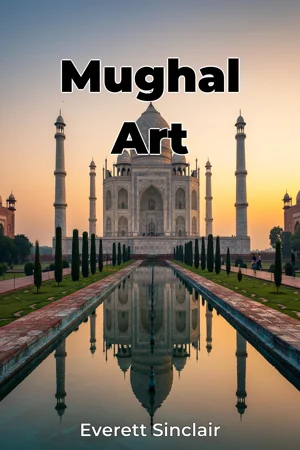
About This Book
How did an empire’s artistic vision redefine a subcontinent’s landscape? This book, *Mughal Art*, delves into the rich tapestry of artistic and architectural achievements that flourished under the Mughal Empire, examining not only the aesthetic beauty of their creations but also the socio-political forces that shaped them. We will explore the grand scale of their palaces and forts, the intricate detail of their miniature paintings, and the serene beauty of their gardens, revealing how these art forms served as expressions of imperial power, cultural synthesis, and religious belief. This book focuses on three key topics: Mughal Architecture, Mughal Painting, and Mughal Gardens. Mughal Architecture displays an amalgamation of Persian, Islamic, and Indian styles, resulting in structures of immense size and refined detail which showcase the Empire’s wealth and power. Mughal Painting, particularly miniature painting, served as a crucial medium for documenting court life, illustrating historical events, and exploring literary themes, providing insights into the Mughal worldview. Mughal Gardens brought the Persian concept of the "paradise garden" to India, acting as both retreats from the world and symbolic representations of imperial order and harmony. These topics are important to understand the dynamics of cultural exchange and artistic innovation in the pre-modern world. To fully grasp the significance of Mughal Art, a basic understanding of the Mughal dynasty's rise to power in the 16th century is necessary. Their reign marked a period of unprecedented cultural synthesis and economic prosperity, which enabled the construction of magnificent structures and the patronage of talented artists. The central argument of *Mughal Art* is that the artistic and architectural achievements of the Mughal Empire were not merely decorative flourishes, but carefully constructed statements of imperial authority, cultural identity, and religious vision. This book seeks to demonstrate how the Mughals used art to legitimize their rule, negotiate cultural differences, and project an image of themselves as divinely ordained rulers. The book is structured as follows: First, it provides an introduction to the historical context of the Mughal Empire and the key figures who shaped its artistic landscape, like Humayun, Akbar, Jahangir, Shah Jahan, and Aurangzeb. The second part of the book is divided into three chapters, each dedicated to one of the key topics: architecture, painting, and gardens. The architecture chapter examines the evolution of Mughal architectural styles, from the early structures of Humayun's Tomb to the culminating example of the Taj Mahal. The painting chapter explores the different schools of Mughal painting, including the imperial ateliers and regional variations. The gardens chapter analyzes the design and symbolism of Mughal gardens, highlighting their role as spaces of leisure, power, and spiritual reflection. The third part of the book examines the decline of the Mughal Empire and its legacy on subsequent artistic movements. This book draws upon a wide range of sources, including primary texts like Mughal chronicles, travelogues, and architectural manuals, as well as secondary scholarship in art history, architectural history, and cultural studies. The book also incorporates visual analysis of key artworks and architectural monuments, using photographs, plans, and diagrams to illustrate its arguments. This study connects to other fields, such as history, religious studies, and political science, by exploring art’s relationship to imperial power and cultural exchange. It aims to challenge existing perspectives by focusing on the socio-political context of artistic production. *Mughal Art* adopts an interdisciplinary approach, combining art historical analysis with cultural and historical context to offer a comprehensive understanding of Mughal artistic achievements. The intended audience includes art historians, architectural historians, students, and anyone interested in the art and culture of the Mughal Empire. This book provides a valuable synthesis of existing scholarship and offers fresh insights into the cultural and political significance of Mughal Art. In keeping with the conventions of non-fiction art history, the book strives for objectivity and accuracy in its presentation of facts and arguments. It acknowledges alternative interpretations and engages with scholarly debates in a fair and balanced manner. The scope of the book is limited to the major artistic and architectural achievements of the Mughal Empire, with a focus on the reigns of the most influential emperors. It does not attempt to provide an exhaustive catalog of all Mughal art, but rather offers a selective and in-depth exploration of key themes and examples. The insights offered in this book can be applied to the study of other empires and cultural contexts, providing a framework for understanding the complex relationship between art, power, and identity. The understanding of how Mughal art developed, changed, and influenced other art forms is an ongoing process of revision and discovery. This book contributes to these conversations by offering new interpretations and insights based on recent scholarship.
How did an empire’s artistic vision redefine a subcontinent’s landscape? This book, *Mughal Art*, delves into the rich tapestry of artistic and architectural achievements that flourished under the Mughal Empire, examining not only the aesthetic beauty of their creations but also the socio-political forces that shaped them. We will explore the grand scale of their palaces and forts, the intricate detail of their miniature paintings, and the serene beauty of their gardens, revealing how these art forms served as expressions of imperial power, cultural synthesis, and religious belief. This book focuses on three key topics: Mughal Architecture, Mughal Painting, and Mughal Gardens. Mughal Architecture displays an amalgamation of Persian, Islamic, and Indian styles, resulting in structures of immense size and refined detail which showcase the Empire’s wealth and power. Mughal Painting, particularly miniature painting, served as a crucial medium for documenting court life, illustrating historical events, and exploring literary themes, providing insights into the Mughal worldview. Mughal Gardens brought the Persian concept of the "paradise garden" to India, acting as both retreats from the world and symbolic representations of imperial order and harmony. These topics are important to understand the dynamics of cultural exchange and artistic innovation in the pre-modern world. To fully grasp the significance of Mughal Art, a basic understanding of the Mughal dynasty's rise to power in the 16th century is necessary. Their reign marked a period of unprecedented cultural synthesis and economic prosperity, which enabled the construction of magnificent structures and the patronage of talented artists. The central argument of *Mughal Art* is that the artistic and architectural achievements of the Mughal Empire were not merely decorative flourishes, but carefully constructed statements of imperial authority, cultural identity, and religious vision. This book seeks to demonstrate how the Mughals used art to legitimize their rule, negotiate cultural differences, and project an image of themselves as divinely ordained rulers. The book is structured as follows: First, it provides an introduction to the historical context of the Mughal Empire and the key figures who shaped its artistic landscape, like Humayun, Akbar, Jahangir, Shah Jahan, and Aurangzeb. The second part of the book is divided into three chapters, each dedicated to one of the key topics: architecture, painting, and gardens. The architecture chapter examines the evolution of Mughal architectural styles, from the early structures of Humayun's Tomb to the culminating example of the Taj Mahal. The painting chapter explores the different schools of Mughal painting, including the imperial ateliers and regional variations. The gardens chapter analyzes the design and symbolism of Mughal gardens, highlighting their role as spaces of leisure, power, and spiritual reflection. The third part of the book examines the decline of the Mughal Empire and its legacy on subsequent artistic movements. This book draws upon a wide range of sources, including primary texts like Mughal chronicles, travelogues, and architectural manuals, as well as secondary scholarship in art history, architectural history, and cultural studies. The book also incorporates visual analysis of key artworks and architectural monuments, using photographs, plans, and diagrams to illustrate its arguments. This study connects to other fields, such as history, religious studies, and political science, by exploring art’s relationship to imperial power and cultural exchange. It aims to challenge existing perspectives by focusing on the socio-political context of artistic production. *Mughal Art* adopts an interdisciplinary approach, combining art historical analysis with cultural and historical context to offer a comprehensive understanding of Mughal artistic achievements. The intended audience includes art historians, architectural historians, students, and anyone interested in the art and culture of the Mughal Empire. This book provides a valuable synthesis of existing scholarship and offers fresh insights into the cultural and political significance of Mughal Art. In keeping with the conventions of non-fiction art history, the book strives for objectivity and accuracy in its presentation of facts and arguments. It acknowledges alternative interpretations and engages with scholarly debates in a fair and balanced manner. The scope of the book is limited to the major artistic and architectural achievements of the Mughal Empire, with a focus on the reigns of the most influential emperors. It does not attempt to provide an exhaustive catalog of all Mughal art, but rather offers a selective and in-depth exploration of key themes and examples. The insights offered in this book can be applied to the study of other empires and cultural contexts, providing a framework for understanding the complex relationship between art, power, and identity. The understanding of how Mughal art developed, changed, and influenced other art forms is an ongoing process of revision and discovery. This book contributes to these conversations by offering new interpretations and insights based on recent scholarship.
"Mughal Art" explores the rich artistic and architectural legacy of the Mughal Empire, revealing how art served as a powerful statement of imperial authority, cultural identity, and religious vision. The book examines the fusion of Persian, Islamic, and Indian styles that defined Mughal artistic expression. The book uniquely synthesizes art historical analysis with cultural and historical context. Mughal painting, particularly miniature painting, served as a crucial medium for documenting court life and illustrating historical events, providing insights into the Mughal worldview. The book argues that the Mughals used art to legitimize their rule and project an image of divinely ordained rulers. The book progresses by first introducing the historical context of the Mughal Empire. It then delves into three key areas: architecture, painting, and gardens. Each chapter explores the evolution and significance of these art forms, from the grand structures like the Taj Mahal to the intricate details of miniature paintings and the symbolic design of Mughal gardens. Finally, the book examines the decline of the Mughal Empire and its lasting legacy on subsequent artistic movements.
Book Details
ISBN
9788235233318
Publisher
Publifye AS
Your Licenses
You don't own any licenses for this book
Purchase a license below to unlock this book and download the EPUB.
Purchase License
Select a tier to unlock this book
Need bulk licensing?
Contact us for enterprise agreements.