
About This Book
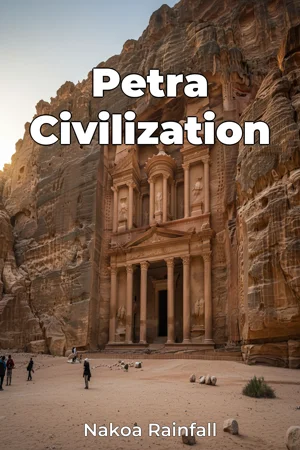
Imagine a city carved from sandstone cliffs, a testament to human ingenuity and adaptability. This is Petra, the lost city of the Nabataeans, and this book, "Petra Civilization," delves into the heart of this ancient marvel, exploring its architectural wonders, sophisticated trade networks, and enduring historical significance in the Middle East. We will explore how the Nabataeans transformed a harsh desert environment into a thriving metropolis. "Petra Civilization" examines three core aspects of Nabataean society. First, we analyze their advanced engineering capabilities, focusing on their mastery of water management and rock-cut architecture. Second, we investigate their intricate trade networks, revealing how Petra became a crucial hub connecting the East and West. Third, we assess Petra's crucial role within the broader historical context of the ancient Middle East and its lasting influence. Understanding Petra requires a grasp of the region's ancient history, including the rise and fall of neighboring empires and the nomadic traditions that shaped Nabataean culture. While prior knowledge of Middle Eastern history is helpful, this book provides the necessary context to appreciate the Nabataeans' unique achievements. The central argument of "Petra Civilization" is that the Nabataeans, through their innovative engineering, strategic trade practices, and political acumen, created a resilient and influential civilization that defied the limitations of their arid environment. This argument challenges conventional views of desert societies as passive recipients of outside influence, highlighting the Nabataeans' agency and contributions to regional development. The book is structured to provide a comprehensive understanding of Petra. It begins by introducing the Nabataeans, their origins, and their environment. The subsequent sections delve into specific aspects of their civilization: The book explores their mastery of hydraulic engineering, focusing on the dams, cisterns, and aqueducts that sustained Petra's population. It explores the architectural marvels of the city, highlighting the iconic Treasury, the Monastery, and the Royal Tombs. The book also analyses Petra's role as a vital commercial center, examining the trade routes, commodities, and cultural exchanges that flowed through the city. It concludes by examining the Nabataeans' interactions with the Roman Empire, their eventual decline, and Petra's rediscovery in modern times. The book's arguments are supported by archaeological evidence, including site excavations, inscriptions, and material artifacts. It also draws from ancient texts, such as the writings of Strabo and Pliny the Elder, to provide historical context. Unique data sources include detailed surveys of Petra's water systems and analyses of pottery and other artifacts that reveal insights into Nabataean trade and daily life. "Petra Civilization" connects to several other fields of study, including archaeology, architectural history, and economic history. By integrating insights from these disciplines, the book offers a holistic view of Nabataean society and its place in the ancient world. This book stands out for its focus on the Nabataeans' engineering achievements as a key factor in their success. It presents a detailed analysis of their water management systems and rock-cut architecture, highlighting their innovative solutions to the challenges of desert living. Written in an accessible and engaging style, "Petra Civilization" is designed for a broad audience, including students, scholars, and anyone interested in ancient history, archaeology, or the Middle East. It provides a comprehensive and up-to-date account of Petra and its civilization, making it a valuable resource for both academic research and general reading. As a work of historical non-fiction, "Petra Civilization" adheres to the conventions of scholarly research, including detailed citations, source analysis, and balanced presentation of different perspectives. However, it also aims to be engaging and accessible to a wider audience, presenting complex information in a clear and compelling manner. While the book covers all major aspects of Nabataean civilization, its primary focus is on Petra itself. It does not delve deeply into the broader history of the Nabataean kingdom or its other settlements. This deliberate limitation allows for a more in-depth exploration of Petra's unique features and its significance as a cultural and economic center. The lessons learned from the Nabataeans' sustainable water management practices and innovative architecture can be applied to modern challenges of urbanization and resource management. Their example offers valuable insights into how societies can adapt to harsh environments and create thriving communities. While much is known about the Nabataeans, there are still ongoing debates about their origins, their religious practices, and the reasons for their eventual decline. "Petra Civilization" addresses these controversies, presenting different viewpoints and encouraging readers to draw their own conclusions.
Imagine a city carved from sandstone cliffs, a testament to human ingenuity and adaptability. This is Petra, the lost city of the Nabataeans, and this book, "Petra Civilization," delves into the heart of this ancient marvel, exploring its architectural wonders, sophisticated trade networks, and enduring historical significance in the Middle East. We will explore how the Nabataeans transformed a harsh desert environment into a thriving metropolis. "Petra Civilization" examines three core aspects of Nabataean society. First, we analyze their advanced engineering capabilities, focusing on their mastery of water management and rock-cut architecture. Second, we investigate their intricate trade networks, revealing how Petra became a crucial hub connecting the East and West. Third, we assess Petra's crucial role within the broader historical context of the ancient Middle East and its lasting influence. Understanding Petra requires a grasp of the region's ancient history, including the rise and fall of neighboring empires and the nomadic traditions that shaped Nabataean culture. While prior knowledge of Middle Eastern history is helpful, this book provides the necessary context to appreciate the Nabataeans' unique achievements. The central argument of "Petra Civilization" is that the Nabataeans, through their innovative engineering, strategic trade practices, and political acumen, created a resilient and influential civilization that defied the limitations of their arid environment. This argument challenges conventional views of desert societies as passive recipients of outside influence, highlighting the Nabataeans' agency and contributions to regional development. The book is structured to provide a comprehensive understanding of Petra. It begins by introducing the Nabataeans, their origins, and their environment. The subsequent sections delve into specific aspects of their civilization: The book explores their mastery of hydraulic engineering, focusing on the dams, cisterns, and aqueducts that sustained Petra's population. It explores the architectural marvels of the city, highlighting the iconic Treasury, the Monastery, and the Royal Tombs. The book also analyses Petra's role as a vital commercial center, examining the trade routes, commodities, and cultural exchanges that flowed through the city. It concludes by examining the Nabataeans' interactions with the Roman Empire, their eventual decline, and Petra's rediscovery in modern times. The book's arguments are supported by archaeological evidence, including site excavations, inscriptions, and material artifacts. It also draws from ancient texts, such as the writings of Strabo and Pliny the Elder, to provide historical context. Unique data sources include detailed surveys of Petra's water systems and analyses of pottery and other artifacts that reveal insights into Nabataean trade and daily life. "Petra Civilization" connects to several other fields of study, including archaeology, architectural history, and economic history. By integrating insights from these disciplines, the book offers a holistic view of Nabataean society and its place in the ancient world. This book stands out for its focus on the Nabataeans' engineering achievements as a key factor in their success. It presents a detailed analysis of their water management systems and rock-cut architecture, highlighting their innovative solutions to the challenges of desert living. Written in an accessible and engaging style, "Petra Civilization" is designed for a broad audience, including students, scholars, and anyone interested in ancient history, archaeology, or the Middle East. It provides a comprehensive and up-to-date account of Petra and its civilization, making it a valuable resource for both academic research and general reading. As a work of historical non-fiction, "Petra Civilization" adheres to the conventions of scholarly research, including detailed citations, source analysis, and balanced presentation of different perspectives. However, it also aims to be engaging and accessible to a wider audience, presenting complex information in a clear and compelling manner. While the book covers all major aspects of Nabataean civilization, its primary focus is on Petra itself. It does not delve deeply into the broader history of the Nabataean kingdom or its other settlements. This deliberate limitation allows for a more in-depth exploration of Petra's unique features and its significance as a cultural and economic center. The lessons learned from the Nabataeans' sustainable water management practices and innovative architecture can be applied to modern challenges of urbanization and resource management. Their example offers valuable insights into how societies can adapt to harsh environments and create thriving communities. While much is known about the Nabataeans, there are still ongoing debates about their origins, their religious practices, and the reasons for their eventual decline. "Petra Civilization" addresses these controversies, presenting different viewpoints and encouraging readers to draw their own conclusions.
"Petra Civilization" unveils the secrets of Petra, the astonishing rock-cut city of the Nabataeans in the Ancient Middle East. This book explores how this civilization thrived in a harsh desert environment, showcasing their mastery of engineering, particularly their advanced water management systems which included intricate dams and aqueducts. The Nabataeans also developed complex trade networks, transforming Petra into a vital hub connecting East and West, influencing the historical significance of the region. The book delves into the architectural marvels of Petra, such as the Treasury and the Monastery, illustrating the Nabataeans' unique rock-cut architecture and engineering prowess. It presents archaeological evidence and ancient texts to support its analysis, emphasizing the civilization's ingenuity in adapting to the arid landscape. The book is structured to provide a comprehensive understanding, beginning with the Nabataeans' origins and environment, then exploring their engineering, trade, and interactions with the Roman Empire, ultimately leading to Petra's rediscovery. This book stands out by highlighting the Nabataeans' innovative engineering achievements as a key factor in their success. Through detailed analysis and an accessible writing style, "Petra Civilization" offers valuable insights into the ingenuity and resilience of this ancient culture, making it an essential read for anyone interested in architecture, history, and archaeology.
Book Details
ISBN
9788235233196
Publisher
Publifye AS
Your Licenses
You don't own any licenses for this book
Purchase a license below to unlock this book and download the EPUB.
Purchase License
Select a tier to unlock this book
Need bulk licensing?
Contact us for enterprise agreements.