
About This Book
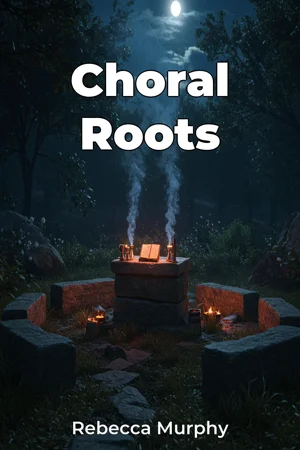
How did humanity first sing its soul? "Choral Roots" delves into the largely undocumented origins of choral music, tracing its development from early poetic utterances within ceremonial and musical contexts. This book examines how the innate human drive for communal expression manifested in structured vocalizations, ultimately laying the groundwork for the complex choral traditions we know today. Understanding these origins provides invaluable insight into the foundational role of music in shaping human culture and societal bonds. This work explores two primary concepts: the intertwining of early poetic forms with musical expression, and the function of these combined arts within ritualistic settings. The significance of these topics lies in their ability to shed light on the evolution of both music and poetry, revealing how they served as crucial tools for communication, spiritual connection, and social cohesion in pre-literate societies. Their prevalence also uncovers much about early societal structures. The book begins by establishing the historical and anthropological backdrop against which early choral music emerged. It investigates prehistoric and ancient cultures where archaeological and textual evidence suggests the presence of communal singing and chanting. This requires a grasp of basic musicological terminology, early poetic forms, and an understanding of ancient religious and social practices. The central argument of "Choral Roots" posits that the development of choral music was intrinsically linked to the creation and performance of early poetic forms within ceremonial contexts. It asserts that these early choral expressions were not merely artistic endeavors, but rather essential components of ritual practices, serving to reinforce communal identity, transmit cultural knowledge, and facilitate spiritual experiences. This argument is crucial because it challenges modern perceptions of choral music as solely an art form, highlighting its deeper roots in human social and spiritual life. The book unfolds in three major sections. First, it introduces the fundamental concepts of early poetic forms, musical structures, and ceremonial settings. Second, it examines specific historical examples of early choral practices, drawing upon archaeological findings, ancient texts, and ethnomusicological studies. This section encompasses Mesopotamia, Ancient Greece, and early Hebrew traditions. Third, the book analyzes the lasting impact of these early choral roots on the development of Western musical traditions, highlighting the continuity of certain musical and poetic elements across millennia. The arguments presented in "Choral Roots" are substantiated by a diverse range of evidence, including analyses of ancient musical instruments, interpretations of religious texts, and comparisons of contemporary ethnomusicological studies of cultures with unbroken oral traditions. It utilizes an interdisciplinary approach, drawing upon musicology, history, anthropology, and religious studies to provide a holistic understanding of the subject matter. This book connects to the fields of anthropology by considering various cultural rituals and their poetic and musical components. It also connects to religious studies by examining how music and poetry were initially intertwined with spiritual practices. These connections enrich the book's arguments by situating the development of choral music within a broader framework of human cultural and spiritual evolution. "Choral Roots" offers a unique perspective by approaching the study of choral music not just from a musical standpoint, but also through the lens of early poetic forms and ceremonial function. This perspective allows for a deeper understanding of the social and spiritual significance of choral music's origins. The book employs a scholarly yet accessible writing style, aiming to engage readers with a blend of historical analysis and insightful interpretation. It targets music scholars, historians, choral directors, and anyone interested in the origins of music and its role in human culture. This book is valuable to these readers as it provides a comprehensive overview of the topic, shedding light on the often-overlooked origins of choral music and offering new perspectives on its significance. As a work of historical musicology, "Choral Roots" adheres to the conventions of rigorous research, detailed documentation, and scholarly analysis. It aims for extensive coverage while acknowledging certain limitations, primarily the scarcity of direct evidence from the earliest periods of human history. The scope is limited to traditions that predate the common era. The information in this book can be applied practically by choral directors seeking to enrich their understanding of the music they perform, and by educators seeking to incorporate a broader historical and cultural perspective into their teaching. While this book focuses on tracing the origins and development of choral music, it also acknowledges ongoing debates within the field regarding the interpretation of limited historical evidence and the reconstruction of ancient musical practices.
How did humanity first sing its soul? "Choral Roots" delves into the largely undocumented origins of choral music, tracing its development from early poetic utterances within ceremonial and musical contexts. This book examines how the innate human drive for communal expression manifested in structured vocalizations, ultimately laying the groundwork for the complex choral traditions we know today. Understanding these origins provides invaluable insight into the foundational role of music in shaping human culture and societal bonds. This work explores two primary concepts: the intertwining of early poetic forms with musical expression, and the function of these combined arts within ritualistic settings. The significance of these topics lies in their ability to shed light on the evolution of both music and poetry, revealing how they served as crucial tools for communication, spiritual connection, and social cohesion in pre-literate societies. Their prevalence also uncovers much about early societal structures. The book begins by establishing the historical and anthropological backdrop against which early choral music emerged. It investigates prehistoric and ancient cultures where archaeological and textual evidence suggests the presence of communal singing and chanting. This requires a grasp of basic musicological terminology, early poetic forms, and an understanding of ancient religious and social practices. The central argument of "Choral Roots" posits that the development of choral music was intrinsically linked to the creation and performance of early poetic forms within ceremonial contexts. It asserts that these early choral expressions were not merely artistic endeavors, but rather essential components of ritual practices, serving to reinforce communal identity, transmit cultural knowledge, and facilitate spiritual experiences. This argument is crucial because it challenges modern perceptions of choral music as solely an art form, highlighting its deeper roots in human social and spiritual life. The book unfolds in three major sections. First, it introduces the fundamental concepts of early poetic forms, musical structures, and ceremonial settings. Second, it examines specific historical examples of early choral practices, drawing upon archaeological findings, ancient texts, and ethnomusicological studies. This section encompasses Mesopotamia, Ancient Greece, and early Hebrew traditions. Third, the book analyzes the lasting impact of these early choral roots on the development of Western musical traditions, highlighting the continuity of certain musical and poetic elements across millennia. The arguments presented in "Choral Roots" are substantiated by a diverse range of evidence, including analyses of ancient musical instruments, interpretations of religious texts, and comparisons of contemporary ethnomusicological studies of cultures with unbroken oral traditions. It utilizes an interdisciplinary approach, drawing upon musicology, history, anthropology, and religious studies to provide a holistic understanding of the subject matter. This book connects to the fields of anthropology by considering various cultural rituals and their poetic and musical components. It also connects to religious studies by examining how music and poetry were initially intertwined with spiritual practices. These connections enrich the book's arguments by situating the development of choral music within a broader framework of human cultural and spiritual evolution. "Choral Roots" offers a unique perspective by approaching the study of choral music not just from a musical standpoint, but also through the lens of early poetic forms and ceremonial function. This perspective allows for a deeper understanding of the social and spiritual significance of choral music's origins. The book employs a scholarly yet accessible writing style, aiming to engage readers with a blend of historical analysis and insightful interpretation. It targets music scholars, historians, choral directors, and anyone interested in the origins of music and its role in human culture. This book is valuable to these readers as it provides a comprehensive overview of the topic, shedding light on the often-overlooked origins of choral music and offering new perspectives on its significance. As a work of historical musicology, "Choral Roots" adheres to the conventions of rigorous research, detailed documentation, and scholarly analysis. It aims for extensive coverage while acknowledging certain limitations, primarily the scarcity of direct evidence from the earliest periods of human history. The scope is limited to traditions that predate the common era. The information in this book can be applied practically by choral directors seeking to enrich their understanding of the music they perform, and by educators seeking to incorporate a broader historical and cultural perspective into their teaching. While this book focuses on tracing the origins and development of choral music, it also acknowledges ongoing debates within the field regarding the interpretation of limited historical evidence and the reconstruction of ancient musical practices.
"Choral Roots" explores the largely undocumented origins of choral music, tracing its evolution from early poetic expressions within ceremonial and ritual music settings. Delving into ancient cultures, the book reveals how the human need for communal expression manifested in structured vocalizations, forming the basis for complex choral traditions. Intriguingly, early choral expressions weren't mere artistic endeavors; they were essential components of ritual practices, reinforcing communal identity and transmitting cultural knowledge. The book uniquely approaches choral music through the lenses of early poetic forms and ceremonial functions. It begins by establishing a historical and anthropological backdrop, then examines specific examples from Mesopotamia, Ancient Greece, and early Hebrew traditions. It then analyzes the lasting impact of these early choral roots on Western musical traditions. This interdisciplinary approach, combining musicology, history, and anthropology, provides a holistic understanding of choral music's significance and its intertwining with religious music.
Book Details
ISBN
9788235233004
Publisher
Publifye AS
Your Licenses
You don't own any licenses for this book
Purchase a license below to unlock this book and download the EPUB.
Purchase License
Select a tier to unlock this book
Need bulk licensing?
Contact us for enterprise agreements.