
About This Book
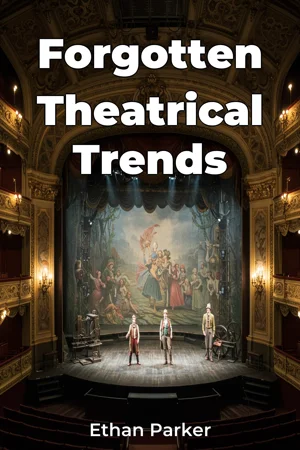
What happened to Pepper's Ghost on the Victorian stage, or the once-ubiquitous practice of actors directly addressing the audience? "Forgotten Theatrical Trends" explores the captivating world of performance styles, stagecraft innovations, and narrative techniques that have faded from contemporary theatrical practice. This book delves into the historical context and lasting impact of theatrical conventions that, while no longer commonplace, significantly shaped the evolution of dramatic presentation. This book examines the rise and fall of specific theatrical trends: the dominance of melodrama with its exaggerated acting styles and moralistic tales; the spectacle-driven productions made possible by advancements in stage machinery and lighting; and the varied uses of direct address, from the aside to the full-blown prologue, in engaging the audience. These topics are important because they offer insight into how theatrical tastes and practices evolve, reflecting changing social values, technological capabilities, and artistic priorities. Understanding these forgotten trends provides a richer appreciation of the theatrical landscape and informs contemporary performance. The historical context encompasses the 18th, 19th, and early 20th centuries, a period of rapid industrialization, social change, and technological innovation that profoundly impacted the performing arts. The reader will benefit from a basic understanding of Western theatrical history, including knowledge of key playwrights, movements, and theatrical spaces of these eras. The central argument of "Forgotten Theatrical Trends" is that the evolution of theatre is not simply a linear progression toward realism or contemporary forms. Instead, theatrical history is characterized by cycles of innovation, adaptation, and obsolescence, where once-popular techniques are replaced or re-invented based on evolving cultural needs and artistic visions. By examining these discarded trends, we gain a deeper understanding of the continuous negotiation between theatrical convention and audience expectation. The book is structured to first introduce the concept of theatrical trends and their historical context. It then explores the development of ideas through focused chapters on specific trends, such as the mechanics of stage illusion and the narrative function of direct address. The book will culminate in an overview analyzing how the disappearance of these trends may influence modern theatre. Finally it will look at the potential application of these forgotten techniques. The evidence presented comprises historical documents, play scripts, theatre reviews, technical manuals, and visual materials like set designs and photographs. Unique data sources include digitized archives of 19th-century theatre ephemera and newly translated foreign treatises on stagecraft. These sources will be analyzed using historical and performance studies methodologies. "Forgotten Theatrical Trends" connects to other fields, including media studies (examining the relationship between theatre and emerging technologies), sociology (analyzing the reflection of social values in theatrical practices), and cultural studies (exploring the evolution of taste and aesthetics). These connections enrich the book's argument by providing a broader understanding of the socio-cultural forces impacting theatrical change. This book will stand out by providing a detailed synthesis of diverse sources to offer a fresh perspective on the ever-changing theatrical landscape. The tone of the book will be academic yet accessible, aiming to engage readers with vivid descriptions and clear explanations. The target audience includes theatre students, scholars, practitioners, and enthusiasts interested in understanding the historical roots of contemporary performance. This book would be valuable because it offers a new perspective on the evolution of theatre. As a work of non-fiction in the performing arts and history genres, the book will adhere to scholarly standards of research, documentation, and objectivity. The scope of the book is limited to Western theatrical traditions, with a primary focus on trends that emerged and declined between the 18th and early 20th centuries. The information presented can be applied practically by contemporary theatre practitioners seeking inspiration from past techniques or by scholars researching the historical context of specific plays or performance styles. While this book does not focus on specific controversies, it touches on debates within theatre history regarding the merits of realism versus theatricalism, the role of technology in performance, and the evolving relationship between performers and audiences.
What happened to Pepper's Ghost on the Victorian stage, or the once-ubiquitous practice of actors directly addressing the audience? "Forgotten Theatrical Trends" explores the captivating world of performance styles, stagecraft innovations, and narrative techniques that have faded from contemporary theatrical practice. This book delves into the historical context and lasting impact of theatrical conventions that, while no longer commonplace, significantly shaped the evolution of dramatic presentation. This book examines the rise and fall of specific theatrical trends: the dominance of melodrama with its exaggerated acting styles and moralistic tales; the spectacle-driven productions made possible by advancements in stage machinery and lighting; and the varied uses of direct address, from the aside to the full-blown prologue, in engaging the audience. These topics are important because they offer insight into how theatrical tastes and practices evolve, reflecting changing social values, technological capabilities, and artistic priorities. Understanding these forgotten trends provides a richer appreciation of the theatrical landscape and informs contemporary performance. The historical context encompasses the 18th, 19th, and early 20th centuries, a period of rapid industrialization, social change, and technological innovation that profoundly impacted the performing arts. The reader will benefit from a basic understanding of Western theatrical history, including knowledge of key playwrights, movements, and theatrical spaces of these eras. The central argument of "Forgotten Theatrical Trends" is that the evolution of theatre is not simply a linear progression toward realism or contemporary forms. Instead, theatrical history is characterized by cycles of innovation, adaptation, and obsolescence, where once-popular techniques are replaced or re-invented based on evolving cultural needs and artistic visions. By examining these discarded trends, we gain a deeper understanding of the continuous negotiation between theatrical convention and audience expectation. The book is structured to first introduce the concept of theatrical trends and their historical context. It then explores the development of ideas through focused chapters on specific trends, such as the mechanics of stage illusion and the narrative function of direct address. The book will culminate in an overview analyzing how the disappearance of these trends may influence modern theatre. Finally it will look at the potential application of these forgotten techniques. The evidence presented comprises historical documents, play scripts, theatre reviews, technical manuals, and visual materials like set designs and photographs. Unique data sources include digitized archives of 19th-century theatre ephemera and newly translated foreign treatises on stagecraft. These sources will be analyzed using historical and performance studies methodologies. "Forgotten Theatrical Trends" connects to other fields, including media studies (examining the relationship between theatre and emerging technologies), sociology (analyzing the reflection of social values in theatrical practices), and cultural studies (exploring the evolution of taste and aesthetics). These connections enrich the book's argument by providing a broader understanding of the socio-cultural forces impacting theatrical change. This book will stand out by providing a detailed synthesis of diverse sources to offer a fresh perspective on the ever-changing theatrical landscape. The tone of the book will be academic yet accessible, aiming to engage readers with vivid descriptions and clear explanations. The target audience includes theatre students, scholars, practitioners, and enthusiasts interested in understanding the historical roots of contemporary performance. This book would be valuable because it offers a new perspective on the evolution of theatre. As a work of non-fiction in the performing arts and history genres, the book will adhere to scholarly standards of research, documentation, and objectivity. The scope of the book is limited to Western theatrical traditions, with a primary focus on trends that emerged and declined between the 18th and early 20th centuries. The information presented can be applied practically by contemporary theatre practitioners seeking inspiration from past techniques or by scholars researching the historical context of specific plays or performance styles. While this book does not focus on specific controversies, it touches on debates within theatre history regarding the merits of realism versus theatricalism, the role of technology in performance, and the evolving relationship between performers and audiences.
"Forgotten Theatrical Trends" unearths the captivating history of performance styles and stagecraft innovations that once dominated Western theatre traditions but have since faded. The book delves into theatrical conventions of the 18th, 19th, and early 20th centuries, revealing how forgotten techniques like direct address and elaborate stage machinery shaped dramatic presentation. It highlights the cyclical nature of theatre history, where trends rise, fall, and sometimes re-emerge, reflecting evolving social values and artistic priorities. For example, the once-popular "Pepper's Ghost" illusion captivated audiences, showcasing the era’s fascination with spectacle. Exploring the dominance of melodrama and the narrative power of direct address, the book analyzes digitized archives and historical documents to offer a fresh perspective on theatre history. Each chapter focuses on specific trends, building towards an overview of how their disappearance influences modern theatre. By examining these discarded techniques, "Forgotten Theatrical Trends" provides theatre students, scholars, and enthusiasts with a deeper understanding of the ever-changing theatrical landscape.
Book Details
ISBN
9788235232939
Publisher
Publifye AS
Your Licenses
You don't own any licenses for this book
Purchase a license below to unlock this book and download the EPUB.
Purchase License
Select a tier to unlock this book
Need bulk licensing?
Contact us for enterprise agreements.