
About This Book
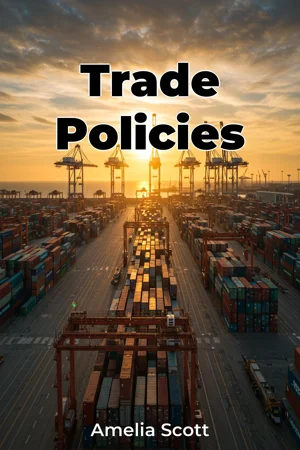
How do international trade agreements truly impact national economies, and are current tariff structures genuinely serving their intended purpose? "Trade Policies" explores the intricate world of global commerce, providing a comprehensive analysis of the agreements, tariffs, and economic policies that shape international trade. This book examines the complex interplay between economics and politics, shedding light on the forces that drive global trade dynamics. "Trade Policies" focuses on three key areas: the architecture of international trade agreements such as the WTO and regional trade blocs; the economic effects of tariffs and non-tariff barriers; and the policy decisions that nations make to promote or protect their industries. These topics are vital because international trade profoundly affects economic growth, employment, and the distribution of wealth both within and between countries. Understanding these dynamics is crucial for policymakers, businesses, and anyone interested in the global economy. To understand these contemporary issues, this book also delves into the historical evolution of trade policies, from the mercantilist era to the modern age of globalization. It examines the theoretical underpinnings of free trade versus protectionism, drawing on the work of economists like Adam Smith, David Ricardo, and subsequent scholars. Readers should have a basic understanding of economic principles such as supply and demand, comparative advantage, and GDP, as well as a general awareness of current geopolitical dynamics. The central argument of "Trade Policies" asserts that while international trade, in principle, offers significant benefits, its actual impact is heavily influenced by the design and implementation of trade policies, which often reflect political considerations and power dynamics rather than purely economic efficiency. The book contends that a nuanced understanding of these policies is essential for navigating the complexities of the global economy and ensuring that trade benefits are broadly shared. The book is structured in three parts. Part I introduces the main concepts and theoretical frameworks, providing a foundation for understanding international trade. Part II delves into specific trade policies, analyzing the effects of tariffs, quotas, subsidies, and other trade barriers. It also examines the role of international organizations like the World Trade Organization (WTO) and the impact of regional trade agreements such as NAFTA/USMCA and the EU. Part III explores case studies of different countries and industries, illustrating how trade policies have shaped their economic development and international competitiveness. The book culminates with a discussion of the challenges and opportunities facing the global trading system in the 21st century, including issues such as climate change, technological disruption, and rising economic inequality. The book relies on a range of evidence to support its arguments, including statistical data from international organizations such as the World Bank, the IMF, and the WTO; empirical studies on the effects of trade policies; and case studies of specific industries and countries. It also draws on legal and policy documents related to international trade agreements, providing a comprehensive and multi-faceted analysis. "Trade Policies" connects to several other fields of study, including international relations, political science, and development economics. The book also explores links to law, specifically concerning international trade law and the dispute resolution mechanisms within the WTO. Furthermore, it touches upon aspects of environmental economics, particularly the impact of trade on environmental sustainability and the role of trade policies in addressing climate change. These connections enrich the book's analysis, providing a more holistic understanding of international trade. This book offers a unique perspective by combining rigorous economic analysis with a critical examination of the political and social factors that shape trade policies. It moves beyond simplistic arguments for or against free trade, offering a nuanced assessment of the conditions under which trade can promote inclusive growth and sustainable development. The tone of the book is academic yet accessible. It aims to present complex information in a clear and engaging manner, making it suitable for a wide audience. The writing style is formal and objective, avoiding jargon and technical terms whenever possible. The target audience includes students of economics, political science, and international relations; policymakers and government officials involved in trade negotiations; business professionals engaged in international trade; and anyone interested in understanding the forces shaping the global economy. As a work of non-fiction within the economics and politics genres, "Trade Policies" avoids speculative or opinion-based arguments, relying instead on empirical evidence and rigorous analysis. It adheres to the conventions of academic scholarship, providing detailed citations and references to support its claims. The scope of "Trade Policies" is broad, covering a wide range of trade policies and issues. However, it focuses primarily on the economic and political aspects of trade, without delving into the technical details of international finance or supply chain management. While global in scope, it gives more weight to trade policies of larger economies with significant global impact. The information provided in "Trade Policies" can be applied practically by policymakers seeking to design more effective trade policies, by businesses seeking to navigate the complexities of the global trading system, and by citizens seeking to understand the forces shaping their economic future. The book also addresses ongoing debates in the field of international trade, such as the impact of trade on income inequality, the role of trade in promoting or hindering environmental sustainability, and the future of the WTO in a world of rising protectionism and geopolitical tensions.
How do international trade agreements truly impact national economies, and are current tariff structures genuinely serving their intended purpose? "Trade Policies" explores the intricate world of global commerce, providing a comprehensive analysis of the agreements, tariffs, and economic policies that shape international trade. This book examines the complex interplay between economics and politics, shedding light on the forces that drive global trade dynamics. "Trade Policies" focuses on three key areas: the architecture of international trade agreements such as the WTO and regional trade blocs; the economic effects of tariffs and non-tariff barriers; and the policy decisions that nations make to promote or protect their industries. These topics are vital because international trade profoundly affects economic growth, employment, and the distribution of wealth both within and between countries. Understanding these dynamics is crucial for policymakers, businesses, and anyone interested in the global economy. To understand these contemporary issues, this book also delves into the historical evolution of trade policies, from the mercantilist era to the modern age of globalization. It examines the theoretical underpinnings of free trade versus protectionism, drawing on the work of economists like Adam Smith, David Ricardo, and subsequent scholars. Readers should have a basic understanding of economic principles such as supply and demand, comparative advantage, and GDP, as well as a general awareness of current geopolitical dynamics. The central argument of "Trade Policies" asserts that while international trade, in principle, offers significant benefits, its actual impact is heavily influenced by the design and implementation of trade policies, which often reflect political considerations and power dynamics rather than purely economic efficiency. The book contends that a nuanced understanding of these policies is essential for navigating the complexities of the global economy and ensuring that trade benefits are broadly shared. The book is structured in three parts. Part I introduces the main concepts and theoretical frameworks, providing a foundation for understanding international trade. Part II delves into specific trade policies, analyzing the effects of tariffs, quotas, subsidies, and other trade barriers. It also examines the role of international organizations like the World Trade Organization (WTO) and the impact of regional trade agreements such as NAFTA/USMCA and the EU. Part III explores case studies of different countries and industries, illustrating how trade policies have shaped their economic development and international competitiveness. The book culminates with a discussion of the challenges and opportunities facing the global trading system in the 21st century, including issues such as climate change, technological disruption, and rising economic inequality. The book relies on a range of evidence to support its arguments, including statistical data from international organizations such as the World Bank, the IMF, and the WTO; empirical studies on the effects of trade policies; and case studies of specific industries and countries. It also draws on legal and policy documents related to international trade agreements, providing a comprehensive and multi-faceted analysis. "Trade Policies" connects to several other fields of study, including international relations, political science, and development economics. The book also explores links to law, specifically concerning international trade law and the dispute resolution mechanisms within the WTO. Furthermore, it touches upon aspects of environmental economics, particularly the impact of trade on environmental sustainability and the role of trade policies in addressing climate change. These connections enrich the book's analysis, providing a more holistic understanding of international trade. This book offers a unique perspective by combining rigorous economic analysis with a critical examination of the political and social factors that shape trade policies. It moves beyond simplistic arguments for or against free trade, offering a nuanced assessment of the conditions under which trade can promote inclusive growth and sustainable development. The tone of the book is academic yet accessible. It aims to present complex information in a clear and engaging manner, making it suitable for a wide audience. The writing style is formal and objective, avoiding jargon and technical terms whenever possible. The target audience includes students of economics, political science, and international relations; policymakers and government officials involved in trade negotiations; business professionals engaged in international trade; and anyone interested in understanding the forces shaping the global economy. As a work of non-fiction within the economics and politics genres, "Trade Policies" avoids speculative or opinion-based arguments, relying instead on empirical evidence and rigorous analysis. It adheres to the conventions of academic scholarship, providing detailed citations and references to support its claims. The scope of "Trade Policies" is broad, covering a wide range of trade policies and issues. However, it focuses primarily on the economic and political aspects of trade, without delving into the technical details of international finance or supply chain management. While global in scope, it gives more weight to trade policies of larger economies with significant global impact. The information provided in "Trade Policies" can be applied practically by policymakers seeking to design more effective trade policies, by businesses seeking to navigate the complexities of the global trading system, and by citizens seeking to understand the forces shaping their economic future. The book also addresses ongoing debates in the field of international trade, such as the impact of trade on income inequality, the role of trade in promoting or hindering environmental sustainability, and the future of the WTO in a world of rising protectionism and geopolitical tensions.
"Trade Policies" offers a comprehensive exploration of global commerce, dissecting the agreements, tariffs, and policies that define international trade. It delves into the interplay between economics and politics, revealing how they shape global trade dynamics. For instance, while international trade theoretically boosts economies, its real-world impact hinges on policy implementation, often swayed by political agendas rather than pure economic efficiency. The book uniquely combines rigorous economic analysis with a critical examination of the political and social influences on trade policies. The book progresses systematically, beginning with foundational concepts and theoretical frameworks necessary for understanding international trade. It then analyzes specific trade policies, like tariffs and subsidies, and the roles of organizations such as the WTO. Case studies from various countries and industries illustrate how trade policies impact economic development and international competitiveness. Readers will discover how historical trade policies have evolved from mercantilism to modern globalization, and how factors like climate change and economic inequality influence trade systems today.
Book Details
ISBN
9788235232809
Publisher
Publifye AS
Your Licenses
You don't own any licenses for this book
Purchase a license below to unlock this book and download the EPUB.
Purchase License
Select a tier to unlock this book
Need bulk licensing?
Contact us for enterprise agreements.