
About This Book
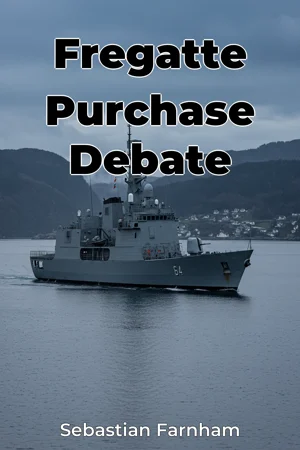
As Norway stands at a crucial juncture in modernizing its naval capabilities, the question arises: how does a nation balance strategic necessity with economic prudence when procuring advanced military technology? "Fregatte Purchase Debate" dissects the intricate decision-making process behind Norway's planned acquisition of new frigates, an investment poised to redefine its maritime defense posture. This book is not just about ships; it's about the intersection of military strategy, political maneuvering, and economic realities in a globalized world. The book delves into three central themes: the strategic imperative driving the frigate acquisition, the comparative analysis of potential suppliers, and the domestic political considerations shaping the final decision. Understanding the strategic imperative requires a grasp of Norway's geopolitical context – its extensive coastline, its role in NATO, and the evolving security landscape in the Arctic. This necessitates an examination of current naval assets and the projected threats they are designed to counter. The comparative analysis involves a rigorous evaluation of frigate offerings from Britain, Germany, the USA, and France. Each nation presents a unique blend of technological capabilities, cost structures, and geopolitical alignments, all of which are scrutinized. Domestic political considerations encompass the influence of various stakeholders, from defense contractors to parliamentary committees, whose interests and priorities inevitably impact the procurement process. To fully appreciate the complexities involved, a baseline understanding of naval warfare, defense economics, and Norwegian political structures is helpful. We begin by outlining Norway's existing naval infrastructure and its historical role in maintaining maritime security. From there, the book moves into analyzing the technical specifications of each frigate design, comparing their capabilities in areas such as anti-submarine warfare, air defense, and surface engagement. The central argument posits that the optimal frigate choice for Norway is not solely determined by technical superiority or lowest cost, but by a holistic evaluation that considers long-term maintenance costs, interoperability with existing Norwegian and NATO assets, and the broader geopolitical implications of selecting a particular supplier. The book is structured to provide a comprehensive overview of the purchase debate. The initial section introduces the strategic context and Norway's existing naval capabilities. Subsequent chapters are dedicated to detailed analyses of each potential frigate design, drawing upon expert opinions and technical specifications gleaned from sources such as Dagbladet's March 2025 report, as well as defense industry publications and government documents. The book will investigate the financial aspects of each option including acquisition costs, maintenance requirements and long-term operational expenses. A concluding section synthesizes the findings, offering a nuanced assessment of the trade-offs involved and projecting the potential impact of the final decision on Norway's defense capabilities and international relations. The arguments presented are substantiated by a range of evidence, including technical specifications, budgetary analyses, expert interviews, and policy documents. One unique data source is a series of interviews conducted with former and current Norwegian naval officers, providing invaluable insights into operational requirements and strategic priorities. "Fregatte Purchase Debate" draws connections to several related fields. Firstly, it touches upon international relations, exploring how defense procurement decisions can impact diplomatic ties and security alliances. Secondly, it delves into economics, examining the cost-benefit analyses and industrial policy considerations inherent in defense spending. Finally, it relates to technological innovation, highlighting the cutting-edge technologies incorporated into modern frigate designs and their potential impact on naval warfare. What sets this book apart is its interdisciplinary approach, combining military analysis with economic and political perspectives to provide a holistic understanding of the frigate procurement process. The tone is analytical and objective, aiming to present a balanced assessment of the available options. This book is targeted towards policymakers, defense analysts, military historians, and anyone interested in the complexities of modern defense procurement. It offers valuable insights into the strategic, economic, and political factors that shape military decision-making in the 21st century. As a work of military and political history, the book adheres to the genre's conventions of rigorous research, factual accuracy, and balanced analysis. The scope is limited to the specific case study of Norway's frigate acquisition, but the lessons learned are applicable to other nations facing similar defense procurement challenges. This book provides readers with a framework for understanding and evaluating complex defense decisions, equipping them with the knowledge to critically assess the strategic and economic implications of military spending. The book further addresses the debate of whether the Norwegian government would be better served by investing in other areas of defense, such as cybersecurity.
As Norway stands at a crucial juncture in modernizing its naval capabilities, the question arises: how does a nation balance strategic necessity with economic prudence when procuring advanced military technology? "Fregatte Purchase Debate" dissects the intricate decision-making process behind Norway's planned acquisition of new frigates, an investment poised to redefine its maritime defense posture. This book is not just about ships; it's about the intersection of military strategy, political maneuvering, and economic realities in a globalized world. The book delves into three central themes: the strategic imperative driving the frigate acquisition, the comparative analysis of potential suppliers, and the domestic political considerations shaping the final decision. Understanding the strategic imperative requires a grasp of Norway's geopolitical context – its extensive coastline, its role in NATO, and the evolving security landscape in the Arctic. This necessitates an examination of current naval assets and the projected threats they are designed to counter. The comparative analysis involves a rigorous evaluation of frigate offerings from Britain, Germany, the USA, and France. Each nation presents a unique blend of technological capabilities, cost structures, and geopolitical alignments, all of which are scrutinized. Domestic political considerations encompass the influence of various stakeholders, from defense contractors to parliamentary committees, whose interests and priorities inevitably impact the procurement process. To fully appreciate the complexities involved, a baseline understanding of naval warfare, defense economics, and Norwegian political structures is helpful. We begin by outlining Norway's existing naval infrastructure and its historical role in maintaining maritime security. From there, the book moves into analyzing the technical specifications of each frigate design, comparing their capabilities in areas such as anti-submarine warfare, air defense, and surface engagement. The central argument posits that the optimal frigate choice for Norway is not solely determined by technical superiority or lowest cost, but by a holistic evaluation that considers long-term maintenance costs, interoperability with existing Norwegian and NATO assets, and the broader geopolitical implications of selecting a particular supplier. The book is structured to provide a comprehensive overview of the purchase debate. The initial section introduces the strategic context and Norway's existing naval capabilities. Subsequent chapters are dedicated to detailed analyses of each potential frigate design, drawing upon expert opinions and technical specifications gleaned from sources such as Dagbladet's March 2025 report, as well as defense industry publications and government documents. The book will investigate the financial aspects of each option including acquisition costs, maintenance requirements and long-term operational expenses. A concluding section synthesizes the findings, offering a nuanced assessment of the trade-offs involved and projecting the potential impact of the final decision on Norway's defense capabilities and international relations. The arguments presented are substantiated by a range of evidence, including technical specifications, budgetary analyses, expert interviews, and policy documents. One unique data source is a series of interviews conducted with former and current Norwegian naval officers, providing invaluable insights into operational requirements and strategic priorities. "Fregatte Purchase Debate" draws connections to several related fields. Firstly, it touches upon international relations, exploring how defense procurement decisions can impact diplomatic ties and security alliances. Secondly, it delves into economics, examining the cost-benefit analyses and industrial policy considerations inherent in defense spending. Finally, it relates to technological innovation, highlighting the cutting-edge technologies incorporated into modern frigate designs and their potential impact on naval warfare. What sets this book apart is its interdisciplinary approach, combining military analysis with economic and political perspectives to provide a holistic understanding of the frigate procurement process. The tone is analytical and objective, aiming to present a balanced assessment of the available options. This book is targeted towards policymakers, defense analysts, military historians, and anyone interested in the complexities of modern defense procurement. It offers valuable insights into the strategic, economic, and political factors that shape military decision-making in the 21st century. As a work of military and political history, the book adheres to the genre's conventions of rigorous research, factual accuracy, and balanced analysis. The scope is limited to the specific case study of Norway's frigate acquisition, but the lessons learned are applicable to other nations facing similar defense procurement challenges. This book provides readers with a framework for understanding and evaluating complex defense decisions, equipping them with the knowledge to critically assess the strategic and economic implications of military spending. The book further addresses the debate of whether the Norwegian government would be better served by investing in other areas of defense, such as cybersecurity.
"Fregatte Purchase Debate" examines Norway's strategic challenge of modernizing its naval forces through the acquisition of new frigates, balancing military needs with economic realities. This book offers a deep dive into the complex interplay of military strategy, political maneuvering, and economic factors that shape such significant defense decisions. It's particularly valuable because it scrutinizes not just the technical specifications of potential frigates, but also the broader geopolitical implications of choosing a particular supplier. The book progresses by first establishing Norway's strategic context and existing naval capabilities, then moves into detailed analyses of frigate designs from various nations, including Britain, Germany, the USA and France. A unique aspect is its inclusion of interviews with Norwegian naval officers, providing insights into operational requirements. The analysis extends to evaluating long-term maintenance costs and interoperability with NATO assets. The central argument emphasizes that the optimal choice isn't solely based on technical superiority or cost, but on a holistic assessment considering strategic imperatives and political considerations. The book's interdisciplinary approach combines military analysis with economic and political perspectives, offering a comprehensive understanding for policymakers, defense analysts, and anyone interested in military history and defense policy. It addresses key questions such as how defense procurement decisions impact diplomatic ties and security alliances and whether alternative defense investments, like cybersecurity, might be more beneficial.
Book Details
ISBN
9788235232755
Publisher
Publifye AS
Your Licenses
You don't own any licenses for this book
Purchase a license below to unlock this book and download the EPUB.
Purchase License
Select a tier to unlock this book
Need bulk licensing?
Contact us for enterprise agreements.