
About This Book
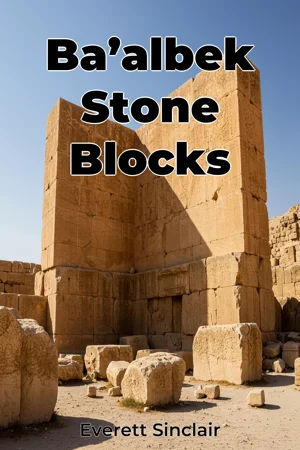
How were colossal stone blocks, some weighing over a thousand tons, moved and meticulously arranged to form the monumental structures of Ba’albek? This book, "Ba’albek Stone Blocks," delves into the enduring mystery of this ancient construction site, examining the techniques and technological capabilities that enabled the creation of one of the most impressive architectural achievements in human history. We will explore not just the "how," but also the "why" and "when" of Ba’albek’s construction, offering a comprehensive analysis grounded in archaeological evidence and engineering principles. The book focuses on three key areas: the quarrying and transportation of the massive blocks, the precision of their placement and arrangement, and the socio-political context that drove the construction of such a monumental complex. Understanding these elements is vital for grasping the full scope of the engineering feat at Ba’albek and its significance within the broader landscape of ancient architecture. To fully appreciate the challenges and innovations involved, the book provides historical context, outlining the Roman influence in the region, the religious significance of the site, and the evolution of construction technologies during that era. Familiarity with basic principles of Roman engineering and logistical organization will prove beneficial. The central thesis of "Ba’albek Stone Blocks" posits that the construction of these megastructures resulted from a combination of advanced, though not necessarily mystical, engineering techniques, meticulous planning, and a highly organized labor force, all driven by the imperial ambitions and religious zeal of the Roman Empire. We argue that understanding the interplay of these factors is crucial to demystifying the site without diminishing its architectural grandeur. The book unfolds in a structured manner. It begins with an introduction to the Ba’albek site, its historical background, and the enigma surrounding the movement and placement of the megalithic stones. The second section examines the quarries from which the stones were extracted, detailing the tools and methods likely used in the process. This section will also delve into the processes of transporting the blocks. The third section focuses on the construction techniques employed in arranging the blocks. This section examines the precision fitting of the stones, including the Trilithon, and discusses the possible use of ramps, levers, and other mechanical aids. The book concludes by synthesizing the evidence, offering a detailed reconstruction of the construction process, and reflecting on the legacy of Ba’albek as a testament to human ingenuity and ambition. Our analysis draws upon a wide array of evidence, including archaeological surveys of the site and surrounding quarries, detailed examination of the stone blocks themselves, comparative studies of Roman construction techniques, and historical texts that provide insights into the social and political climate of the time. We incorporate recent geological analysis of the stones to pinpoint their origin and shed light on the logistical challenges of their transport. "Ba’albek Stone Blocks" also connects to other fields of study, including: history, examining the Roman influence in the Levant; sociology, exploring the organization of labor and resources required for such large-scale projects; and geology. These interdisciplinary connections enrich our understanding of the construction process and its broader implications. A unique aspect of this book is its emphasis on practical, engineering-based explanations for the construction methods employed. The book avoids speculative theories lacking concrete evidence, instead focusing on plausible scenarios supported by archaeological data and engineering principles. Written in an accessible yet scholarly style, "Ba’albek Stone Blocks" is intended for a broad audience, including architecture enthusiasts, history buffs, archaeology students, and anyone intrigued by ancient mysteries. The book offers a valuable resource for understanding the technical and logistical challenges of constructing monumental structures in antiquity. This book provides a thorough examination of the topic, focusing specifically on the movement and arrangement of the stone blocks at Ba’albek. While we acknowledge the broader historical and religious significance of the site, the book's primary focus remains on the engineering aspects of its construction. The knowledge gained from studying Ba’albek can be applied to understanding other ancient construction sites and to informing contemporary engineering practices, particularly in the field of heavy lifting and materials transportation. The construction of Ba’albek has been the subject of numerous theories, some bordering on the fringe. This book acknowledges these alternative viewpoints but offers a critical evaluation based on scientific evidence and established historical and engineering principles.
How were colossal stone blocks, some weighing over a thousand tons, moved and meticulously arranged to form the monumental structures of Ba’albek? This book, "Ba’albek Stone Blocks," delves into the enduring mystery of this ancient construction site, examining the techniques and technological capabilities that enabled the creation of one of the most impressive architectural achievements in human history. We will explore not just the "how," but also the "why" and "when" of Ba’albek’s construction, offering a comprehensive analysis grounded in archaeological evidence and engineering principles. The book focuses on three key areas: the quarrying and transportation of the massive blocks, the precision of their placement and arrangement, and the socio-political context that drove the construction of such a monumental complex. Understanding these elements is vital for grasping the full scope of the engineering feat at Ba’albek and its significance within the broader landscape of ancient architecture. To fully appreciate the challenges and innovations involved, the book provides historical context, outlining the Roman influence in the region, the religious significance of the site, and the evolution of construction technologies during that era. Familiarity with basic principles of Roman engineering and logistical organization will prove beneficial. The central thesis of "Ba’albek Stone Blocks" posits that the construction of these megastructures resulted from a combination of advanced, though not necessarily mystical, engineering techniques, meticulous planning, and a highly organized labor force, all driven by the imperial ambitions and religious zeal of the Roman Empire. We argue that understanding the interplay of these factors is crucial to demystifying the site without diminishing its architectural grandeur. The book unfolds in a structured manner. It begins with an introduction to the Ba’albek site, its historical background, and the enigma surrounding the movement and placement of the megalithic stones. The second section examines the quarries from which the stones were extracted, detailing the tools and methods likely used in the process. This section will also delve into the processes of transporting the blocks. The third section focuses on the construction techniques employed in arranging the blocks. This section examines the precision fitting of the stones, including the Trilithon, and discusses the possible use of ramps, levers, and other mechanical aids. The book concludes by synthesizing the evidence, offering a detailed reconstruction of the construction process, and reflecting on the legacy of Ba’albek as a testament to human ingenuity and ambition. Our analysis draws upon a wide array of evidence, including archaeological surveys of the site and surrounding quarries, detailed examination of the stone blocks themselves, comparative studies of Roman construction techniques, and historical texts that provide insights into the social and political climate of the time. We incorporate recent geological analysis of the stones to pinpoint their origin and shed light on the logistical challenges of their transport. "Ba’albek Stone Blocks" also connects to other fields of study, including: history, examining the Roman influence in the Levant; sociology, exploring the organization of labor and resources required for such large-scale projects; and geology. These interdisciplinary connections enrich our understanding of the construction process and its broader implications. A unique aspect of this book is its emphasis on practical, engineering-based explanations for the construction methods employed. The book avoids speculative theories lacking concrete evidence, instead focusing on plausible scenarios supported by archaeological data and engineering principles. Written in an accessible yet scholarly style, "Ba’albek Stone Blocks" is intended for a broad audience, including architecture enthusiasts, history buffs, archaeology students, and anyone intrigued by ancient mysteries. The book offers a valuable resource for understanding the technical and logistical challenges of constructing monumental structures in antiquity. This book provides a thorough examination of the topic, focusing specifically on the movement and arrangement of the stone blocks at Ba’albek. While we acknowledge the broader historical and religious significance of the site, the book's primary focus remains on the engineering aspects of its construction. The knowledge gained from studying Ba’albek can be applied to understanding other ancient construction sites and to informing contemporary engineering practices, particularly in the field of heavy lifting and materials transportation. The construction of Ba’albek has been the subject of numerous theories, some bordering on the fringe. This book acknowledges these alternative viewpoints but offers a critical evaluation based on scientific evidence and established historical and engineering principles.
"Ba’albek Stone Blocks" explores the architectural marvel of Ba’albek, focusing on how ancient builders moved and placed colossal stone blocks, some weighing over a thousand tons. This feat of ancient construction showcases remarkable Roman engineering and ingenuity. The book delves into the quarrying, transportation, and precise arrangement of these megastructures, examining the socio-political context that drove their creation. One intriguing element is the Trilithon, composed of three massive stones each weighing approximately 800 tons, challenging our understanding of ancient technological capabilities. The book adopts an engineering-based approach, avoiding unsubstantiated theories and focusing on archaeological evidence and established engineering principles. It begins with an introduction to the site's history and the mysteries surrounding the stone blocks. It then examines the quarries and transportation methods, followed by a detailed analysis of the construction techniques used to arrange the blocks. By understanding Ba'albek, we gain insight into the complexities of monumental structures and ancient construction. The book synthesizes evidence from archaeological surveys, geological analysis, and historical texts to reconstruct the construction process. It highlights the Roman influence in the Levant and explores the organization of labor and resources needed for such large-scale projects. This comprehensive analysis aims to demystify the site while emphasizing its architectural grandeur, making it valuable for architecture enthusiasts, history buffs, and anyone intrigued by ancient mysteries.
Book Details
ISBN
9788235232748
Publisher
Publifye AS
Your Licenses
You don't own any licenses for this book
Purchase a license below to unlock this book and download the EPUB.
Purchase License
Select a tier to unlock this book
Need bulk licensing?
Contact us for enterprise agreements.