
About This Book
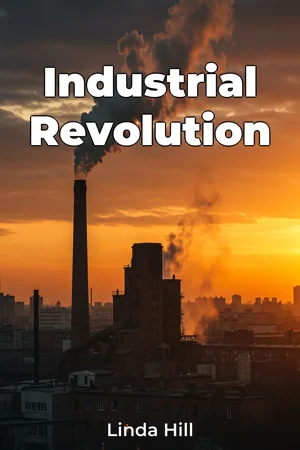
Did you know that the clothes you're wearing, the device you're reading this on, and even the food you eat have all been profoundly shaped by a period of unprecedented transformation? This book, "Industrial Revolution," delves into the core of that era, exploring how new machines, factories, and inventions irrevocably transformed cities, jobs, and the very fabric of human life. This is more than just a historical account; it's an examination of the roots of our modern world. The book focuses on three central themes: the technological innovations that fueled the revolution, the societal shifts it engendered, and the environmental consequences that continue to resonate today. Understanding these themes is crucial because the Industrial Revolution laid the foundation for the economic, social, and ecological challenges we face in the 21st century. Without grasping its complexities, comprehending our current global landscape is incomplete. To fully appreciate the magnitude of the Industrial Revolution, we'll provide essential context, including the preceding agricultural revolution, the rise of mercantilism, and the scientific advancements that paved the way for technological breakthroughs. Prior knowledge of basic economic principles and European history will enhance, but not dictate, your understanding. Our central argument is that the Industrial Revolution, while creating unprecedented wealth and progress, also sowed the seeds of social inequality and environmental degradation, issues that still demand our attention. Understanding its dual legacy is vital for informing contemporary debates on economic development, social justice, and environmental sustainability. The book opens with an introduction to the key inventions and figures that defined the early stages of the revolution. It then proceeds through three major sections. The first examines the impact of steam power, textile manufacturing, and iron production on urban centers and labor practices. The second analyzes the social consequences, including the rise of the factory system, the emergence of new social classes, and the challenges of urbanization. The third explores the long-term environmental effects, such as pollution, resource depletion, and climate change precursors. The book culminates in a discussion of the Industrial Revolution's lasting legacy and its relevance to contemporary challenges, including case studies of ongoing industrial development in various parts of the world. The book draws upon a wide range of primary and secondary sources, including factory records, parliamentary reports, personal letters, and academic studies. Statistical data on population growth, economic output, and environmental indicators will be presented to support the arguments. We employ a comparative historical methodology, drawing parallels and contrasts between different regions and time periods to highlight the multifaceted nature of the Industrial Revolution. "Industrial Revolution" connects to several other fields, including economics, sociology, and environmental science. By examining the economic drivers of industrial growth, the social impact on different populations, and the ecological impact of industrial processes, the book offers an interdisciplinary perspective on this transformative period. Furthermore, the book analyzes the relationship between technological innovation and government policy, highlighting the role of regulation in shaping the course of industrial development. This book offers a nuanced perspective by examining not only the achievements of the Industrial Revolution but also its costs. It avoids simplistic narratives of progress and acknowledges the complex interplay of factors that shaped this era. Written in a clear, accessible style, "Industrial Revolution" is targeted toward students, general readers interested in history, and anyone seeking a deeper understanding of the forces that have shaped the modern world. It is particularly valuable for those interested in economics, sociology, environmental studies, and public policy. As a work of history, the book strives for accuracy, objectivity, and a balanced presentation of different perspectives. It adheres to the conventions of historical scholarship, including proper citation of sources and rigorous analysis of evidence. The book focuses primarily on the Industrial Revolution in Britain and its subsequent spread to other parts of Europe and North America. While acknowledging the global impact of industrialization, it does not provide an exhaustive account of industrial development in every region of the world. Readers will gain insights applicable to contemporary issues such as globalization, technological disruption, and sustainable development. Understanding the historical precedents of these challenges can inform more effective strategies for addressing them today. Finally, the book touches upon the ongoing debates surrounding the Industrial Revolution, including its impact on living standards, the role of colonialism in facilitating industrial growth, and the extent to which its negative consequences could have been avoided. These discussions are integral to a nuanced understanding of this complex period in human history.
Did you know that the clothes you're wearing, the device you're reading this on, and even the food you eat have all been profoundly shaped by a period of unprecedented transformation? This book, "Industrial Revolution," delves into the core of that era, exploring how new machines, factories, and inventions irrevocably transformed cities, jobs, and the very fabric of human life. This is more than just a historical account; it's an examination of the roots of our modern world. The book focuses on three central themes: the technological innovations that fueled the revolution, the societal shifts it engendered, and the environmental consequences that continue to resonate today. Understanding these themes is crucial because the Industrial Revolution laid the foundation for the economic, social, and ecological challenges we face in the 21st century. Without grasping its complexities, comprehending our current global landscape is incomplete. To fully appreciate the magnitude of the Industrial Revolution, we'll provide essential context, including the preceding agricultural revolution, the rise of mercantilism, and the scientific advancements that paved the way for technological breakthroughs. Prior knowledge of basic economic principles and European history will enhance, but not dictate, your understanding. Our central argument is that the Industrial Revolution, while creating unprecedented wealth and progress, also sowed the seeds of social inequality and environmental degradation, issues that still demand our attention. Understanding its dual legacy is vital for informing contemporary debates on economic development, social justice, and environmental sustainability. The book opens with an introduction to the key inventions and figures that defined the early stages of the revolution. It then proceeds through three major sections. The first examines the impact of steam power, textile manufacturing, and iron production on urban centers and labor practices. The second analyzes the social consequences, including the rise of the factory system, the emergence of new social classes, and the challenges of urbanization. The third explores the long-term environmental effects, such as pollution, resource depletion, and climate change precursors. The book culminates in a discussion of the Industrial Revolution's lasting legacy and its relevance to contemporary challenges, including case studies of ongoing industrial development in various parts of the world. The book draws upon a wide range of primary and secondary sources, including factory records, parliamentary reports, personal letters, and academic studies. Statistical data on population growth, economic output, and environmental indicators will be presented to support the arguments. We employ a comparative historical methodology, drawing parallels and contrasts between different regions and time periods to highlight the multifaceted nature of the Industrial Revolution. "Industrial Revolution" connects to several other fields, including economics, sociology, and environmental science. By examining the economic drivers of industrial growth, the social impact on different populations, and the ecological impact of industrial processes, the book offers an interdisciplinary perspective on this transformative period. Furthermore, the book analyzes the relationship between technological innovation and government policy, highlighting the role of regulation in shaping the course of industrial development. This book offers a nuanced perspective by examining not only the achievements of the Industrial Revolution but also its costs. It avoids simplistic narratives of progress and acknowledges the complex interplay of factors that shaped this era. Written in a clear, accessible style, "Industrial Revolution" is targeted toward students, general readers interested in history, and anyone seeking a deeper understanding of the forces that have shaped the modern world. It is particularly valuable for those interested in economics, sociology, environmental studies, and public policy. As a work of history, the book strives for accuracy, objectivity, and a balanced presentation of different perspectives. It adheres to the conventions of historical scholarship, including proper citation of sources and rigorous analysis of evidence. The book focuses primarily on the Industrial Revolution in Britain and its subsequent spread to other parts of Europe and North America. While acknowledging the global impact of industrialization, it does not provide an exhaustive account of industrial development in every region of the world. Readers will gain insights applicable to contemporary issues such as globalization, technological disruption, and sustainable development. Understanding the historical precedents of these challenges can inform more effective strategies for addressing them today. Finally, the book touches upon the ongoing debates surrounding the Industrial Revolution, including its impact on living standards, the role of colonialism in facilitating industrial growth, and the extent to which its negative consequences could have been avoided. These discussions are integral to a nuanced understanding of this complex period in human history.
The "Industrial Revolution" examines the profound transformation of society brought about by technological innovations, social shifts, and the consequential environmental impact, laying the foundation for many of today's global challenges. This exploration extends beyond mere historical accounts, delving into the roots of our modern world by analyzing the rise of steam power, textile manufacturing, and iron production, which irrevocably altered urban landscapes and labor practices. The book uniquely presents a balanced perspective, acknowledging both the unprecedented wealth created and the seeds of social inequality and environmental degradation sown during this era. This historical journey progresses through key sections, first detailing the technological advancements and their effects on urban centers and labor. It then analyzes the social ramifications, focusing on the factory system and emerging social classes. Finally, the book explores the long-term environmental effects linked to pollution and resource depletion. By connecting historical precedents to contemporary issues like globalization and sustainable development, "Industrial Revolution" provides valuable insights for understanding the forces shaping our present and future, emphasizing the dual legacy of progress and problems.
Book Details
ISBN
9788235232595
Publisher
Publifye AS
Your Licenses
You don't own any licenses for this book
Purchase a license below to unlock this book and download the EPUB.
Purchase License
Select a tier to unlock this book
Need bulk licensing?
Contact us for enterprise agreements.