
About This Book
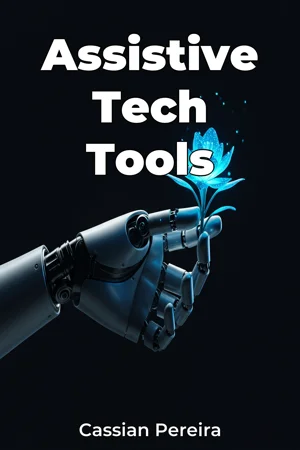
In an increasingly interconnected world, how can we ensure technology serves as a bridge to inclusivity for individuals facing sensory, physical, or cognitive challenges? "Assistive Tech Tools" explores the diverse landscape of assistive technologies designed to empower individuals with disabilities across digital and physical environments. This book addresses the critical need for accessible technology, demonstrating how these tools can transform lives by fostering independence, enhancing communication, and promoting participation in education, employment, and social activities. This book delves into three core areas: sensory aids, physical support systems, and cognitive enhancement technologies. Sensory aids encompass devices and software that compensate for visual or auditory impairments, such as screen readers, braille displays, and hearing aids with advanced signal processing. Physical support systems include mobility aids like powered wheelchairs and exoskeletons, as well as adaptive equipment that allows individuals with motor impairments to interact more effectively with their surroundings. Cognitive enhancement technologies encompass a range of tools designed to assist with memory, attention, and executive function, including software for task management, communication aids for individuals with speech impairments, and virtual reality applications for cognitive rehabilitation. Understanding the historical context of assistive technology is crucial. The book traces the evolution of assistive tools, from early mechanical devices to sophisticated digital solutions, highlighting the social and technological factors that have shaped their development. We also address the ethical considerations surrounding assistive technology, including issues of privacy, autonomy, and equitable access. The central argument of "Assistive Tech Tools" is that assistive technology should be viewed not merely as a set of tools, but as an integral component of a comprehensive strategy for promoting inclusion and accessibility. This argument emphasizes the importance of user-centered design, interdisciplinary collaboration, and ongoing research to ensure that assistive technologies meet the diverse needs of individuals with disabilities. The book begins by introducing fundamental concepts in assistive technology, including accessibility standards, universal design principles, and the process of matching individuals with appropriate assistive solutions. It then explores the three core areas of sensory aids, physical support systems, and cognitive enhancement technologies in detail, dedicating individual chapters to specific types of devices and software within each category. Case studies and real-world examples illustrate the practical applications of these technologies and their impact on individuals' lives. The concluding chapters address emerging trends in assistive technology, such as the use of artificial intelligence and the Internet of Things, and offer recommendations for policymakers, educators, and technology developers. The book draws upon a wide range of evidence, including clinical studies, user testimonials, and data from government agencies and research institutions. We evaluate the effectiveness of different assistive technologies using rigorous methodologies, considering both quantitative and qualitative data. A unique aspect of the book is its focus on user perspectives, incorporating insights from individuals with disabilities, their families, and the professionals who support them. "Assistive Tech Tools" is inherently interdisciplinary, drawing connections to fields such as rehabilitation medicine, computer science, education, and social work. This interdisciplinary approach enhances the book's argument by highlighting the importance of collaboration and communication among different stakeholders. Connections to fields such as urban planning and architecture illustrate how assistive technologies can be integrated into the built environment. Furthermore, the book explores the intersection of assistive technology and disability studies, examining the social and cultural implications of technology use. The book adopts a practical and accessible tone, aiming to inform and empower readers from diverse backgrounds. While grounded in research and evidence, the writing style is clear and engaging, avoiding technical jargon whenever possible. The target audience includes healthcare professionals, educators, rehabilitation specialists, technology developers, policymakers, and individuals with disabilities and their families. It offers valuable insights and practical guidance for anyone interested in promoting accessibility and improving the lives of individuals with disabilities. As a work of non-fiction, this book adheres to the genre's conventions of accuracy, objectivity, and clear communication. It provides thorough citations and references to support its claims, ensuring that readers can verify the information presented. The scope of the book is intentionally broad, covering a wide range of assistive technologies across different domains. However, it acknowledges that assistive technology is a rapidly evolving field, and that new devices and software are constantly emerging. The book focuses on established technologies with proven effectiveness, while also highlighting promising areas for future development. The information presented in "Assistive Tech Tools" can be applied in a variety of real-world settings, from clinical practice and educational institutions to workplaces and homes. It provides practical guidance for selecting, implementing, and evaluating assistive technologies, as well as strategies for advocating for accessible environments and policies. The book also addresses ongoing debates in the field, such as the role of technology in promoting or hindering social inclusion, and the challenges of ensuring equitable access to assistive technologies for individuals from marginalized communities. Ultimately, "Assistive Tech Tools" serves as a comprehensive guide to assistive technology, empowering readers to harness the transformative potential of these tools and create a more inclusive and accessible world for all.
In an increasingly interconnected world, how can we ensure technology serves as a bridge to inclusivity for individuals facing sensory, physical, or cognitive challenges? "Assistive Tech Tools" explores the diverse landscape of assistive technologies designed to empower individuals with disabilities across digital and physical environments. This book addresses the critical need for accessible technology, demonstrating how these tools can transform lives by fostering independence, enhancing communication, and promoting participation in education, employment, and social activities. This book delves into three core areas: sensory aids, physical support systems, and cognitive enhancement technologies. Sensory aids encompass devices and software that compensate for visual or auditory impairments, such as screen readers, braille displays, and hearing aids with advanced signal processing. Physical support systems include mobility aids like powered wheelchairs and exoskeletons, as well as adaptive equipment that allows individuals with motor impairments to interact more effectively with their surroundings. Cognitive enhancement technologies encompass a range of tools designed to assist with memory, attention, and executive function, including software for task management, communication aids for individuals with speech impairments, and virtual reality applications for cognitive rehabilitation. Understanding the historical context of assistive technology is crucial. The book traces the evolution of assistive tools, from early mechanical devices to sophisticated digital solutions, highlighting the social and technological factors that have shaped their development. We also address the ethical considerations surrounding assistive technology, including issues of privacy, autonomy, and equitable access. The central argument of "Assistive Tech Tools" is that assistive technology should be viewed not merely as a set of tools, but as an integral component of a comprehensive strategy for promoting inclusion and accessibility. This argument emphasizes the importance of user-centered design, interdisciplinary collaboration, and ongoing research to ensure that assistive technologies meet the diverse needs of individuals with disabilities. The book begins by introducing fundamental concepts in assistive technology, including accessibility standards, universal design principles, and the process of matching individuals with appropriate assistive solutions. It then explores the three core areas of sensory aids, physical support systems, and cognitive enhancement technologies in detail, dedicating individual chapters to specific types of devices and software within each category. Case studies and real-world examples illustrate the practical applications of these technologies and their impact on individuals' lives. The concluding chapters address emerging trends in assistive technology, such as the use of artificial intelligence and the Internet of Things, and offer recommendations for policymakers, educators, and technology developers. The book draws upon a wide range of evidence, including clinical studies, user testimonials, and data from government agencies and research institutions. We evaluate the effectiveness of different assistive technologies using rigorous methodologies, considering both quantitative and qualitative data. A unique aspect of the book is its focus on user perspectives, incorporating insights from individuals with disabilities, their families, and the professionals who support them. "Assistive Tech Tools" is inherently interdisciplinary, drawing connections to fields such as rehabilitation medicine, computer science, education, and social work. This interdisciplinary approach enhances the book's argument by highlighting the importance of collaboration and communication among different stakeholders. Connections to fields such as urban planning and architecture illustrate how assistive technologies can be integrated into the built environment. Furthermore, the book explores the intersection of assistive technology and disability studies, examining the social and cultural implications of technology use. The book adopts a practical and accessible tone, aiming to inform and empower readers from diverse backgrounds. While grounded in research and evidence, the writing style is clear and engaging, avoiding technical jargon whenever possible. The target audience includes healthcare professionals, educators, rehabilitation specialists, technology developers, policymakers, and individuals with disabilities and their families. It offers valuable insights and practical guidance for anyone interested in promoting accessibility and improving the lives of individuals with disabilities. As a work of non-fiction, this book adheres to the genre's conventions of accuracy, objectivity, and clear communication. It provides thorough citations and references to support its claims, ensuring that readers can verify the information presented. The scope of the book is intentionally broad, covering a wide range of assistive technologies across different domains. However, it acknowledges that assistive technology is a rapidly evolving field, and that new devices and software are constantly emerging. The book focuses on established technologies with proven effectiveness, while also highlighting promising areas for future development. The information presented in "Assistive Tech Tools" can be applied in a variety of real-world settings, from clinical practice and educational institutions to workplaces and homes. It provides practical guidance for selecting, implementing, and evaluating assistive technologies, as well as strategies for advocating for accessible environments and policies. The book also addresses ongoing debates in the field, such as the role of technology in promoting or hindering social inclusion, and the challenges of ensuring equitable access to assistive technologies for individuals from marginalized communities. Ultimately, "Assistive Tech Tools" serves as a comprehensive guide to assistive technology, empowering readers to harness the transformative potential of these tools and create a more inclusive and accessible world for all.
"Assistive Tech Tools" explores how technology bridges inclusivity for those with sensory, physical, or cognitive challenges. Highlighting technology's transformative power, the book discusses sensory aids like advanced hearing aids, physical support systems such as powered wheelchairs, and cognitive enhancement technologies, including VR applications for cognitive rehabilitation. It traces the evolution of assistive tech, from mechanical devices to current digital solutions, underscoring ethical considerations like privacy and equitable access. The book argues that assistive technology is integral to promoting inclusion. It begins with fundamental concepts like accessibility standards and universal design principles. Chapters delve into sensory aids, physical support systems, and cognitive enhancement technologies, employing case studies for practical applications. Concluding chapters address emerging trends like AI and the Internet of Things, offering recommendations for various stakeholders. This approach makes the book uniquely valuable for healthcare professionals, educators, and anyone seeking to improve lives through inclusive technology.
Book Details
ISBN
9788235232526
Publisher
Publifye AS
Your Licenses
You don't own any licenses for this book
Purchase a license below to unlock this book and download the EPUB.
Purchase License
Select a tier to unlock this book
Need bulk licensing?
Contact us for enterprise agreements.