
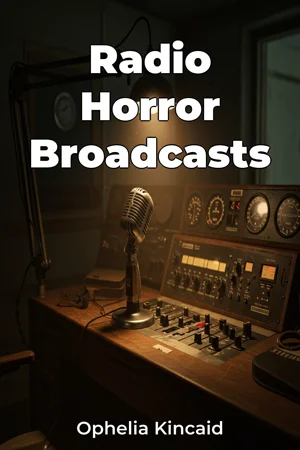
About This Book
Have you ever wondered how a simple radio broadcast could grip an entire nation in fear? "Radio Horror Broadcasts" delves into the history, psychology, and lasting influence of these chilling auditory experiences that captivated and terrified listeners, ultimately shaping the landscape of psychological thrillers across modern media. This book explores two central topics: the anatomy of fear in audio storytelling and the socio-cultural impact of early horror radio. The first examines how specific sound techniques, narrative structures, and psychological triggers were employed to create intense fear and suspense solely through the medium of radio. The second investigates how these broadcasts reflected and shaped the anxieties of their time, influencing public perception, cultural norms, and even sparking widespread panic in some instances. Understanding these topics is crucial for appreciating the evolution of horror as a genre and the power of audio as a storytelling medium. The emergence of horror radio in the 1930s and 40s coincided with significant social and political upheaval, including the Great Depression and the looming threat of World War II. This backdrop of uncertainty and fear created a fertile ground for tales of the macabre and the uncanny to resonate with audiences seeking both escape and a reflection of their anxieties. No prior knowledge is explicitly needed, though familiarity with the history of radio or film will enrich the reading experience. The central argument of this book is that the success of early horror radio broadcasts stemmed not only from their technical innovation but also from their ability to tap into deep-seated psychological fears and anxieties prevalent in society. These broadcasts, in turn, served as a crucial testing ground for narrative techniques that would later become staples of the psychological thriller genre in film, television, and other media. This argument is significant because it highlights the often-overlooked influence of radio on the development of modern storytelling and the enduring power of fear as a narrative tool. The book begins with an introduction to the key concepts of auditory horror and the psychology of fear, setting the stage for a historical overview of the golden age of radio drama. It then delves into specific case studies of famous broadcasts, analyzing their narrative techniques, sound design, and audience reception. Major sections include a deep dive into Orson Welles' "War of the Worlds" broadcast and its impact, an analysis of suspenseful techniques in programs such as "Suspense" and "Inner Sanctum Mysteries", and an exploration of the recurring themes and archetypes present in these stories. The book culminates with a discussion of the legacy of radio horror and its influence on contemporary psychological thrillers, exploring examples in modern film and television. The evidence presented in this book draws from a variety of sources, including archival recordings of radio broadcasts, contemporary newspaper articles and listener letters, academic studies of media history and psychology, and interviews with radio historians and experts. Interdisciplinary connections enrich the discussion: media studies provide a framework for understanding the technological and cultural context of radio broadcasting; psychology offers insights into the mechanisms of fear and suspense; and history provides a lens for examining the social and political forces that shaped the content and reception of these broadcasts. This book offers a unique perspective by examining the interplay between technical innovation, psychological manipulation, and socio-cultural context in the creation of effective auditory horror. It bridges the gap between media history, psychological analysis, and popular culture, providing a holistic understanding of a pivotal moment in the evolution of storytelling. The tone is academic, blending accurate historical research with accessible language to appeal to a broad audience. The target audience includes students and scholars of media studies, film history, psychology, and popular culture, as well as general readers interested in horror, radio drama, and the history of entertainment. As a work of media history, the book adheres to the conventions of scholarly research, providing detailed citations and a comprehensive bibliography. The scope of the book is limited to the golden age of radio drama, focusing primarily on broadcasts produced in the United States and Britain. Understanding the techniques used in early horror radio broadcasts can inform the creation of more effective and engaging audio content in various contemporary applications, from podcasts and audio dramas to sound design for video games and virtual reality experiences. While there is a general consensus on the historical significance of these broadcasts, debates continue regarding the extent of their psychological impact and the ethical considerations surrounding the use of fear as a tool for entertainment. "Radio Horror Broadcasts" addresses these controversies head-on, offering a balanced and nuanced perspective on this fascinating and often unsettling chapter in media history.
Have you ever wondered how a simple radio broadcast could grip an entire nation in fear? "Radio Horror Broadcasts" delves into the history, psychology, and lasting influence of these chilling auditory experiences that captivated and terrified listeners, ultimately shaping the landscape of psychological thrillers across modern media. This book explores two central topics: the anatomy of fear in audio storytelling and the socio-cultural impact of early horror radio. The first examines how specific sound techniques, narrative structures, and psychological triggers were employed to create intense fear and suspense solely through the medium of radio. The second investigates how these broadcasts reflected and shaped the anxieties of their time, influencing public perception, cultural norms, and even sparking widespread panic in some instances. Understanding these topics is crucial for appreciating the evolution of horror as a genre and the power of audio as a storytelling medium. The emergence of horror radio in the 1930s and 40s coincided with significant social and political upheaval, including the Great Depression and the looming threat of World War II. This backdrop of uncertainty and fear created a fertile ground for tales of the macabre and the uncanny to resonate with audiences seeking both escape and a reflection of their anxieties. No prior knowledge is explicitly needed, though familiarity with the history of radio or film will enrich the reading experience. The central argument of this book is that the success of early horror radio broadcasts stemmed not only from their technical innovation but also from their ability to tap into deep-seated psychological fears and anxieties prevalent in society. These broadcasts, in turn, served as a crucial testing ground for narrative techniques that would later become staples of the psychological thriller genre in film, television, and other media. This argument is significant because it highlights the often-overlooked influence of radio on the development of modern storytelling and the enduring power of fear as a narrative tool. The book begins with an introduction to the key concepts of auditory horror and the psychology of fear, setting the stage for a historical overview of the golden age of radio drama. It then delves into specific case studies of famous broadcasts, analyzing their narrative techniques, sound design, and audience reception. Major sections include a deep dive into Orson Welles' "War of the Worlds" broadcast and its impact, an analysis of suspenseful techniques in programs such as "Suspense" and "Inner Sanctum Mysteries", and an exploration of the recurring themes and archetypes present in these stories. The book culminates with a discussion of the legacy of radio horror and its influence on contemporary psychological thrillers, exploring examples in modern film and television. The evidence presented in this book draws from a variety of sources, including archival recordings of radio broadcasts, contemporary newspaper articles and listener letters, academic studies of media history and psychology, and interviews with radio historians and experts. Interdisciplinary connections enrich the discussion: media studies provide a framework for understanding the technological and cultural context of radio broadcasting; psychology offers insights into the mechanisms of fear and suspense; and history provides a lens for examining the social and political forces that shaped the content and reception of these broadcasts. This book offers a unique perspective by examining the interplay between technical innovation, psychological manipulation, and socio-cultural context in the creation of effective auditory horror. It bridges the gap between media history, psychological analysis, and popular culture, providing a holistic understanding of a pivotal moment in the evolution of storytelling. The tone is academic, blending accurate historical research with accessible language to appeal to a broad audience. The target audience includes students and scholars of media studies, film history, psychology, and popular culture, as well as general readers interested in horror, radio drama, and the history of entertainment. As a work of media history, the book adheres to the conventions of scholarly research, providing detailed citations and a comprehensive bibliography. The scope of the book is limited to the golden age of radio drama, focusing primarily on broadcasts produced in the United States and Britain. Understanding the techniques used in early horror radio broadcasts can inform the creation of more effective and engaging audio content in various contemporary applications, from podcasts and audio dramas to sound design for video games and virtual reality experiences. While there is a general consensus on the historical significance of these broadcasts, debates continue regarding the extent of their psychological impact and the ethical considerations surrounding the use of fear as a tool for entertainment. "Radio Horror Broadcasts" addresses these controversies head-on, offering a balanced and nuanced perspective on this fascinating and often unsettling chapter in media history.
"Radio Horror Broadcasts" explores the unsettling history and enduring legacy of early radio horror, dissecting how auditory storytelling gripped a nation through suspense and fear. The book examines the psychological triggers employed via sound design and narrative structures, revealing how these broadcasts shaped anxieties during times of social and political upheaval such as the Great Depression and World War II. This golden age of radio drama not only provided escapism but also reflected the deep-seated fears of its audience, influencing cultural norms and even sparking widespread panic, as exemplified by Orson Welles' "War of the Worlds". The book uniquely bridges media history, psychology, and popular culture to analyze horror's evolution. Starting with key concepts of auditory fear, it progresses through historical overviews, case studies of famous broadcasts like "Suspense", and analyses of recurring themes. By understanding the anatomy of fear in audio, readers gain insights into the cultural impact of these programs and their influence on modern psychological thrillers in film and television. The techniques used in these broadcasts offer lessons applicable to contemporary audio content creation.
Book Details
ISBN
9788235232458
Publisher
Publifye AS
Your Licenses
You don't own any licenses for this book
Purchase a license below to unlock this book and download the EPUB.
Purchase License
Select a tier to unlock this book
Need bulk licensing?
Contact us for enterprise agreements.