
About This Book
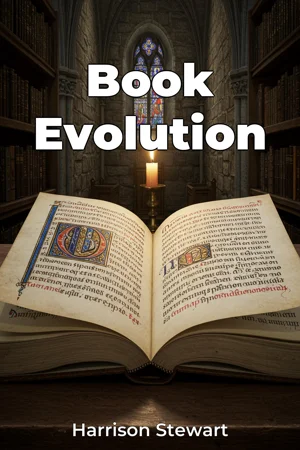
Have you ever considered the incredible journey of the book? From fragile scrolls to the mass-produced paperbacks we know today, its evolution is a story of technological innovation, societal transformation, and the enduring human desire to preserve and share knowledge. "Book Evolution" explores this fascinating history, examining how shifts in format revolutionized not just the storage of information, but also education, governance, and the very fabric of human thought. This book delves into the key stages of book development. We will begin by examining the era of scrolls and codices, dissecting the materials used, the processes of their creation, and their limitations in terms of accessibility and durability. We’ll move forward to the groundbreaking invention of the printing press and the subsequent explosion of printed material. Finally, we address the digital revolution, where the book is reshaped once more into ebooks and audiobooks, accessible across the globe in an instant. This is important because each stage in this evolution has dramatically altered how information is disseminated, consumed, and preserved, directly impacting social structures and intellectual progress. Understanding the historical context is essential. We will explore the social, political, and economic conditions that fostered each technological advancement. The book will illuminate how the transition from laborious hand-copying to mechanical printing required significant investment and a conducive legal framework for copyright. We will provide the necessary historical context for understanding the book's transformative journey. The central argument of "Book Evolution" is that the book's form is not merely a neutral container for information, rather, it actively shapes the content it holds and the way that content is understood. Its evolution reflects and influences broader cultural, technological, and intellectual shifts throughout history. This thesis is vital because it allows us to understand the reciprocal relationship between technology, society, and the evolution of thought itself. The book's structure will begin with an introduction to the earliest forms of written communication and document how our concept of a "book" takes form. The first major section examines the world of handwritten manuscripts, focusing on their production, use within monastic culture, and the knowledge networks they fostered. The second part dives into the impact of the printing press, detailing its spread across Europe, the changes in book production, and the consequent democratization of knowledge. The final part will analyze the digital age and examines the challenges and opportunities presented by ebooks, audiobooks, and online platforms. It culminates by exploring the enduring legacy of the book and its impact on the future of information. The book relies heavily on primary sources, including surviving manuscripts, early printed books, and historical accounts of printing practices. We will also draw upon secondary scholarship in the fields of book history, printing history, media studies, and cultural history. Furthermore, the book incorporates data gleaned from library catalogs and historical archives, providing a quantitative analysis of book production and distribution across different eras. The book connects to the fields of library science, media studies, and sociology. Library science provides the framework for understanding book preservation and access. Media studies informs the analysis of the book as a medium of communication. Sociology helps us understand the social impact of changes in information dissemination. These interdisciplinary connections will enrich the book’s exploration of how books have shaped society’s intellectual and cultural life. "Book Evolution" stands out because it integrates a comprehensive historical analysis with a focus on the intellectual and cultural consequences of changes in book technology. It avoids a purely technological narrative, instead highlighting the interplay between form, content, and social context. The tone is academic yet accessible, balancing scholarly rigor with a clear and engaging writing style. The book avoids overly technical jargon and explains complex concepts in a straightforward manner. The target audience consists of students, researchers, librarians, and anyone interested in the history of books, media, and communication. This book is valuable to them because it provides a comprehensive and insightful account of the book's evolution, offering a deeper understanding of its role in shaping human knowledge and culture. As a work of history, it examines the chronology of book development, significant figures, and cultural influences. As a textbook, it provides clear definitions, structured analysis, and reliable information. The scope of the book is broad, covering the main stages of book development from ancient times to the present day. However, it intentionally focuses on the Western tradition of book production, acknowledging that other cultures have their own unique histories of written communication. The information in this book can be applied practically by readers in many ways. For students and researchers, it provides a solid foundation for further study in book history and related fields. For librarians and archivists, it offers insights into the preservation and management of book collections. For anyone interested in the future of media, it provides a historical perspective on the challenges and opportunities presented by new technologies. Throughout the book, we will also address some of the ongoing debates in the field. What impact did the shift from script to print have on conceptions of authorship and originality? How has the digital revolution affected the authority and reliability of information? By engaging with these questions, "Book Evolution" aims to provide readers with a nuanced and thought-provoking exploration of the book's past, present, and future.
Have you ever considered the incredible journey of the book? From fragile scrolls to the mass-produced paperbacks we know today, its evolution is a story of technological innovation, societal transformation, and the enduring human desire to preserve and share knowledge. "Book Evolution" explores this fascinating history, examining how shifts in format revolutionized not just the storage of information, but also education, governance, and the very fabric of human thought. This book delves into the key stages of book development. We will begin by examining the era of scrolls and codices, dissecting the materials used, the processes of their creation, and their limitations in terms of accessibility and durability. We’ll move forward to the groundbreaking invention of the printing press and the subsequent explosion of printed material. Finally, we address the digital revolution, where the book is reshaped once more into ebooks and audiobooks, accessible across the globe in an instant. This is important because each stage in this evolution has dramatically altered how information is disseminated, consumed, and preserved, directly impacting social structures and intellectual progress. Understanding the historical context is essential. We will explore the social, political, and economic conditions that fostered each technological advancement. The book will illuminate how the transition from laborious hand-copying to mechanical printing required significant investment and a conducive legal framework for copyright. We will provide the necessary historical context for understanding the book's transformative journey. The central argument of "Book Evolution" is that the book's form is not merely a neutral container for information, rather, it actively shapes the content it holds and the way that content is understood. Its evolution reflects and influences broader cultural, technological, and intellectual shifts throughout history. This thesis is vital because it allows us to understand the reciprocal relationship between technology, society, and the evolution of thought itself. The book's structure will begin with an introduction to the earliest forms of written communication and document how our concept of a "book" takes form. The first major section examines the world of handwritten manuscripts, focusing on their production, use within monastic culture, and the knowledge networks they fostered. The second part dives into the impact of the printing press, detailing its spread across Europe, the changes in book production, and the consequent democratization of knowledge. The final part will analyze the digital age and examines the challenges and opportunities presented by ebooks, audiobooks, and online platforms. It culminates by exploring the enduring legacy of the book and its impact on the future of information. The book relies heavily on primary sources, including surviving manuscripts, early printed books, and historical accounts of printing practices. We will also draw upon secondary scholarship in the fields of book history, printing history, media studies, and cultural history. Furthermore, the book incorporates data gleaned from library catalogs and historical archives, providing a quantitative analysis of book production and distribution across different eras. The book connects to the fields of library science, media studies, and sociology. Library science provides the framework for understanding book preservation and access. Media studies informs the analysis of the book as a medium of communication. Sociology helps us understand the social impact of changes in information dissemination. These interdisciplinary connections will enrich the book’s exploration of how books have shaped society’s intellectual and cultural life. "Book Evolution" stands out because it integrates a comprehensive historical analysis with a focus on the intellectual and cultural consequences of changes in book technology. It avoids a purely technological narrative, instead highlighting the interplay between form, content, and social context. The tone is academic yet accessible, balancing scholarly rigor with a clear and engaging writing style. The book avoids overly technical jargon and explains complex concepts in a straightforward manner. The target audience consists of students, researchers, librarians, and anyone interested in the history of books, media, and communication. This book is valuable to them because it provides a comprehensive and insightful account of the book's evolution, offering a deeper understanding of its role in shaping human knowledge and culture. As a work of history, it examines the chronology of book development, significant figures, and cultural influences. As a textbook, it provides clear definitions, structured analysis, and reliable information. The scope of the book is broad, covering the main stages of book development from ancient times to the present day. However, it intentionally focuses on the Western tradition of book production, acknowledging that other cultures have their own unique histories of written communication. The information in this book can be applied practically by readers in many ways. For students and researchers, it provides a solid foundation for further study in book history and related fields. For librarians and archivists, it offers insights into the preservation and management of book collections. For anyone interested in the future of media, it provides a historical perspective on the challenges and opportunities presented by new technologies. Throughout the book, we will also address some of the ongoing debates in the field. What impact did the shift from script to print have on conceptions of authorship and originality? How has the digital revolution affected the authority and reliability of information? By engaging with these questions, "Book Evolution" aims to provide readers with a nuanced and thought-provoking exploration of the book's past, present, and future.
"Book Evolution" traces the remarkable journey of the book, from ancient scrolls to modern ebooks, highlighting its profound impact on society. The book examines how pivotal shifts in format, like the invention of the printing press, revolutionized not only information storage but also education and governance. Each chapter explores the social, political, and economic conditions that facilitated these technological advancements, revealing how the book's evolution is intertwined with broader cultural and intellectual shifts. The narrative begins with early manuscripts, detailing their creation and role in monastic culture, before diving into the printing press era and its democratization of knowledge. The digital age, with ebooks and audiobooks, is then analyzed for its challenges and opportunities. A central argument is that the book's form actively shapes its content and understanding, offering a unique perspective on the reciprocal relationship between technology and society. The book draws upon primary sources and interdisciplinary scholarship to provide a comprehensive account suitable for students, researchers, and anyone fascinated by the history of media.
Book Details
ISBN
9788235232250
Publisher
Publifye AS
Your Licenses
You don't own any licenses for this book
Purchase a license below to unlock this book and download the EPUB.
Purchase License
Select a tier to unlock this book
Need bulk licensing?
Contact us for enterprise agreements.