
About This Book
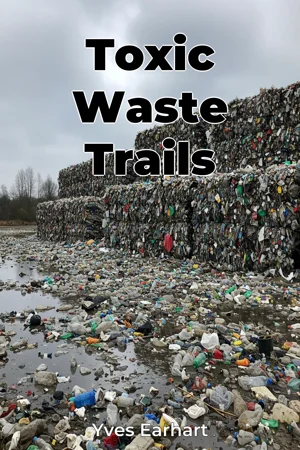
Where does your trash really go? *Toxic Waste Trails* exposes the hidden global network of toxic waste transportation, dumping, and regulation, revealing the dark underbelly of our consumer society. This book unveils the complex legal loopholes and devastating environmental health consequences that result from the global trade in toxins, making it essential reading for anyone concerned about environmental justice and public health. This book explores three key interconnected themes: the physical infrastructure of toxic waste transportation across international borders; the often-nebulous legal and regulatory frameworks designed to manage this waste; and the direct health impacts on communities living near dumping sites. Understanding these issues is crucial because the globalization of waste management disproportionately affects vulnerable populations, exacerbates environmental degradation, and poses significant risks to human health worldwide. The historical context surrounding the Basel Convention, intended to control the transboundary movements of hazardous wastes, will be explored to expose its limitations and the rise of a global waste trade driven by economic disparities. Readers will gain an understanding of the materials classified as toxic waste, including e-waste, industrial byproducts, and medical waste, and the potential dangers they pose when improperly handled. The central argument of *Toxic Waste Trails* is that current international regulations and enforcement mechanisms are insufficient to prevent the unethical and harmful transport and disposal of toxic waste, leading to significant environmental and public health crises in developing nations. Highlighting this insufficiency is vital because it demonstrates the urgent need for stronger international cooperation, stricter regulations, and a re-evaluation of our consumption and waste management practices. The book is structured in three major parts. First, it introduces the key players involved in the global toxic waste trade: waste producers, transporters, recyclers (both legitimate and illegitimate), and regulatory bodies. Second, the book delves into case studies from various regions, including Southeast Asia, Africa, and Eastern Europe, highlighting specific examples of illegal dumping, regulatory failures, and the resultant health impacts on local communities. This section will dissect how legal ambiguities, corruption, and lack of resources contribute to the problem. Finally, it culminates in a discussion of potential solutions, including policy recommendations, technological innovations for waste treatment, and strategies for promoting corporate accountability. The book closes with practical suggestions for how individuals can reduce their contribution to the toxic waste stream. Supporting the arguments are a diverse array of evidence and research, including investigative journalism reports, government documents, scientific studies on environmental contamination, and eyewitness accounts from affected communities. Data obtained from international organizations, such as the United Nations Environment Programme (UNEP) and Interpol, will be utilized, alongside independent environmental monitoring reports. *Toxic Waste Trails* draws connections across several academic fields, integrating elements of environmental science to explain the chemical processes and ecological impacts of toxic waste; law and political science to analyze international regulations and governance structures; and public health to understand the epidemiology of diseases linked to toxic exposure. These interdisciplinary connections enrich the book's analysis by providing a holistic understanding of the complex issues at play. This book offers a unique perspective by combining a macro-level analysis of international trade dynamics with micro-level case studies of affected communities, offering both a systemic overview and a human-centered narrative. It employs a fact-based, journalistic writing style, presenting complex information in an accessible and engaging manner. The book targets a broad audience, including environmental activists, policymakers, public health professionals, students of environmental studies and international relations, and general readers interested in understanding the environmental impact of our global economy. It will appeal to those seeking a deeper understanding of the hidden costs of consumerism and the urgent need for environmental justice. As a work of environmental and current events non-fiction, this book adheres to the genre's conventions of providing factual accuracy, thorough research, and clear, unbiased analysis. While the book strives to provide a global overview of the toxic waste trade, its scope is limited by the availability of data and the clandestine nature of many illegal activities. The book focuses on the systemic issues and specific case studies, rather than attempting to provide an exhaustive list of every instance of toxic waste dumping worldwide. The information in *Toxic Waste Trails* can be applied practically by readers who want to make informed choices about their consumption habits, advocate for stronger environmental regulations, and support organizations working to combat environmental injustice. The book addresses ongoing debates about the responsibilities of developed nations in managing their waste and the effectiveness of current international agreements in protecting vulnerable populations from toxic exposure.
Where does your trash really go? *Toxic Waste Trails* exposes the hidden global network of toxic waste transportation, dumping, and regulation, revealing the dark underbelly of our consumer society. This book unveils the complex legal loopholes and devastating environmental health consequences that result from the global trade in toxins, making it essential reading for anyone concerned about environmental justice and public health. This book explores three key interconnected themes: the physical infrastructure of toxic waste transportation across international borders; the often-nebulous legal and regulatory frameworks designed to manage this waste; and the direct health impacts on communities living near dumping sites. Understanding these issues is crucial because the globalization of waste management disproportionately affects vulnerable populations, exacerbates environmental degradation, and poses significant risks to human health worldwide. The historical context surrounding the Basel Convention, intended to control the transboundary movements of hazardous wastes, will be explored to expose its limitations and the rise of a global waste trade driven by economic disparities. Readers will gain an understanding of the materials classified as toxic waste, including e-waste, industrial byproducts, and medical waste, and the potential dangers they pose when improperly handled. The central argument of *Toxic Waste Trails* is that current international regulations and enforcement mechanisms are insufficient to prevent the unethical and harmful transport and disposal of toxic waste, leading to significant environmental and public health crises in developing nations. Highlighting this insufficiency is vital because it demonstrates the urgent need for stronger international cooperation, stricter regulations, and a re-evaluation of our consumption and waste management practices. The book is structured in three major parts. First, it introduces the key players involved in the global toxic waste trade: waste producers, transporters, recyclers (both legitimate and illegitimate), and regulatory bodies. Second, the book delves into case studies from various regions, including Southeast Asia, Africa, and Eastern Europe, highlighting specific examples of illegal dumping, regulatory failures, and the resultant health impacts on local communities. This section will dissect how legal ambiguities, corruption, and lack of resources contribute to the problem. Finally, it culminates in a discussion of potential solutions, including policy recommendations, technological innovations for waste treatment, and strategies for promoting corporate accountability. The book closes with practical suggestions for how individuals can reduce their contribution to the toxic waste stream. Supporting the arguments are a diverse array of evidence and research, including investigative journalism reports, government documents, scientific studies on environmental contamination, and eyewitness accounts from affected communities. Data obtained from international organizations, such as the United Nations Environment Programme (UNEP) and Interpol, will be utilized, alongside independent environmental monitoring reports. *Toxic Waste Trails* draws connections across several academic fields, integrating elements of environmental science to explain the chemical processes and ecological impacts of toxic waste; law and political science to analyze international regulations and governance structures; and public health to understand the epidemiology of diseases linked to toxic exposure. These interdisciplinary connections enrich the book's analysis by providing a holistic understanding of the complex issues at play. This book offers a unique perspective by combining a macro-level analysis of international trade dynamics with micro-level case studies of affected communities, offering both a systemic overview and a human-centered narrative. It employs a fact-based, journalistic writing style, presenting complex information in an accessible and engaging manner. The book targets a broad audience, including environmental activists, policymakers, public health professionals, students of environmental studies and international relations, and general readers interested in understanding the environmental impact of our global economy. It will appeal to those seeking a deeper understanding of the hidden costs of consumerism and the urgent need for environmental justice. As a work of environmental and current events non-fiction, this book adheres to the genre's conventions of providing factual accuracy, thorough research, and clear, unbiased analysis. While the book strives to provide a global overview of the toxic waste trade, its scope is limited by the availability of data and the clandestine nature of many illegal activities. The book focuses on the systemic issues and specific case studies, rather than attempting to provide an exhaustive list of every instance of toxic waste dumping worldwide. The information in *Toxic Waste Trails* can be applied practically by readers who want to make informed choices about their consumption habits, advocate for stronger environmental regulations, and support organizations working to combat environmental injustice. The book addresses ongoing debates about the responsibilities of developed nations in managing their waste and the effectiveness of current international agreements in protecting vulnerable populations from toxic exposure.
*Toxic Waste Trails* uncovers the hidden network of global toxic waste, revealing how consumerism fuels a dangerous trade that disproportionately impacts vulnerable communities. The book explores the physical routes of waste, the legal loopholes that enable its movement, and the resulting environmental health consequences. For example, electronic waste, often touted for its recycling potential, frequently ends up illegally dumped in developing nations, exposing residents to harmful toxins. The book argues that current international regulations, like the Basel Convention, are insufficient to prevent the unethical disposal of toxic waste. Through case studies spanning Southeast Asia, Africa, and Eastern Europe, the book examines instances of illegal dumping and regulatory failures. It highlights the urgent need for stronger international cooperation and a reassessment of waste management practices. The book progresses by first introducing the key players involved in the global waste trade. It then delves into specific case studies to illustrate the problem's scope and impact, before finally offering potential solutions. By blending macro-level analysis of international trade with micro-level accounts from affected communities, *Toxic Waste Trails* provides a unique and valuable perspective on this critical current event.
Book Details
ISBN
9788235232212
Publisher
Publifye AS
Your Licenses
You don't own any licenses for this book
Purchase a license below to unlock this book and download the EPUB.
Purchase License
Select a tier to unlock this book
Need bulk licensing?
Contact us for enterprise agreements.