
About This Book
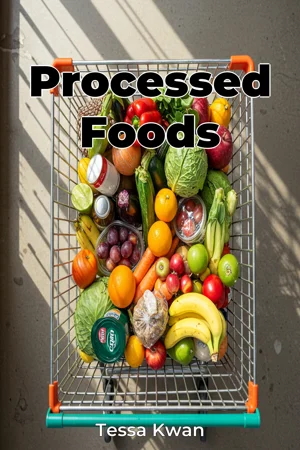
Are processed foods fueling a health crisis? This book, *Processed Foods*, unpacks the complex relationship between these ubiquitous products and our well-being. We delve into their pervasive impact on health, dissect their often-hidden ingredients, and, most importantly, equip you with practical strategies for making healthier dietary choices. This book addresses two critical topics: the impact of processed foods on individual and public health, and the deceptively complex ingredient lists that define them. These are important because understanding the health consequences can empower individuals to make informed dietary choices, while deciphering ingredient lists reveals the true nature of what we consume. The rise of processed foods is intertwined with industrialization, globalization, and changing societal norms around food preparation. Mass production techniques and the demand for convenience have led to an explosion of processed options. This book assumes a basic understanding of nutrition, but complex scientific terminology will be clearly explained. Our central argument is that while processed foods offer convenience and affordability, their excessive consumption, driven by misleading labeling and aggressive marketing, poses significant risks to individual and public health. Understanding these risks and developing strategies for informed consumption is crucial for mitigating these effects. The book is structured as follows: We begin by defining "processed food" and exploring its historical context. We then dedicate sections to analyzing the health impacts, covering topics like obesity, heart disease, and gut health. A significant portion of the book is devoted to understanding ingredient lists: deciphering additives, preservatives, and artificial flavorings. Finally, we culminate with actionable strategies for navigating the grocery store, interpreting food labels, and incorporating healthier alternatives into your diet. We also explore the role of food policy. The arguments presented are based on a comprehensive review of scientific literature, including epidemiological studies, clinical trials, and reports from public health organizations. We also analyze food industry practices and marketing strategies, drawing on data from market research and advertising campaigns. Government regulations and standards form a key reference point throughout the work. This book intersects with several fields: nutrition science, public health, and economics. Nutrition science provides the foundation for understanding the physiological effects of food components. Public health informs the discussion of population-level health trends and interventions. Economics sheds light on the market forces driving the production and consumption of processed foods. We present a balanced perspective, acknowledging both the benefits and drawbacks of processed foods. We emphasize practical solutions and empower readers to make informed choices without advocating for complete elimination of processed foods, an unrealistic goal for many. The tone is informative and accessible, avoiding jargon and presenting complex information in a clear, concise manner. The style is fact-based and objective, prioritizing evidence-based recommendations. This book is intended for health-conscious individuals, parents, educators, and anyone seeking to better understand the impact of processed foods on their health and well-being. It's valuable because it provides the knowledge and tools necessary to navigate the complex food environment and make healthier choices. As a health and fitness guide, it blends scientific insight with practical advice. The book focuses on the most common and impactful categories of processed foods found in typical diets. While we acknowledge the nuances of food processing techniques, we prioritize broad principles and actionable strategies. Readers will learn how to identify hidden sugars, unhealthy fats, and artificial additives, and how to replace them with nutrient-rich alternatives. They will also gain the skills to plan healthy meals and snacks, and to advocate for healthier food policies in their communities. The book addresses controversies surrounding specific ingredients, such as artificial sweeteners and genetically modified organisms (GMOs), presenting different perspectives and evaluating the available evidence. Policy debates related to food labeling and advertising are also discussed.
Are processed foods fueling a health crisis? This book, *Processed Foods*, unpacks the complex relationship between these ubiquitous products and our well-being. We delve into their pervasive impact on health, dissect their often-hidden ingredients, and, most importantly, equip you with practical strategies for making healthier dietary choices. This book addresses two critical topics: the impact of processed foods on individual and public health, and the deceptively complex ingredient lists that define them. These are important because understanding the health consequences can empower individuals to make informed dietary choices, while deciphering ingredient lists reveals the true nature of what we consume. The rise of processed foods is intertwined with industrialization, globalization, and changing societal norms around food preparation. Mass production techniques and the demand for convenience have led to an explosion of processed options. This book assumes a basic understanding of nutrition, but complex scientific terminology will be clearly explained. Our central argument is that while processed foods offer convenience and affordability, their excessive consumption, driven by misleading labeling and aggressive marketing, poses significant risks to individual and public health. Understanding these risks and developing strategies for informed consumption is crucial for mitigating these effects. The book is structured as follows: We begin by defining "processed food" and exploring its historical context. We then dedicate sections to analyzing the health impacts, covering topics like obesity, heart disease, and gut health. A significant portion of the book is devoted to understanding ingredient lists: deciphering additives, preservatives, and artificial flavorings. Finally, we culminate with actionable strategies for navigating the grocery store, interpreting food labels, and incorporating healthier alternatives into your diet. We also explore the role of food policy. The arguments presented are based on a comprehensive review of scientific literature, including epidemiological studies, clinical trials, and reports from public health organizations. We also analyze food industry practices and marketing strategies, drawing on data from market research and advertising campaigns. Government regulations and standards form a key reference point throughout the work. This book intersects with several fields: nutrition science, public health, and economics. Nutrition science provides the foundation for understanding the physiological effects of food components. Public health informs the discussion of population-level health trends and interventions. Economics sheds light on the market forces driving the production and consumption of processed foods. We present a balanced perspective, acknowledging both the benefits and drawbacks of processed foods. We emphasize practical solutions and empower readers to make informed choices without advocating for complete elimination of processed foods, an unrealistic goal for many. The tone is informative and accessible, avoiding jargon and presenting complex information in a clear, concise manner. The style is fact-based and objective, prioritizing evidence-based recommendations. This book is intended for health-conscious individuals, parents, educators, and anyone seeking to better understand the impact of processed foods on their health and well-being. It's valuable because it provides the knowledge and tools necessary to navigate the complex food environment and make healthier choices. As a health and fitness guide, it blends scientific insight with practical advice. The book focuses on the most common and impactful categories of processed foods found in typical diets. While we acknowledge the nuances of food processing techniques, we prioritize broad principles and actionable strategies. Readers will learn how to identify hidden sugars, unhealthy fats, and artificial additives, and how to replace them with nutrient-rich alternatives. They will also gain the skills to plan healthy meals and snacks, and to advocate for healthier food policies in their communities. The book addresses controversies surrounding specific ingredients, such as artificial sweeteners and genetically modified organisms (GMOs), presenting different perspectives and evaluating the available evidence. Policy debates related to food labeling and advertising are also discussed.
"Processed Foods" explores the intricate relationship between these widely available products and our health. It delves into the impact of processed foods on well-being, dissecting hidden ingredients and offering actionable strategies for healthier eating. The book highlights how factors like industrialization and convenience have led to a surge in processed options, often laden with additives and artificial sweeteners. Understanding ingredient lists and the effects of these foods on conditions like obesity and heart disease is crucial for making informed choices. The book begins by defining "processed food" and its history, progressing to analyze health impacts and deciphering ingredient lists, including additives and preservatives. It culminates with practical strategies for navigating grocery stores and interpreting food labels. A key insight is that excessive consumption, driven by misleading labeling, poses significant health risks. By providing knowledge and tools, "Processed Foods" empowers readers to make healthier dietary choices and advocate for better food policies.
Book Details
ISBN
9788235231970
Publisher
Publifye AS
Your Licenses
You don't own any licenses for this book
Purchase a license below to unlock this book and download the EPUB.
Purchase License
Select a tier to unlock this book
Need bulk licensing?
Contact us for enterprise agreements.