
About This Book
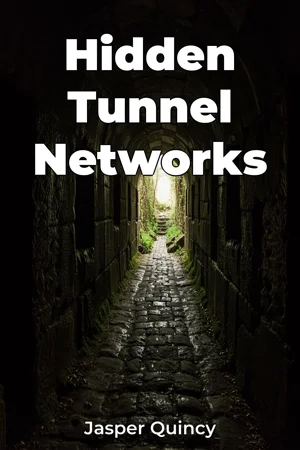
What lies beneath our feet? "Hidden Tunnel Networks" delves into the intricate and often mysterious world of subterranean passageways built by various civilizations throughout history. This book explores the construction, purpose, and enduring secrets of tunnel systems across the globe, offering a comprehensive look at these hidden realms and their connection to human history, adventure, and the unknown. The book primarily focuses on three key aspects of tunnel networks. First, it examines tunnels used for ritualistic purposes. These sacred spaces, carved into the earth by ancient cultures, served as conduits for spiritual practices and initiations, holding deep symbolic meaning. Second, the book investigates tunnels constructed for military operations. These complex networks provided strategic advantages in times of conflict, acting as secret routes for troop movement, storage facilities, and clandestine activities. Finally, it explores tunnels of unknown origin, the purpose of which remains a mystery, sparking debate and speculation among historians and archaeologists. These enigmatic structures offer a glimpse into the ingenuity and perhaps even the fears, of past societies. Understanding these tunnel systems requires a multidisciplinary approach, drawing upon archaeology, history, geology, and engineering. The book provides the necessary context, explaining the construction techniques used in different eras, the geological conditions that influenced tunnel design, and the social and political factors that drove their creation. No prior expert knowledge is needed, as the book explains all the concepts and terms used. The central argument of "Hidden Tunnel Networks" is that these subterranean spaces are not merely physical structures; they are tangible links to our past, reflecting the beliefs, ambitions, and survival strategies of those who came before us. By exploring these hidden networks, we gain a deeper understanding of human civilization and our enduring connection to the earth. The book unfolds in a logical progression. It begins with an introduction to the concept of tunnel networks, exploring their global distribution and common features. The following sections delve into the specific categories of tunnels mentioned above: ritualistic, military, and those of unknown origin. For each type, detailed case studies are presented, drawing on archaeological evidence, historical records, and geological surveys. The book culminates in a discussion of the broader implications of these findings, considering the role of tunnel networks in shaping landscapes, influencing conflicts, and preserving cultural memories. Practical applications of this knowledge are also considered, such as the preservation of historical sites and the use of tunneling technology in modern infrastructure projects. The evidence presented in "Hidden Tunnel Networks" is drawn from a variety of sources. Archaeological excavations provide physical evidence of tunnel construction and use, while historical documents offer insights into their intended purpose. Geological surveys reveal the environmental conditions that impacted their creation, while engineering analyses demonstrate the ingenious solutions developed by ancient builders. This book connects to other fields such as anthropology, urban planning, and religious studies. By examining tunnel networks through an anthropological lens, we can understand their cultural significance and their role in shaping social structures. Connecting to urban planning, we can observe how these underground structures have influenced the development of cities and their infrastructure. By considering the religious significance of some sites, the book enhances the understanding of ancient religious practices. A unique aspect of "Hidden Tunnel Networks" is its focus on the intersection of human ingenuity and the natural world. The book highlights how ancient civilizations adapted to their environments, utilizing subterranean spaces to meet their needs for security, spirituality, and survival. Written in a clear and accessible style, "Hidden Tunnel Networks" aims to engage a broad audience, including history enthusiasts, archaeology buffs, adventure seekers, and anyone curious about the hidden world beneath their feet. The book will be valuable to readers because it offers a comprehensive overview of a fascinating and often overlooked aspect of human history. As a non-fiction work in the adventure and history genres, "Hidden Tunnel Networks" adheres to the principles of factual accuracy and evidence-based analysis. While acknowledging the speculative nature of some theories surrounding tunnels of unknown origin, the book maintains a rigorous approach to research and interpretation. The scope of "Hidden Tunnel Networks" is global, encompassing examples from Europe, Asia, the Americas, and beyond. However, it does not attempt to be an exhaustive catalog of every known tunnel system. Instead, it focuses on a selection of representative examples that illustrate the key themes and arguments of the book. The study of tunnel networks has practical implications for modern society. Understanding the engineering principles used in ancient tunnel construction can inform the design and construction of modern infrastructure, while preserving historical tunnel sites can contribute to cultural heritage tourism. While the book presents a comprehensive and informative account of tunnel networks, areas of debate and uncertainty remain. The precise purpose of some tunnel systems, particularly those of unknown origin, is still a matter of speculation. The book presents different perspectives on these controversies, encouraging readers to form their own conclusions based on the available evidence.
What lies beneath our feet? "Hidden Tunnel Networks" delves into the intricate and often mysterious world of subterranean passageways built by various civilizations throughout history. This book explores the construction, purpose, and enduring secrets of tunnel systems across the globe, offering a comprehensive look at these hidden realms and their connection to human history, adventure, and the unknown. The book primarily focuses on three key aspects of tunnel networks. First, it examines tunnels used for ritualistic purposes. These sacred spaces, carved into the earth by ancient cultures, served as conduits for spiritual practices and initiations, holding deep symbolic meaning. Second, the book investigates tunnels constructed for military operations. These complex networks provided strategic advantages in times of conflict, acting as secret routes for troop movement, storage facilities, and clandestine activities. Finally, it explores tunnels of unknown origin, the purpose of which remains a mystery, sparking debate and speculation among historians and archaeologists. These enigmatic structures offer a glimpse into the ingenuity and perhaps even the fears, of past societies. Understanding these tunnel systems requires a multidisciplinary approach, drawing upon archaeology, history, geology, and engineering. The book provides the necessary context, explaining the construction techniques used in different eras, the geological conditions that influenced tunnel design, and the social and political factors that drove their creation. No prior expert knowledge is needed, as the book explains all the concepts and terms used. The central argument of "Hidden Tunnel Networks" is that these subterranean spaces are not merely physical structures; they are tangible links to our past, reflecting the beliefs, ambitions, and survival strategies of those who came before us. By exploring these hidden networks, we gain a deeper understanding of human civilization and our enduring connection to the earth. The book unfolds in a logical progression. It begins with an introduction to the concept of tunnel networks, exploring their global distribution and common features. The following sections delve into the specific categories of tunnels mentioned above: ritualistic, military, and those of unknown origin. For each type, detailed case studies are presented, drawing on archaeological evidence, historical records, and geological surveys. The book culminates in a discussion of the broader implications of these findings, considering the role of tunnel networks in shaping landscapes, influencing conflicts, and preserving cultural memories. Practical applications of this knowledge are also considered, such as the preservation of historical sites and the use of tunneling technology in modern infrastructure projects. The evidence presented in "Hidden Tunnel Networks" is drawn from a variety of sources. Archaeological excavations provide physical evidence of tunnel construction and use, while historical documents offer insights into their intended purpose. Geological surveys reveal the environmental conditions that impacted their creation, while engineering analyses demonstrate the ingenious solutions developed by ancient builders. This book connects to other fields such as anthropology, urban planning, and religious studies. By examining tunnel networks through an anthropological lens, we can understand their cultural significance and their role in shaping social structures. Connecting to urban planning, we can observe how these underground structures have influenced the development of cities and their infrastructure. By considering the religious significance of some sites, the book enhances the understanding of ancient religious practices. A unique aspect of "Hidden Tunnel Networks" is its focus on the intersection of human ingenuity and the natural world. The book highlights how ancient civilizations adapted to their environments, utilizing subterranean spaces to meet their needs for security, spirituality, and survival. Written in a clear and accessible style, "Hidden Tunnel Networks" aims to engage a broad audience, including history enthusiasts, archaeology buffs, adventure seekers, and anyone curious about the hidden world beneath their feet. The book will be valuable to readers because it offers a comprehensive overview of a fascinating and often overlooked aspect of human history. As a non-fiction work in the adventure and history genres, "Hidden Tunnel Networks" adheres to the principles of factual accuracy and evidence-based analysis. While acknowledging the speculative nature of some theories surrounding tunnels of unknown origin, the book maintains a rigorous approach to research and interpretation. The scope of "Hidden Tunnel Networks" is global, encompassing examples from Europe, Asia, the Americas, and beyond. However, it does not attempt to be an exhaustive catalog of every known tunnel system. Instead, it focuses on a selection of representative examples that illustrate the key themes and arguments of the book. The study of tunnel networks has practical implications for modern society. Understanding the engineering principles used in ancient tunnel construction can inform the design and construction of modern infrastructure, while preserving historical tunnel sites can contribute to cultural heritage tourism. While the book presents a comprehensive and informative account of tunnel networks, areas of debate and uncertainty remain. The precise purpose of some tunnel systems, particularly those of unknown origin, is still a matter of speculation. The book presents different perspectives on these controversies, encouraging readers to form their own conclusions based on the available evidence.
"Hidden Tunnel Networks" explores the fascinating world of subterranean passageways created by civilizations throughout history. These hidden realms, built for purposes ranging from sacred rituals to military strategies, offer unique insights into human ingenuity and societal needs. For instance, ancient cultures utilized tunnels as conduits for spiritual practices, while military networks provided strategic advantages during conflicts, showcasing the diverse applications of these underground systems. The book examines these networks through a multidisciplinary lens, incorporating archaeology, history, geology, and engineering to understand their construction and purpose. It progresses logically, starting with an overview of global tunnel distribution and then diving into specific categories such as ritualistic, military, and tunnels of unknown origin. Detailed case studies, drawn from archaeological findings and historical records, illustrate the enduring impact of these subterranean spaces. Discover how tunnel networks reflect the beliefs, ambitions, and survival strategies of past societies in this comprehensive exploration.
Book Details
ISBN
9788235231918
Publisher
Publifye AS
Your Licenses
You don't own any licenses for this book
Purchase a license below to unlock this book and download the EPUB.
Purchase License
Select a tier to unlock this book
Need bulk licensing?
Contact us for enterprise agreements.