
About This Book
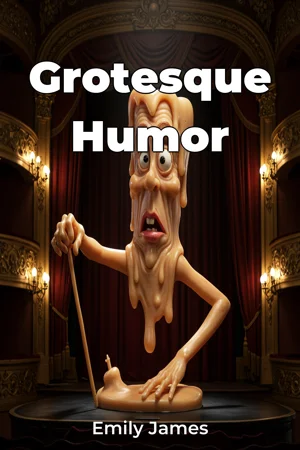
Why do we laugh at what disgusts us? "Grotesque Humor" delves into this perplexing phenomenon, exploring the multifaceted role of the grotesque and discomfort in shaping humor across literature and performance. This book examines how these elements, often considered taboo, contribute to comedic effect and, more significantly, challenge societal norms and provoke critical thought. This study is important because it offers a fresh perspective on humor, moving beyond simple entertainment to reveal its potential as a tool for social commentary. It investigates how artists and performers utilize the grotesque to subvert expectations, expose hypocrisy, and address difficult topics that might otherwise remain unspoken. Further, understanding the appeal of discomfort in humor provides insights into our psychological boundaries and the ways in which we collectively process anxieties and fears. The book begins by establishing a historical and theoretical context for the grotesque. It traces the evolution of its aesthetic and its increasing use in comedic expression across different eras and cultures. It then introduces key concepts such as abjection, the carnivalesque, and transgression, providing a framework for understanding how these elements function within humor. Knowledge of basic literary and performance theory is helpful but not essential. The central argument of "Grotesque Humor" is that the strategic deployment of the grotesque and discomfort serves as a powerful method of critical engagement with established power structures and cultural values. It posits that humor born from the unsettling and the repulsive is not merely a means of eliciting laughter but a catalyst for questioning and re-evaluating our perceptions of the world. This argument is significant because it elevates the study of humor to a level of serious intellectual inquiry, demonstrating its capacity to drive social and political change. The book unfolds through an exploration of various case studies drawn from both literary and performance contexts. Part 1 introduces the core concepts and lays out the theoretical groundwork. Part 2 analyzes literary works spanning genres like satire, dark comedy, and absurdism, examining how authors use grotesque imagery, characterizations, and situations to create humor with an unsettling edge. Part 3 shifts focus to performance, dissecting comedic plays, stand-up routines, and performance art pieces that employ physical comedy, shock value, and audience discomfort to achieve their comedic goals. Part 4 culminates in a discussion of the broader implications of grotesque humor, exploring its role in challenging social norms and fostering critical thinking. Evidence brought forth throughout the book includes close readings of literary texts, detailed analyses of performance recordings and scripts, and theoretical frameworks from cultural studies, psychoanalysis, and philosophy. Archival materials, such as playbills and critical reviews, also enrich the analysis. This multilayered approach ensures a robust and well-supported exploration of the subject matter. The analysis connects to fields such as sociology, exploring the social functions of humor; psychology, delving into the emotional responses to the grotesque; and political science, examining the subversive potential of comedic expression. These interdisciplinary connections enrich the book's argument by demonstrating how humor interacts with and influences various aspects of human experience. A unique aspect of "Grotesque Humor" lies in its comparative analysis of literary and performance practices. By juxtaposing these two forms of expression, the book reveals common threads and distinct approaches to utilizing the grotesque and discomfort. This comparison offers fresh insights into the creative strategies employed by artists across different media. The writing style is academic yet accessible, aiming to engage both scholars and general readers interested in humor studies, literature, and performance. While grounded in rigorous research, the book maintains a clear and engaging tone, making complex ideas understandable and thought-provoking. The target audience includes students and scholars of literature, performance studies, humor studies, and cultural studies. Additionally, it appeals to anyone interested in understanding the complexities of humor and its role in shaping society. The book is valuable to this audience because it provides a thorough and nuanced analysis of a often-overlooked aspect of comedic expression. As a work of literary and performing arts essays, the book conforms to the standards of rigorous scholarship while also embracing creative and interpretive approaches. It explores complex themes while maintaining clarity and coherence. The scope of the book is broad, encompassing a wide range of literary and performance examples from different historical periods and cultural contexts. However, it is limited intentionally to focus on Western traditions to provide depth of analysis. The ideas presented in the book have real-world applications for comedians, writers, and anyone interested in using humor effectively. By understanding the principles of grotesque humor, individuals can craft more impactful and thought-provoking content. Finally, the book addresses ongoing debates surrounding the ethical boundaries of humor, particularly in relation to sensitive topics such as race, gender, and class. It explores the potential for humor to both perpetuate and challenge harmful stereotypes, prompting critical reflection on the responsibilities of comedic expression.
Why do we laugh at what disgusts us? "Grotesque Humor" delves into this perplexing phenomenon, exploring the multifaceted role of the grotesque and discomfort in shaping humor across literature and performance. This book examines how these elements, often considered taboo, contribute to comedic effect and, more significantly, challenge societal norms and provoke critical thought. This study is important because it offers a fresh perspective on humor, moving beyond simple entertainment to reveal its potential as a tool for social commentary. It investigates how artists and performers utilize the grotesque to subvert expectations, expose hypocrisy, and address difficult topics that might otherwise remain unspoken. Further, understanding the appeal of discomfort in humor provides insights into our psychological boundaries and the ways in which we collectively process anxieties and fears. The book begins by establishing a historical and theoretical context for the grotesque. It traces the evolution of its aesthetic and its increasing use in comedic expression across different eras and cultures. It then introduces key concepts such as abjection, the carnivalesque, and transgression, providing a framework for understanding how these elements function within humor. Knowledge of basic literary and performance theory is helpful but not essential. The central argument of "Grotesque Humor" is that the strategic deployment of the grotesque and discomfort serves as a powerful method of critical engagement with established power structures and cultural values. It posits that humor born from the unsettling and the repulsive is not merely a means of eliciting laughter but a catalyst for questioning and re-evaluating our perceptions of the world. This argument is significant because it elevates the study of humor to a level of serious intellectual inquiry, demonstrating its capacity to drive social and political change. The book unfolds through an exploration of various case studies drawn from both literary and performance contexts. Part 1 introduces the core concepts and lays out the theoretical groundwork. Part 2 analyzes literary works spanning genres like satire, dark comedy, and absurdism, examining how authors use grotesque imagery, characterizations, and situations to create humor with an unsettling edge. Part 3 shifts focus to performance, dissecting comedic plays, stand-up routines, and performance art pieces that employ physical comedy, shock value, and audience discomfort to achieve their comedic goals. Part 4 culminates in a discussion of the broader implications of grotesque humor, exploring its role in challenging social norms and fostering critical thinking. Evidence brought forth throughout the book includes close readings of literary texts, detailed analyses of performance recordings and scripts, and theoretical frameworks from cultural studies, psychoanalysis, and philosophy. Archival materials, such as playbills and critical reviews, also enrich the analysis. This multilayered approach ensures a robust and well-supported exploration of the subject matter. The analysis connects to fields such as sociology, exploring the social functions of humor; psychology, delving into the emotional responses to the grotesque; and political science, examining the subversive potential of comedic expression. These interdisciplinary connections enrich the book's argument by demonstrating how humor interacts with and influences various aspects of human experience. A unique aspect of "Grotesque Humor" lies in its comparative analysis of literary and performance practices. By juxtaposing these two forms of expression, the book reveals common threads and distinct approaches to utilizing the grotesque and discomfort. This comparison offers fresh insights into the creative strategies employed by artists across different media. The writing style is academic yet accessible, aiming to engage both scholars and general readers interested in humor studies, literature, and performance. While grounded in rigorous research, the book maintains a clear and engaging tone, making complex ideas understandable and thought-provoking. The target audience includes students and scholars of literature, performance studies, humor studies, and cultural studies. Additionally, it appeals to anyone interested in understanding the complexities of humor and its role in shaping society. The book is valuable to this audience because it provides a thorough and nuanced analysis of a often-overlooked aspect of comedic expression. As a work of literary and performing arts essays, the book conforms to the standards of rigorous scholarship while also embracing creative and interpretive approaches. It explores complex themes while maintaining clarity and coherence. The scope of the book is broad, encompassing a wide range of literary and performance examples from different historical periods and cultural contexts. However, it is limited intentionally to focus on Western traditions to provide depth of analysis. The ideas presented in the book have real-world applications for comedians, writers, and anyone interested in using humor effectively. By understanding the principles of grotesque humor, individuals can craft more impactful and thought-provoking content. Finally, the book addresses ongoing debates surrounding the ethical boundaries of humor, particularly in relation to sensitive topics such as race, gender, and class. It explores the potential for humor to both perpetuate and challenge harmful stereotypes, prompting critical reflection on the responsibilities of comedic expression.
"Grotesque Humor" explores why we laugh at the disgusting, examining the role of the grotesque and discomfort in humor across literature and performance. This literary collection of essays argues that these elements aren't just for laughs; they challenge social norms and provoke critical thought. The book highlights how artists use the grotesque to expose hypocrisy and address difficult topics, revealing humor's potential as social commentary. Understanding why we find discomfort funny provides insights into our psychological boundaries. The book begins by establishing the historical context of the grotesque, tracing its evolution and use in comedy. It introduces key concepts like abjection and transgression to explain their function within humor. Analyzing literary works of satire, dark comedy, and absurdism, the book examines how authors use unsettling imagery to create humor. Moving into performance art, it dissects plays and stand-up routines that employ shock value and audience discomfort. Ultimately, "Grotesque Humor" argues that the strategic use of the grotesque is a powerful method of engaging with power structures and cultural values. It demonstrates that humor born from the repulsive can catalyze questioning and re-evaluating our perceptions, elevating the study of humor to a level of serious intellectual inquiry and demonstrating its capacity to drive social and political change.
Book Details
ISBN
9788235231864
Publisher
Publifye AS
Your Licenses
You don't own any licenses for this book
Purchase a license below to unlock this book and download the EPUB.
Purchase License
Select a tier to unlock this book
Need bulk licensing?
Contact us for enterprise agreements.