
About This Book
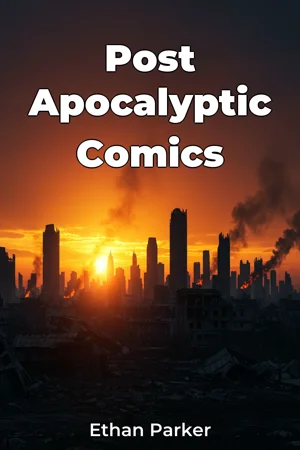
What if the end wasn't the end, but a new beginning, albeit a terrifying one? *Post-Apocalyptic Comics* delves into the enduring fascination with survival, dystopian futures, and world-altering catastrophes as depicted in the sequential art form. This book examines how comics, a medium often associated with escapism, have become powerful vehicles for exploring profound anxieties about societal collapse, human resilience, and the moral quandaries that arise when civilization crumbles. This exploration centers on three key themes: the representation of survival strategies in post-apocalyptic scenarios, the construction and critique of dystopian societies in the ashes of the old world, and the utilization of catastrophic events as a catalyst for examining human nature. Understanding these themes is crucial, as they reflect deep-seated societal fears and offer valuable insights into how we envision our future and grapple with present-day challenges. Our investigation will be grounded in a historical context, tracing the evolution of apocalyptic narratives in comics from the Cold War era to the present day, noting key shifts in cultural anxieties reflected in the stories. It requires a basic understanding of comics as a narrative medium and a general familiarity with major historical events that have shaped apocalyptic anxieties, such as nuclear proliferation, environmental degradation, and global pandemics. The central argument of *Post-Apocalyptic Comics* is that these narratives, far from being mere entertainment, serve as cultural barometers, reflecting and refracting our collective anxieties and aspirations. By examining the recurring tropes, archetypes, and thematic concerns within these comics, we can gain a deeper comprehension of our own societal values, fears, and hopes for the future. The book will unfold as follows: First, we'll introduce the core concepts of post-apocalyptic fiction and its significance in comics. Then, it will explore three major areas: 1. the evolution of survival strategies depicted, from individualistic approaches to collaborative community building; 2. the representations of dystopian societies, analyzing how they critique existing power structures and societal inequalities; 3. the role of catastrophic events as moral testing grounds, examining how characters grapple with ethical dilemmas in extreme circumstances. Finally, it will culminate in a discussion of the broader cultural implications of these narratives. To support these arguments, the book will draw upon a diverse range of primary source material – examining a wide selection of post-apocalyptic comic books, graphic novels, and related media. This analysis will be complemented by secondary research from scholarly articles, critical essays, and historical accounts, providing a comprehensive and methodologically diverse study. Attention will be given to under-examined independent comics in addition to work from major publishers. This project connects to several interdisciplinary fields. Firstly, sociology, allowing us to analyze how these comics reflect and impact social norms and structures. Secondly, political science, helping us to understand the power dynamics and governance systems depicted in dystopian societies. And thirdly, environmental studies, providing insight into the ecological anxieties that often underlie post-apocalyptic narratives. The book adopts a formal yet accessible tone, blending scholarly analysis with clear and engaging writing. The target audience includes students and scholars of comics studies, media studies, and popular culture, as well as general readers interested in the genre and its cultural significance. Given the breadth of post-apocalyptic fiction, the book focuses specifically on comics as a unique medium for exploring these themes, thus limiting any deep exploration of literature or gaming. Ultimately, *Post-Apocalyptic Comics* aims to equip readers with a deeper understanding of the cultural significance of these narratives and their relevance to contemporary issues, considering the possible lessons we can learn from fictional disasters. The book also acknowledges the ongoing debates surrounding the representation of marginalized groups in post-apocalyptic fiction, and the ethical considerations involved in portraying violence and suffering.
What if the end wasn't the end, but a new beginning, albeit a terrifying one? *Post-Apocalyptic Comics* delves into the enduring fascination with survival, dystopian futures, and world-altering catastrophes as depicted in the sequential art form. This book examines how comics, a medium often associated with escapism, have become powerful vehicles for exploring profound anxieties about societal collapse, human resilience, and the moral quandaries that arise when civilization crumbles. This exploration centers on three key themes: the representation of survival strategies in post-apocalyptic scenarios, the construction and critique of dystopian societies in the ashes of the old world, and the utilization of catastrophic events as a catalyst for examining human nature. Understanding these themes is crucial, as they reflect deep-seated societal fears and offer valuable insights into how we envision our future and grapple with present-day challenges. Our investigation will be grounded in a historical context, tracing the evolution of apocalyptic narratives in comics from the Cold War era to the present day, noting key shifts in cultural anxieties reflected in the stories. It requires a basic understanding of comics as a narrative medium and a general familiarity with major historical events that have shaped apocalyptic anxieties, such as nuclear proliferation, environmental degradation, and global pandemics. The central argument of *Post-Apocalyptic Comics* is that these narratives, far from being mere entertainment, serve as cultural barometers, reflecting and refracting our collective anxieties and aspirations. By examining the recurring tropes, archetypes, and thematic concerns within these comics, we can gain a deeper comprehension of our own societal values, fears, and hopes for the future. The book will unfold as follows: First, we'll introduce the core concepts of post-apocalyptic fiction and its significance in comics. Then, it will explore three major areas: 1. the evolution of survival strategies depicted, from individualistic approaches to collaborative community building; 2. the representations of dystopian societies, analyzing how they critique existing power structures and societal inequalities; 3. the role of catastrophic events as moral testing grounds, examining how characters grapple with ethical dilemmas in extreme circumstances. Finally, it will culminate in a discussion of the broader cultural implications of these narratives. To support these arguments, the book will draw upon a diverse range of primary source material – examining a wide selection of post-apocalyptic comic books, graphic novels, and related media. This analysis will be complemented by secondary research from scholarly articles, critical essays, and historical accounts, providing a comprehensive and methodologically diverse study. Attention will be given to under-examined independent comics in addition to work from major publishers. This project connects to several interdisciplinary fields. Firstly, sociology, allowing us to analyze how these comics reflect and impact social norms and structures. Secondly, political science, helping us to understand the power dynamics and governance systems depicted in dystopian societies. And thirdly, environmental studies, providing insight into the ecological anxieties that often underlie post-apocalyptic narratives. The book adopts a formal yet accessible tone, blending scholarly analysis with clear and engaging writing. The target audience includes students and scholars of comics studies, media studies, and popular culture, as well as general readers interested in the genre and its cultural significance. Given the breadth of post-apocalyptic fiction, the book focuses specifically on comics as a unique medium for exploring these themes, thus limiting any deep exploration of literature or gaming. Ultimately, *Post-Apocalyptic Comics* aims to equip readers with a deeper understanding of the cultural significance of these narratives and their relevance to contemporary issues, considering the possible lessons we can learn from fictional disasters. The book also acknowledges the ongoing debates surrounding the representation of marginalized groups in post-apocalyptic fiction, and the ethical considerations involved in portraying violence and suffering.
*Post Apocalyptic Comics* explores our fascination with dystopian societies and survival in the face of societal collapse, as portrayed in comics and graphic novels. *Post Apocalyptic Comics* examines how these narratives, often dismissed as mere entertainment, actually reflect our deepest cultural anxieties. Comics offer a unique lens through which to examine human resilience and the moral dilemmas that arise when civilization crumbles, providing a powerful commentary on our values and fears. One intriguing facet is the evolution of survival strategies depicted, ranging from lone wolf approaches to collaborative community building after catastrophic events. The study analyzes the representation of dystopian societies and the power structures they create. It also considers how these narratives function as cultural barometers, reflecting anxieties related to nuclear proliferation, environmental degradation, and global pandemics. Using a diverse range of comic books and graphic novels and balancing formal analysis with engaging writing, *Post Apocalyptic Comics* progresses from introducing core concepts to exploring survival strategies, dystopian representations, and the ethical quandaries faced by characters. Ultimately, *Post Apocalyptic Comics* aims to provide a deeper understanding of the cultural significance of post-apocalyptic comics and their relevance to contemporary issues.
Book Details
ISBN
9788235231659
Publisher
Publifye AS
Your Licenses
You don't own any licenses for this book
Purchase a license below to unlock this book and download the EPUB.
Purchase License
Select a tier to unlock this book
Need bulk licensing?
Contact us for enterprise agreements.