
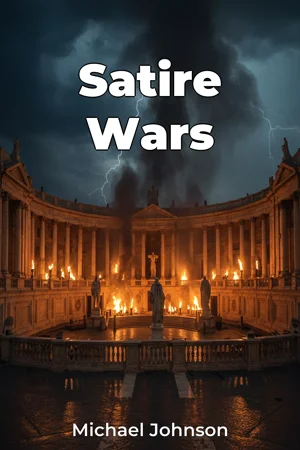
About This Book
Can humor truly challenge power, or does it merely reinforce existing structures? *Satire Wars* delves into the complex interplay between satire and the institutions it frequently targets: politics, religion, and media. We examine how satirical expression, throughout history and in contemporary society, has both influenced and clashed with these powerful forces. The central exploration revolves around understanding satire not just as comedic commentary but as a potent form of social and political engagement, capable of shaping public discourse and even sparking tangible change. This book is significant because understanding satire's role is crucial in navigating today’s information landscape. The blurring lines between news and entertainment, coupled with the proliferation of online content, make it imperative to critically assess the messages conveyed through humor. Furthermore, the increasing sensitivity surrounding issues of identity and belief necessitates a nuanced understanding of satire's potential to both critique and offend. *Satire Wars* argues that satire's effectiveness hinges on its ability to expose hypocrisy and absurdity while remaining grounded in truth, however subjective that truth may be. It contends that the power of satire lies not only in its comedic value but also in its capacity to provoke critical thinking and challenge established narratives. We explore how satire, when successful, can serve as a vital check on power, holding institutions accountable and fostering a more informed and engaged citizenry. The book is structured into three main sections. The first introduces the core concepts of satire, exploring its various forms, historical evolution, and theoretical underpinnings. The second delves into specific case studies, analyzing instances where satire has directly impacted or clashed with political figures, religious institutions, and media outlets. This section covers key historical moments and contemporary examples, ranging from political cartoons of the 18th century to modern-day satirical news programs. Finally, the book culminates in an exploration of the ethical considerations surrounding satire, examining issues such as freedom of speech, offensiveness, and the potential for satire to be co-opted by those in power. It also considers the future of satire in an age of deepfakes and algorithmic amplification. The analysis relies on a diverse range of evidence, including historical documents, media content, scholarly articles, and interviews with satirists and cultural commentators. The study also considers legal precedents related to satire and freedom of expression, comparing and contrasting different legal frameworks across various countries. *Satire Wars* connects to several other fields of study, including political science, religious studies, media studies, and sociology. By drawing on these disciplines, the book offers a holistic understanding of satire's multifaceted role in society. Moreover, it provides a unique perspective by considering the intersection of these fields, highlighting how political satire can be influenced by religious beliefs or how media power can shape the reception of satirical messages. This book takes a unique approach by examining satire through the lens of power dynamics. Rather than simply analyzing the comedic elements of satire, it focuses on the strategic use of humor to challenge authority and influence public opinion. It is written in an accessible style, avoiding overly academic jargon while maintaining a rigorous analytical approach. The target audience is broad, encompassing students, academics, journalists, policymakers, and anyone interested in understanding the role of satire in contemporary society. It will be particularly valuable to those studying or working in fields related to politics, religion, media, or communication. In keeping with the conventions of non-fiction writing, *Satire Wars* adheres to principles of accuracy, objectivity, and transparency. All claims are supported by evidence, and sources are clearly cited. The book acknowledges the limitations of its scope, focusing primarily on Western examples of satire while recognizing that the dynamics of satire may vary in other cultural contexts. The information presented in *Satire Wars* can be applied to a variety of real-world situations. For example, it can help individuals critically evaluate the messages conveyed through satirical media, understand the potential impact of satire on political discourse, and navigate the ethical challenges of creating or consuming satirical content. The book addresses ongoing debates surrounding the limits of free speech, the role of satire in a polarized society, and the potential for satire to be used as a tool for propaganda or misinformation. By exploring these controversies, *Satire Wars* aims to foster a more informed and nuanced understanding of the power and limitations of satire.
Can humor truly challenge power, or does it merely reinforce existing structures? *Satire Wars* delves into the complex interplay between satire and the institutions it frequently targets: politics, religion, and media. We examine how satirical expression, throughout history and in contemporary society, has both influenced and clashed with these powerful forces. The central exploration revolves around understanding satire not just as comedic commentary but as a potent form of social and political engagement, capable of shaping public discourse and even sparking tangible change. This book is significant because understanding satire's role is crucial in navigating today’s information landscape. The blurring lines between news and entertainment, coupled with the proliferation of online content, make it imperative to critically assess the messages conveyed through humor. Furthermore, the increasing sensitivity surrounding issues of identity and belief necessitates a nuanced understanding of satire's potential to both critique and offend. *Satire Wars* argues that satire's effectiveness hinges on its ability to expose hypocrisy and absurdity while remaining grounded in truth, however subjective that truth may be. It contends that the power of satire lies not only in its comedic value but also in its capacity to provoke critical thinking and challenge established narratives. We explore how satire, when successful, can serve as a vital check on power, holding institutions accountable and fostering a more informed and engaged citizenry. The book is structured into three main sections. The first introduces the core concepts of satire, exploring its various forms, historical evolution, and theoretical underpinnings. The second delves into specific case studies, analyzing instances where satire has directly impacted or clashed with political figures, religious institutions, and media outlets. This section covers key historical moments and contemporary examples, ranging from political cartoons of the 18th century to modern-day satirical news programs. Finally, the book culminates in an exploration of the ethical considerations surrounding satire, examining issues such as freedom of speech, offensiveness, and the potential for satire to be co-opted by those in power. It also considers the future of satire in an age of deepfakes and algorithmic amplification. The analysis relies on a diverse range of evidence, including historical documents, media content, scholarly articles, and interviews with satirists and cultural commentators. The study also considers legal precedents related to satire and freedom of expression, comparing and contrasting different legal frameworks across various countries. *Satire Wars* connects to several other fields of study, including political science, religious studies, media studies, and sociology. By drawing on these disciplines, the book offers a holistic understanding of satire's multifaceted role in society. Moreover, it provides a unique perspective by considering the intersection of these fields, highlighting how political satire can be influenced by religious beliefs or how media power can shape the reception of satirical messages. This book takes a unique approach by examining satire through the lens of power dynamics. Rather than simply analyzing the comedic elements of satire, it focuses on the strategic use of humor to challenge authority and influence public opinion. It is written in an accessible style, avoiding overly academic jargon while maintaining a rigorous analytical approach. The target audience is broad, encompassing students, academics, journalists, policymakers, and anyone interested in understanding the role of satire in contemporary society. It will be particularly valuable to those studying or working in fields related to politics, religion, media, or communication. In keeping with the conventions of non-fiction writing, *Satire Wars* adheres to principles of accuracy, objectivity, and transparency. All claims are supported by evidence, and sources are clearly cited. The book acknowledges the limitations of its scope, focusing primarily on Western examples of satire while recognizing that the dynamics of satire may vary in other cultural contexts. The information presented in *Satire Wars* can be applied to a variety of real-world situations. For example, it can help individuals critically evaluate the messages conveyed through satirical media, understand the potential impact of satire on political discourse, and navigate the ethical challenges of creating or consuming satirical content. The book addresses ongoing debates surrounding the limits of free speech, the role of satire in a polarized society, and the potential for satire to be used as a tool for propaganda or misinformation. By exploring these controversies, *Satire Wars* aims to foster a more informed and nuanced understanding of the power and limitations of satire.
"Satire Wars" explores the dynamic relationship between satire and powerful institutions like politics, religion, and media, examining its influence on public discourse and potential to spark societal change. It's not just about comedy; the book argues satire serves as a potent form of social and political engagement, capable of shaping opinions and challenging established narratives. Understanding satire's role is particularly relevant today, given the blurred lines between news and entertainment and the increasing sensitivity surrounding issues of identity and belief. Satire's effectiveness hinges on exposing hypocrisy while remaining grounded in truth. This examination of satire is structured across three sections. First, the book introduces core concepts, exploring satire's forms, history, and theoretical underpinnings. Second, it delves into case studies where satire has impacted politics, religion, and media, ranging from historical political cartoons to modern satirical news. Finally, the book explores ethical considerations like freedom of speech and offensiveness, while also considering satire's future in an age of deepfakes. By examining satire through the lens of power dynamics, the book offers a unique perspective, focusing on the strategic use of humor to challenge authority and influence public opinion.
Book Details
ISBN
9788235231581
Publisher
Publifye AS
Your Licenses
You don't own any licenses for this book
Purchase a license below to unlock this book and download the EPUB.
Purchase License
Select a tier to unlock this book
Need bulk licensing?
Contact us for enterprise agreements.