
About This Book
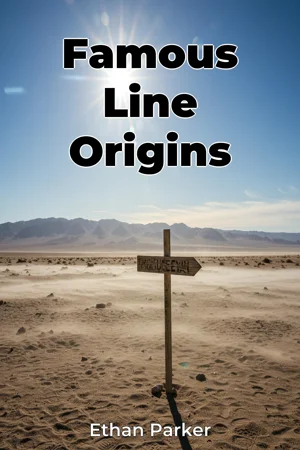
Have you ever wondered about the journey a simple line of dialogue takes to become a cultural touchstone instantly recognizable across generations? This book, "Famous Line Origins," explores the fascinating stories behind some of cinema's most quoted phrases, diving deep into their creation, context, and unexpected ascendance to iconic status. It is a reference guide that offers a blend of film history, cultural studies, and linguistic analysis. At its heart, this book examines the interplay of intention, performance, and audience reception. It considers how a line conceived as merely functional dialogue can unexpectedly resonate with viewers, transcending the boundaries of its original film to become shorthand for shared experiences, emotions, and ideas. The book analyzes the elements that contribute to a line's memorability, exploring factors like rhythm, wit, emotional weight, and universality. Why do some lines stick in our collective consciousness while others fade into obscurity? To understand the origins of these famous lines, the book delves into the historical and social context surrounding their films. It examines the cultural climate, prevailing attitudes, and significant events that may have influenced a line's reception and enduring appeal. Understanding this backdrop provides crucial insights into why certain phrases resonated with audiences at the time and continue to hold meaning today. This analysis includes the filmmakers' intent and the actors’ impact on delivery. The central argument of "Famous Line Origins" posits that while some iconic lines are meticulously crafted with the intention of creating a memorable moment, many achieve their status serendipitously, born from improvisation, misinterpretations, or unexpected cultural shifts. This book challenges the notion that iconic status is solely the product of deliberate planning, highlighting the role of chance, cultural resonance, and audience interpretation in shaping a line's legacy. The book begins by introducing key concepts such as meme theory, cultural transmission, and the psychology of memorability, laying the groundwork for understanding how lines become ingrained in popular culture. The initial chapters investigate the genesis stories of individual lines, tracing their evolution from script to screen and analyzing their initial reception. It then moves to a broader analysis of thematic categories of famous lines: lines about love and loss, lines about power and conflict, and lines about hope and resilience. Each category is explored through case studies of specific films, providing in-depth analysis of the lines' context, delivery, and enduring appeal. The book concludes by exploring the practical applications of understanding line origin to areas like advertising, public speaking, and even everyday communication. The evidence and research presented in this book are based on a combination of primary sources, including film scripts, interviews with filmmakers and actors, and behind-the-scenes documentaries, and secondary sources, such as film criticism, cultural studies analyses, and linguistic research. The book draws on unique data sources, such as viewer surveys and social media analytics, to gauge the contemporary relevance and usage of these famous lines. "Famous Line Origins" has connections to the fields of sociology through its exploration of group and cultural identity, as the lines often bind people together through shared understanding. It also connects to the world of media studies as it grapples with how media affects our perception and language. Finally, it touches on marketing because the art of creating a memorable line is also critical to marketing strategy. This book offers a fresh perspective by combining rigorous research with engaging storytelling, revealing the complex interplay of factors that contribute to a line's iconic status. It adopts a conversational and accessible writing style, making it engaging for both casual film enthusiasts and serious scholars. The target audience for this book includes film buffs, writers, linguists, communications professionals, and anyone interested in the power of language and its impact on popular culture. This book would be valuable to them because it provides a unique glimpse into the creative process behind filmmaking and the cultural forces that shape our collective memory. As a reference book, "Famous Line Origins" adheres to genre conventions by providing detailed citations, comprehensive indexing, and a well-organized structure that allows readers to easily access information about specific films and lines. The scope of the book is limited to English-language films, reflecting the author's expertise and the availability of research materials. It does not delve into theories about non-English films, although it acknowledges and respects that these also exist. The findings have real-world applications for anyone seeking to craft memorable and impactful messaging, from screenwriters to public speakers. While the book strives for objectivity, it acknowledges that interpretations of film and culture are inherently subjective, and it encourages readers to engage critically with the material presented.
Have you ever wondered about the journey a simple line of dialogue takes to become a cultural touchstone instantly recognizable across generations? This book, "Famous Line Origins," explores the fascinating stories behind some of cinema's most quoted phrases, diving deep into their creation, context, and unexpected ascendance to iconic status. It is a reference guide that offers a blend of film history, cultural studies, and linguistic analysis. At its heart, this book examines the interplay of intention, performance, and audience reception. It considers how a line conceived as merely functional dialogue can unexpectedly resonate with viewers, transcending the boundaries of its original film to become shorthand for shared experiences, emotions, and ideas. The book analyzes the elements that contribute to a line's memorability, exploring factors like rhythm, wit, emotional weight, and universality. Why do some lines stick in our collective consciousness while others fade into obscurity? To understand the origins of these famous lines, the book delves into the historical and social context surrounding their films. It examines the cultural climate, prevailing attitudes, and significant events that may have influenced a line's reception and enduring appeal. Understanding this backdrop provides crucial insights into why certain phrases resonated with audiences at the time and continue to hold meaning today. This analysis includes the filmmakers' intent and the actors’ impact on delivery. The central argument of "Famous Line Origins" posits that while some iconic lines are meticulously crafted with the intention of creating a memorable moment, many achieve their status serendipitously, born from improvisation, misinterpretations, or unexpected cultural shifts. This book challenges the notion that iconic status is solely the product of deliberate planning, highlighting the role of chance, cultural resonance, and audience interpretation in shaping a line's legacy. The book begins by introducing key concepts such as meme theory, cultural transmission, and the psychology of memorability, laying the groundwork for understanding how lines become ingrained in popular culture. The initial chapters investigate the genesis stories of individual lines, tracing their evolution from script to screen and analyzing their initial reception. It then moves to a broader analysis of thematic categories of famous lines: lines about love and loss, lines about power and conflict, and lines about hope and resilience. Each category is explored through case studies of specific films, providing in-depth analysis of the lines' context, delivery, and enduring appeal. The book concludes by exploring the practical applications of understanding line origin to areas like advertising, public speaking, and even everyday communication. The evidence and research presented in this book are based on a combination of primary sources, including film scripts, interviews with filmmakers and actors, and behind-the-scenes documentaries, and secondary sources, such as film criticism, cultural studies analyses, and linguistic research. The book draws on unique data sources, such as viewer surveys and social media analytics, to gauge the contemporary relevance and usage of these famous lines. "Famous Line Origins" has connections to the fields of sociology through its exploration of group and cultural identity, as the lines often bind people together through shared understanding. It also connects to the world of media studies as it grapples with how media affects our perception and language. Finally, it touches on marketing because the art of creating a memorable line is also critical to marketing strategy. This book offers a fresh perspective by combining rigorous research with engaging storytelling, revealing the complex interplay of factors that contribute to a line's iconic status. It adopts a conversational and accessible writing style, making it engaging for both casual film enthusiasts and serious scholars. The target audience for this book includes film buffs, writers, linguists, communications professionals, and anyone interested in the power of language and its impact on popular culture. This book would be valuable to them because it provides a unique glimpse into the creative process behind filmmaking and the cultural forces that shape our collective memory. As a reference book, "Famous Line Origins" adheres to genre conventions by providing detailed citations, comprehensive indexing, and a well-organized structure that allows readers to easily access information about specific films and lines. The scope of the book is limited to English-language films, reflecting the author's expertise and the availability of research materials. It does not delve into theories about non-English films, although it acknowledges and respects that these also exist. The findings have real-world applications for anyone seeking to craft memorable and impactful messaging, from screenwriters to public speakers. While the book strives for objectivity, it acknowledges that interpretations of film and culture are inherently subjective, and it encourages readers to engage critically with the material presented.
"Famous Line Origins" delves into the captivating stories behind cinema's most iconic phrases, exploring how they achieve cultural resonance. The book examines the journey of movie lines from script to screen, analyzing why some dialogues become ingrained in popular culture while others fade away. Interestingly, many iconic lines arise serendipitously through improvisation or unexpected cultural shifts, rather than solely from deliberate planning. The book presents its analysis by first introducing key concepts like meme theory to explain cultural transmission. It then investigates individual lines, tracing their evolution and initial reception, before moving to thematic categories like love, power, and hope. Through film analysis and case studies, "Famous Line Origins" highlights the interplay of historical context, actor's delivery, and audience interpretation in shaping a line's legacy. This reference guide uniquely combines film history, cultural studies, and linguistic analysis, making it valuable for film buffs, writers, and anyone interested in language's power. By blending rigorous research with engaging storytelling, the book reveals the complex factors that contribute to a line's iconic status and offers insights applicable to advertising, public speaking, and everyday communication.
Book Details
ISBN
9788235231529
Publisher
Publifye AS
Your Licenses
You don't own any licenses for this book
Purchase a license below to unlock this book and download the EPUB.
Purchase License
Select a tier to unlock this book
Need bulk licensing?
Contact us for enterprise agreements.