
About This Book
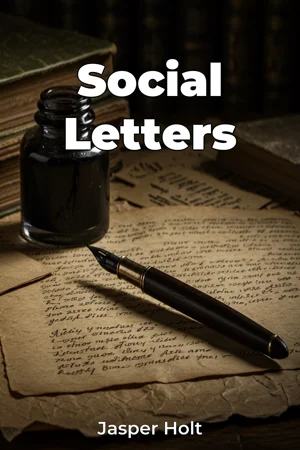
What can centuries of personal letters reveal about the evolution of society? "Social Letters" explores the intricate relationship between personal correspondence and the shifting landscape of social norms, customs, and values. This book delves into the wealth of information contained within historical and contemporary letters, examining how they reflect and, at times, actively shape societal structures. The book focuses on two major themes: first, the role of letters as artifacts that encapsulate the social expectations and behaviors of their time; second, the ways in which letters contribute to the ongoing negotiation and transformation of these norms. We will look at how letters are used to create, consolidate, and occasionally challenge social hierarchies. These topics are significant because they offer a unique window into the everyday lives and evolving mindsets of individuals across different historical periods, providing insights unattainable through more formal historical records. Understanding the social context in which letters were written and received is crucial. The book provides background on the historical periods examined, touching on major events, cultural movements, and intellectual trends that influenced social interactions. Prior knowledge of general historical timelines and basic sociological concepts will enhance the reader’s understanding, though detailed explanations are provided. The central argument of "Social Letters" is that personal correspondence serves as a vital, yet often overlooked, primary source for understanding the dynamic interplay between individual agency and social structure. By analyzing the language, etiquette, and content of letters, we can gain a deeper appreciation for how individuals navigated and, in some cases, redefined the boundaries of acceptable social behavior. This argument is essential because it challenges conventional historical narratives that primarily focus on macro-level events and institutions, highlighting the importance of individual experiences in shaping broader social change. The book is structured to guide the reader through this analysis. The introduction lays the groundwork by defining key concepts and outlining the historical scope of the study. Subsequent chapters will delve into specific themes, such as courtship and familial relationships, professional networks, and political discourse, as reflected in letters from different eras. The analysis develops through explorations of epistolary style, rhetorical strategies, and unspoken social codes. The conclusion synthesizes these findings, offering a framework for understanding the ongoing relevance of personal correspondence in the digital age. To support its arguments, "Social Letters" draws upon a diverse range of primary sources, including collections of personal letters from archives, libraries, and private collections. The book employs close reading techniques and discourse analysis to uncover the subtle nuances of language and meaning embedded in these texts. Additionally, it incorporates quantitative analysis of letter-writing trends to provide a broader context for understanding shifts in social behavior. "Social Letters" connects to several interdisciplinary fields, including sociology, linguistics, and literary studies. Its analysis of social norms is directly relevant to sociological theories of social construction and cultural change. Its examination of language and rhetoric aligns with linguistic approaches to discourse analysis and pragmatics. Its exploration of narrative and storytelling connects to literary studies and the analysis of personal narratives. These connections enrich the book's argument by providing multiple perspectives on the relationship between letters and society. This book offers a unique perspective by treating personal letters not merely as personal communications but as valuable social documents that reflect and shape societal norms. This approach provides a nuanced understanding of how social expectations evolve over time and how individuals both conform to and challenge these expectations through their written interactions. Written in an accessible, yet scholarly style, "Social Letters" is aimed at students and researchers in history, sociology, and related fields, as well as general readers interested in social history and the power of personal narratives. The book's value lies in its ability to shed light on the often-hidden dynamics of social life and its capacity to connect readers to the past through the intimate voices of individuals who lived it. As a work of non-fiction social science, the book adheres to the conventions of scholarly research, including rigorous documentation, clear argumentation, and objective analysis. The scope of "Social Letters" is deliberately broad, encompassing a range of historical periods and social contexts, but it focuses primarily on Western societies. This limitation is acknowledged, and suggestions for future research are offered. The insights gained from "Social Letters" have practical applications for understanding contemporary social dynamics, particularly in the context of digital communication. By analyzing the patterns of communication in historical letters, we can gain a better understanding of how social norms are negotiated and enforced in online spaces, offering valuable insights for navigating the complexities of modern social interactions. The book addresses the ongoing debate about the role of technology in shaping social relationships, offering a historical perspective on how communication technologies have always influenced the ways in which individuals interact and form social bonds.
What can centuries of personal letters reveal about the evolution of society? "Social Letters" explores the intricate relationship between personal correspondence and the shifting landscape of social norms, customs, and values. This book delves into the wealth of information contained within historical and contemporary letters, examining how they reflect and, at times, actively shape societal structures. The book focuses on two major themes: first, the role of letters as artifacts that encapsulate the social expectations and behaviors of their time; second, the ways in which letters contribute to the ongoing negotiation and transformation of these norms. We will look at how letters are used to create, consolidate, and occasionally challenge social hierarchies. These topics are significant because they offer a unique window into the everyday lives and evolving mindsets of individuals across different historical periods, providing insights unattainable through more formal historical records. Understanding the social context in which letters were written and received is crucial. The book provides background on the historical periods examined, touching on major events, cultural movements, and intellectual trends that influenced social interactions. Prior knowledge of general historical timelines and basic sociological concepts will enhance the reader’s understanding, though detailed explanations are provided. The central argument of "Social Letters" is that personal correspondence serves as a vital, yet often overlooked, primary source for understanding the dynamic interplay between individual agency and social structure. By analyzing the language, etiquette, and content of letters, we can gain a deeper appreciation for how individuals navigated and, in some cases, redefined the boundaries of acceptable social behavior. This argument is essential because it challenges conventional historical narratives that primarily focus on macro-level events and institutions, highlighting the importance of individual experiences in shaping broader social change. The book is structured to guide the reader through this analysis. The introduction lays the groundwork by defining key concepts and outlining the historical scope of the study. Subsequent chapters will delve into specific themes, such as courtship and familial relationships, professional networks, and political discourse, as reflected in letters from different eras. The analysis develops through explorations of epistolary style, rhetorical strategies, and unspoken social codes. The conclusion synthesizes these findings, offering a framework for understanding the ongoing relevance of personal correspondence in the digital age. To support its arguments, "Social Letters" draws upon a diverse range of primary sources, including collections of personal letters from archives, libraries, and private collections. The book employs close reading techniques and discourse analysis to uncover the subtle nuances of language and meaning embedded in these texts. Additionally, it incorporates quantitative analysis of letter-writing trends to provide a broader context for understanding shifts in social behavior. "Social Letters" connects to several interdisciplinary fields, including sociology, linguistics, and literary studies. Its analysis of social norms is directly relevant to sociological theories of social construction and cultural change. Its examination of language and rhetoric aligns with linguistic approaches to discourse analysis and pragmatics. Its exploration of narrative and storytelling connects to literary studies and the analysis of personal narratives. These connections enrich the book's argument by providing multiple perspectives on the relationship between letters and society. This book offers a unique perspective by treating personal letters not merely as personal communications but as valuable social documents that reflect and shape societal norms. This approach provides a nuanced understanding of how social expectations evolve over time and how individuals both conform to and challenge these expectations through their written interactions. Written in an accessible, yet scholarly style, "Social Letters" is aimed at students and researchers in history, sociology, and related fields, as well as general readers interested in social history and the power of personal narratives. The book's value lies in its ability to shed light on the often-hidden dynamics of social life and its capacity to connect readers to the past through the intimate voices of individuals who lived it. As a work of non-fiction social science, the book adheres to the conventions of scholarly research, including rigorous documentation, clear argumentation, and objective analysis. The scope of "Social Letters" is deliberately broad, encompassing a range of historical periods and social contexts, but it focuses primarily on Western societies. This limitation is acknowledged, and suggestions for future research are offered. The insights gained from "Social Letters" have practical applications for understanding contemporary social dynamics, particularly in the context of digital communication. By analyzing the patterns of communication in historical letters, we can gain a better understanding of how social norms are negotiated and enforced in online spaces, offering valuable insights for navigating the complexities of modern social interactions. The book addresses the ongoing debate about the role of technology in shaping social relationships, offering a historical perspective on how communication technologies have always influenced the ways in which individuals interact and form social bonds.
"Social Letters" explores the fascinating intersection of personal correspondence and social history, revealing how letters both reflect and shape the evolution of social norms and values. Delving into historical and contemporary letters, the book uncovers insights into everyday lives and evolving mindsets, offering a unique perspective often missed by traditional historical records. Letters are not merely personal communications but valuable artifacts that encapsulate social expectations, contribute to negotiating norms, and sometimes challenge social hierarchies. The book progresses through specific themes like courtship, family relationships, and political discourse as reflected in letters from different eras. By analyzing language, etiquette, and content, "Social Letters" highlights how individuals navigated acceptable social behavior. This approach challenges conventional historical narratives focused on macro-level events, emphasizing the importance of individual experiences in shaping broader social change and offering a unique window into how social expectations evolve over time.
Book Details
ISBN
9788235231314
Publisher
Publifye AS
Your Licenses
You don't own any licenses for this book
Purchase a license below to unlock this book and download the EPUB.
Purchase License
Select a tier to unlock this book
Need bulk licensing?
Contact us for enterprise agreements.