
About This Book
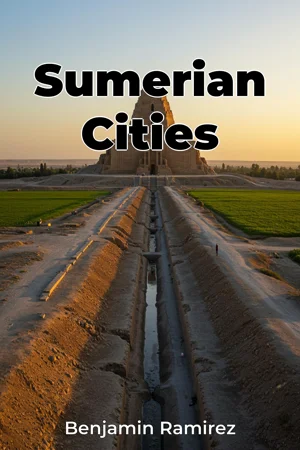
Can the foundations of modern urban life be traced back to a civilization that flourished millennia ago? "Sumerian Cities" delves into the groundbreaking urban planning and societal innovations of ancient Sumer, revealing how these Mesopotamian metropolises laid the groundwork for many aspects of city living we take for granted today. This book explores three key themes: the ingenious irrigation systems that sustained these populations, the development of cuneiform writing as a tool for administration and cultural expression, and the complex governance structures that maintained order and facilitated economic growth. Understanding these themes is crucial because they demonstrate how early urban centers addressed fundamental challenges of resource management, communication, and social organization – problems that continue to resonate in contemporary urban planning. Set against the backdrop of the fertile crescent, this book examines the Sumerian city-states within their environmental and historical context. It requires no specialized knowledge, aiming to make the complexities of Sumerian society accessible to a broad audience. The central argument is that Sumerian cities represent a pivotal moment in human history, demonstrating the earliest large-scale efforts to create sustainable, organized urban environments. This argument is vital because it challenges the notion that modern urban planning is a purely contemporary invention, revealing deep historical roots. "Sumerian Cities" is structured to provide a comprehensive overview of this civilization's urban achievements. It begins by introducing the geographical and historical context, setting the stage for understanding the unique challenges and opportunities faced by the Sumerians. The book then develops its core themes across three major sections. First, it examines Sumerian irrigation techniques, detailing the canal systems, water management strategies, and their impact on agricultural productivity. Second, it analyzes the evolution of cuneiform writing, exploring its use in record-keeping, literature, and legal codes. Third, it investigates Sumerian governance, focusing on the roles of kings, priests, and assemblies in managing city affairs and resolving conflicts. The book culminates by illustrating how Sumerian innovations influenced later Mesopotamian societies and, ultimately, contributed to the development of urban centers worldwide. It also addresses the limitations of Sumerian urbanism, acknowledging its hierarchical social structure and susceptibility to environmental challenges. The arguments presented are supported by a range of evidence, including archaeological findings from sites like Ur, Uruk, and Lagash; translations of cuneiform texts; and analysis of ancient maps and architectural plans. "Sumerian Cities" uniquely synthesizes this data to provide a holistic view of Sumerian urban life. This book connects to several other fields, including archaeology, anthropology, and political science. By examining the material culture of Sumerian cities, it provides insights into the daily lives and social structures of their inhabitants, enhancing anthropological understanding. Furthermore, by analyzing Sumerian governance systems, it contributes to political science by demonstrating the early forms of state organization. "Sumerian Cities" offers a fresh perspective by focusing on the interconnectedness of irrigation, writing, and governance in shaping Sumerian urban society. This integrated approach distinguishes it from studies that focus on individual aspects of Sumerian culture. Written in a clear and accessible style, the book aims to engage readers with compelling narratives and vivid descriptions of Sumerian city life. The target audience includes students of history and archaeology, urban planners, and anyone interested in the origins of urban civilization. This book offers valuable insights for those seeking to understand the roots of contemporary urban challenges and opportunities. Adhering to the conventions of historical non-fiction, "Sumerian Cities" provides a well-researched and meticulously documented account of Sumerian urbanism. While the book covers the major Sumerian city-states, it acknowledges that our understanding of this civilization is constantly evolving as new archaeological discoveries are made. The information presented has various real-world applications, including informing contemporary urban planning strategies for sustainable water management, efficient governance, and cultural preservation. Finally, "Sumerian Cities" addresses ongoing debates about the nature of early state formation and the role of environmental factors in shaping societal development, engaging with current scholarship to provide a nuanced perspective on Sumerian urbanism.
Can the foundations of modern urban life be traced back to a civilization that flourished millennia ago? "Sumerian Cities" delves into the groundbreaking urban planning and societal innovations of ancient Sumer, revealing how these Mesopotamian metropolises laid the groundwork for many aspects of city living we take for granted today. This book explores three key themes: the ingenious irrigation systems that sustained these populations, the development of cuneiform writing as a tool for administration and cultural expression, and the complex governance structures that maintained order and facilitated economic growth. Understanding these themes is crucial because they demonstrate how early urban centers addressed fundamental challenges of resource management, communication, and social organization – problems that continue to resonate in contemporary urban planning. Set against the backdrop of the fertile crescent, this book examines the Sumerian city-states within their environmental and historical context. It requires no specialized knowledge, aiming to make the complexities of Sumerian society accessible to a broad audience. The central argument is that Sumerian cities represent a pivotal moment in human history, demonstrating the earliest large-scale efforts to create sustainable, organized urban environments. This argument is vital because it challenges the notion that modern urban planning is a purely contemporary invention, revealing deep historical roots. "Sumerian Cities" is structured to provide a comprehensive overview of this civilization's urban achievements. It begins by introducing the geographical and historical context, setting the stage for understanding the unique challenges and opportunities faced by the Sumerians. The book then develops its core themes across three major sections. First, it examines Sumerian irrigation techniques, detailing the canal systems, water management strategies, and their impact on agricultural productivity. Second, it analyzes the evolution of cuneiform writing, exploring its use in record-keeping, literature, and legal codes. Third, it investigates Sumerian governance, focusing on the roles of kings, priests, and assemblies in managing city affairs and resolving conflicts. The book culminates by illustrating how Sumerian innovations influenced later Mesopotamian societies and, ultimately, contributed to the development of urban centers worldwide. It also addresses the limitations of Sumerian urbanism, acknowledging its hierarchical social structure and susceptibility to environmental challenges. The arguments presented are supported by a range of evidence, including archaeological findings from sites like Ur, Uruk, and Lagash; translations of cuneiform texts; and analysis of ancient maps and architectural plans. "Sumerian Cities" uniquely synthesizes this data to provide a holistic view of Sumerian urban life. This book connects to several other fields, including archaeology, anthropology, and political science. By examining the material culture of Sumerian cities, it provides insights into the daily lives and social structures of their inhabitants, enhancing anthropological understanding. Furthermore, by analyzing Sumerian governance systems, it contributes to political science by demonstrating the early forms of state organization. "Sumerian Cities" offers a fresh perspective by focusing on the interconnectedness of irrigation, writing, and governance in shaping Sumerian urban society. This integrated approach distinguishes it from studies that focus on individual aspects of Sumerian culture. Written in a clear and accessible style, the book aims to engage readers with compelling narratives and vivid descriptions of Sumerian city life. The target audience includes students of history and archaeology, urban planners, and anyone interested in the origins of urban civilization. This book offers valuable insights for those seeking to understand the roots of contemporary urban challenges and opportunities. Adhering to the conventions of historical non-fiction, "Sumerian Cities" provides a well-researched and meticulously documented account of Sumerian urbanism. While the book covers the major Sumerian city-states, it acknowledges that our understanding of this civilization is constantly evolving as new archaeological discoveries are made. The information presented has various real-world applications, including informing contemporary urban planning strategies for sustainable water management, efficient governance, and cultural preservation. Finally, "Sumerian Cities" addresses ongoing debates about the nature of early state formation and the role of environmental factors in shaping societal development, engaging with current scholarship to provide a nuanced perspective on Sumerian urbanism.
"Sumerian Cities" explores the groundbreaking urban planning and societal innovations of ancient Sumer, revealing how these Mesopotamian metropolises laid the foundation for modern city living. The book examines how Sumerian city-states in the Fertile Crescent tackled challenges of resource management, communication, and social organization. For instance, their ingenious irrigation systems, essential for sustaining large populations, predate modern water management strategies by millennia. Furthermore, the development of cuneiform writing wasn't just for record-keeping; it also served as a tool for literature and legal codes, reflecting a sophisticated cultural expression. The book uniquely connects irrigation, writing, and governance to showcase Sumerian urban society. Structured to provide a comprehensive overview, it begins with geographical and historical context, then explores irrigation techniques, the evolution of cuneiform writing, and Sumerian governance. By synthesizing archaeological findings and translations of cuneiform texts, "Sumerian Cities" provides a holistic view. The book considers how Sumerian innovations have influenced urban centers worldwide while also addressing the limitations of Sumerian urbanism.
Book Details
ISBN
9788235231161
Publisher
Publifye AS
Your Licenses
You don't own any licenses for this book
Purchase a license below to unlock this book and download the EPUB.
Purchase License
Select a tier to unlock this book
Need bulk licensing?
Contact us for enterprise agreements.