
About This Book
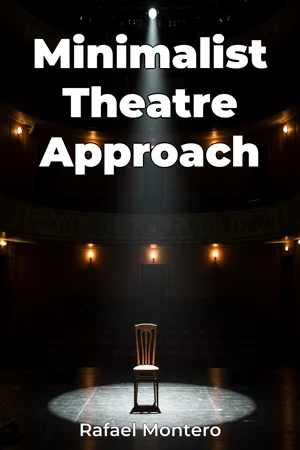
What if the power of theatre lies not in grand spectacle, but in deliberate reduction? "Minimalist Theatre Approach" explores this very question, diving deep into the philosophy and practical application of minimalism in dramatic arts. This book examines how stripping away theatrical excess can amplify emotional impact and deepen audience engagement, offering a compelling alternative to conventional, often overproduced, performances. Three key topics form the foundation of our investigation: minimalist staging, costuming, and thematic focus. Understanding each element is crucial for appreciating minimalist theatre's potential. Minimalist staging emphasizes simplicity, utilizing sparse sets and symbolic props to create mood and atmosphere, thereby making the audience work to fill in the blanks. Costuming shifts from elaborate designs to neutral, functional attire that avoids distracting from character and narrative. Finally, minimalist thematic focus champions succinct narratives, allowing the core message to resonate with impactful clarity. These elements create space for profound connections between performer and viewer. Historically, minimalist theatre emerged as a reaction against the perceived excesses of mainstream productions. Drawing inspiration from artistic movements like abstract expressionism and conceptual art as well as philosophical concepts of existentialism, minimalist theatre seeks to distill dramatic experience to its essence. While no prior knowledge is strictly required, familiarity with the basics of theatre production and directing, dramatic structure, as well as an understanding of art history will enhance the reader's appreciation of the book’s core arguments. The central argument posits that minimalist theatre, when executed thoughtfully, offers a powerful means of conveying complex emotions and ideas. By embracing restraint, we can amplify the impact of core elements and foster a deeper connection between performer and audience. This book provides a guide for understanding and implementing minimalist techniques that are often overlooked. The book unfolds with an introduction to the core principles of minimalist philosophy and its application to theatre. We then delve into detailed analyses of minimalist staging techniques, examining the use of space, lighting, and sound. The discussion transitions to costuming, exploring the power of simplicity in character portrayal. The book then examines the thematic focus of minimalist plays, showcasing how stripping away extraneous plot elements can sharpen the narrative impact. Case studies of notable minimalist productions, from Samuel Beckett's stark masterpieces to contemporary experimental works, are interspersed throughout the text, providing concrete examples of the concepts in action. Finally, the book culminates with insights into practical implementation, offering guidance for directors, designers, and performers interested in embracing a minimalist approach. To support its arguments, the book draws upon a diverse range of sources, including theoretical texts on minimalist art and philosophy, production notes from renowned minimalist directors, and critical analyses of influential minimalist plays. Unique insights are gained from interviews with contemporary theatre practitioners who are actively pushing the boundaries of minimalist performance. "Minimalist Theatre Approach" intersects with several other disciplines, including visual arts (particularly minimalist sculpture and painting), philosophy (existentialism and phenomenology), and performance studies. These interdisciplinary connections illuminate the broader cultural and intellectual context of minimalist theatre, enriching our understanding of its aesthetic and philosophical underpinnings. This book stands out by providing a holistic framework for understanding and implementing minimalist principles in all aspects of theatre production. Unlike other books that focus solely on set design or acting techniques, this work offers a comprehensive approach that considers the interconnectedness of staging, costuming, and thematic focus. The tone is academic yet accessible, blending rigorous analysis with practical advice. This ensures the book appeals to both scholars and theatre practitioners/students alike. The primary target audience includes theatre students, directors, designers, actors, and academics interested in exploring alternative approaches to dramatic performance. This book’s detailed analyses and practical guidance make it a valuable resource for anyone seeking to create impactful theatre with limited resources. As a work in performing arts and philosophy, this book adheres to the conventions of scholarly research, including providing citations, a bibliography, and detailed endnotes. The scope of the book is broad, covering the key aspects of minimalist theatre production. However, the focus remains on live performance, and does not extend to film or television. The principles outlined in "Minimalist Theatre Approach" can be applied in a variety of real-world settings, from small-scale independent productions to larger-scale professional performances. By embracing the power of simplicity, theatre artists can create emotionally resonant experiences that captivate audiences and spark meaningful dialogue. This book addresses ongoing debates within the theatre community regarding the role of spectacle and the value of simplicity. By advocating for a balanced approach that recognizes the potential of both, it aims to foster a more nuanced understanding of contemporary theatre aesthetics.
What if the power of theatre lies not in grand spectacle, but in deliberate reduction? "Minimalist Theatre Approach" explores this very question, diving deep into the philosophy and practical application of minimalism in dramatic arts. This book examines how stripping away theatrical excess can amplify emotional impact and deepen audience engagement, offering a compelling alternative to conventional, often overproduced, performances. Three key topics form the foundation of our investigation: minimalist staging, costuming, and thematic focus. Understanding each element is crucial for appreciating minimalist theatre's potential. Minimalist staging emphasizes simplicity, utilizing sparse sets and symbolic props to create mood and atmosphere, thereby making the audience work to fill in the blanks. Costuming shifts from elaborate designs to neutral, functional attire that avoids distracting from character and narrative. Finally, minimalist thematic focus champions succinct narratives, allowing the core message to resonate with impactful clarity. These elements create space for profound connections between performer and viewer. Historically, minimalist theatre emerged as a reaction against the perceived excesses of mainstream productions. Drawing inspiration from artistic movements like abstract expressionism and conceptual art as well as philosophical concepts of existentialism, minimalist theatre seeks to distill dramatic experience to its essence. While no prior knowledge is strictly required, familiarity with the basics of theatre production and directing, dramatic structure, as well as an understanding of art history will enhance the reader's appreciation of the book’s core arguments. The central argument posits that minimalist theatre, when executed thoughtfully, offers a powerful means of conveying complex emotions and ideas. By embracing restraint, we can amplify the impact of core elements and foster a deeper connection between performer and audience. This book provides a guide for understanding and implementing minimalist techniques that are often overlooked. The book unfolds with an introduction to the core principles of minimalist philosophy and its application to theatre. We then delve into detailed analyses of minimalist staging techniques, examining the use of space, lighting, and sound. The discussion transitions to costuming, exploring the power of simplicity in character portrayal. The book then examines the thematic focus of minimalist plays, showcasing how stripping away extraneous plot elements can sharpen the narrative impact. Case studies of notable minimalist productions, from Samuel Beckett's stark masterpieces to contemporary experimental works, are interspersed throughout the text, providing concrete examples of the concepts in action. Finally, the book culminates with insights into practical implementation, offering guidance for directors, designers, and performers interested in embracing a minimalist approach. To support its arguments, the book draws upon a diverse range of sources, including theoretical texts on minimalist art and philosophy, production notes from renowned minimalist directors, and critical analyses of influential minimalist plays. Unique insights are gained from interviews with contemporary theatre practitioners who are actively pushing the boundaries of minimalist performance. "Minimalist Theatre Approach" intersects with several other disciplines, including visual arts (particularly minimalist sculpture and painting), philosophy (existentialism and phenomenology), and performance studies. These interdisciplinary connections illuminate the broader cultural and intellectual context of minimalist theatre, enriching our understanding of its aesthetic and philosophical underpinnings. This book stands out by providing a holistic framework for understanding and implementing minimalist principles in all aspects of theatre production. Unlike other books that focus solely on set design or acting techniques, this work offers a comprehensive approach that considers the interconnectedness of staging, costuming, and thematic focus. The tone is academic yet accessible, blending rigorous analysis with practical advice. This ensures the book appeals to both scholars and theatre practitioners/students alike. The primary target audience includes theatre students, directors, designers, actors, and academics interested in exploring alternative approaches to dramatic performance. This book’s detailed analyses and practical guidance make it a valuable resource for anyone seeking to create impactful theatre with limited resources. As a work in performing arts and philosophy, this book adheres to the conventions of scholarly research, including providing citations, a bibliography, and detailed endnotes. The scope of the book is broad, covering the key aspects of minimalist theatre production. However, the focus remains on live performance, and does not extend to film or television. The principles outlined in "Minimalist Theatre Approach" can be applied in a variety of real-world settings, from small-scale independent productions to larger-scale professional performances. By embracing the power of simplicity, theatre artists can create emotionally resonant experiences that captivate audiences and spark meaningful dialogue. This book addresses ongoing debates within the theatre community regarding the role of spectacle and the value of simplicity. By advocating for a balanced approach that recognizes the potential of both, it aims to foster a more nuanced understanding of contemporary theatre aesthetics.
"Minimalist Theatre Approach" explores the power of simplicity in dramatic arts, advocating for a theatre stripped of excess to amplify emotional impact. It delves into the philosophy and practical application of minimalism in performance, challenging conventional, often overproduced, theatrical approaches. Minimalism moves beyond just simple staging. For example, minimalist costuming utilizes neutral, functional attire, keeping the focus on the character and narrative. The book argues that restraint enhances the core message, fostering deeper connections between performers and audiences. The book presents its investigation across three key areas: minimalist staging, costuming, and thematic focus, each building upon the other. Through minimalist staging, the book explores how sparse sets and symbolic props impact mood. It uses case studies, production notes, and interviews with contemporary theatre practitioners to support its arguments. The book offers a comprehensive guide for directors, designers, and performers interested in embracing a minimalist approach to theatre production.
Book Details
ISBN
9788235230959
Publisher
Publifye AS
Your Licenses
You don't own any licenses for this book
Purchase a license below to unlock this book and download the EPUB.
Purchase License
Select a tier to unlock this book
Need bulk licensing?
Contact us for enterprise agreements.