
About This Book
How did a nomadic empire rising from the steppes of Central Asia reshape the political and cultural landscape of the Middle East, leaving an indelible mark on Islamic empires and the course of world history? This book, *Mongol Invasions*, delves into the tumultuous era of the 13th and 14th centuries when Mongol armies swept across the Middle East, leaving behind a trail of destruction and sparking profound transformations. We will examine the strategic military campaigns, the widespread devastation inflicted upon cities and populations, and the long-term consequences for the region's political, social, and economic structures. This book argues that the Mongol invasions were not merely destructive raids but a catalyst for significant power shifts and cultural exchanges that fundamentally altered the trajectory of Islamic empires. This is of critical importance because understanding the Mongol impact provides essential context for comprehending the subsequent development of the Middle East and its relationship with the wider world. The historical context of the Mongol expansion is crucial. The Islamic world, fragmented into various caliphates, sultanates, and emirates, was vulnerable to external aggression. Internal rivalries and weakened military capabilities created an environment ripe for conquest. This book will first establish the necessary historical background, exploring the political and social conditions of the Middle East on the eve of the Mongol invasions. A foundational understanding of Islamic political structures and military organization during this period is expected of the reader. *Mongol Invasions* is structured to provide a comprehensive analysis of this complex period. Following an introduction outlining the rise of the Mongol Empire and the state of the Middle East, the book proceeds chronologically and thematically. First, it details the initial Mongol incursions under Genghis Khan and his successors, focusing on the capture and destruction of key cities like Baghdad, the seat of the Abbasid Caliphate, and other important cultural and economic centers. Secondly, it examines the establishment of the Ilkhanate, a Mongol successor state in Persia, and its impact on the region's political landscape, including the rise of new dynasties and the realignment of existing power structures. Thirdly, the book will explore the cultural and intellectual consequences of the Mongol conquests, analyzing the exchange of ideas, technologies, and artistic styles between the Mongol world and the Middle East. The book culminates in an assessment of the long-term legacy of the Mongol invasions, exploring their contribution to the decline of some Islamic empires and the rise of others, as well as their effects on trade, urbanization, and social organization. Practical implications of understanding the Mongol impact help in comprehension of modern geopolitical landscape of the Middle East. The argument is supported by a wide range of primary and secondary sources, including chronicles written by contemporary historians, archaeological evidence from excavated sites, and analyses of administrative documents from the Mongol period. Special attention is given to comparing and contrasting different perspectives on the Mongol invasions, acknowledging the biases and limitations of each source. This book connects to other fields such as anthropology, examining the cultural exchanges and social transformations resulting from the Mongol presence; economics, analyzing the impact of the invasions on trade routes and economic systems; and political science, exploring the dynamics of empire building and state formation in the context of the Mongol conquests. The book offers a balanced perspective, highlighting both the destructive and transformative aspects of the Mongol invasions, and emphasizing the resilience and adaptability of the Middle Eastern societies in the face of adversity. The tone and writing style are academic yet accessible, aiming to engage both scholars and general readers interested in the history of the Middle East and the Mongol Empire. This book is intended for students, researchers, and anyone seeking a deeper understanding of the Mongol invasions and their impact on the Middle East. The book's scope is limited to the major Mongol incursions and their immediate aftermath, primarily focusing on Persia, Mesopotamia, and Syria. Areas such as Anatolia and Egypt, though affected by Mongol influence, are treated with less detail due to constraints of space. Ongoing debates surrounding the long-term consequences of the Mongol invasions, such as the extent of their contribution to the decline of the Islamic Golden Age, are addressed to offer a nuanced and well-informed analysis. This book aims to provide a comprehensive and balanced account of a pivotal moment in Middle Eastern history, offering fresh insights into the complex interplay of conquest, destruction, and transformation.
How did a nomadic empire rising from the steppes of Central Asia reshape the political and cultural landscape of the Middle East, leaving an indelible mark on Islamic empires and the course of world history? This book, *Mongol Invasions*, delves into the tumultuous era of the 13th and 14th centuries when Mongol armies swept across the Middle East, leaving behind a trail of destruction and sparking profound transformations. We will examine the strategic military campaigns, the widespread devastation inflicted upon cities and populations, and the long-term consequences for the region's political, social, and economic structures. This book argues that the Mongol invasions were not merely destructive raids but a catalyst for significant power shifts and cultural exchanges that fundamentally altered the trajectory of Islamic empires. This is of critical importance because understanding the Mongol impact provides essential context for comprehending the subsequent development of the Middle East and its relationship with the wider world. The historical context of the Mongol expansion is crucial. The Islamic world, fragmented into various caliphates, sultanates, and emirates, was vulnerable to external aggression. Internal rivalries and weakened military capabilities created an environment ripe for conquest. This book will first establish the necessary historical background, exploring the political and social conditions of the Middle East on the eve of the Mongol invasions. A foundational understanding of Islamic political structures and military organization during this period is expected of the reader. *Mongol Invasions* is structured to provide a comprehensive analysis of this complex period. Following an introduction outlining the rise of the Mongol Empire and the state of the Middle East, the book proceeds chronologically and thematically. First, it details the initial Mongol incursions under Genghis Khan and his successors, focusing on the capture and destruction of key cities like Baghdad, the seat of the Abbasid Caliphate, and other important cultural and economic centers. Secondly, it examines the establishment of the Ilkhanate, a Mongol successor state in Persia, and its impact on the region's political landscape, including the rise of new dynasties and the realignment of existing power structures. Thirdly, the book will explore the cultural and intellectual consequences of the Mongol conquests, analyzing the exchange of ideas, technologies, and artistic styles between the Mongol world and the Middle East. The book culminates in an assessment of the long-term legacy of the Mongol invasions, exploring their contribution to the decline of some Islamic empires and the rise of others, as well as their effects on trade, urbanization, and social organization. Practical implications of understanding the Mongol impact help in comprehension of modern geopolitical landscape of the Middle East. The argument is supported by a wide range of primary and secondary sources, including chronicles written by contemporary historians, archaeological evidence from excavated sites, and analyses of administrative documents from the Mongol period. Special attention is given to comparing and contrasting different perspectives on the Mongol invasions, acknowledging the biases and limitations of each source. This book connects to other fields such as anthropology, examining the cultural exchanges and social transformations resulting from the Mongol presence; economics, analyzing the impact of the invasions on trade routes and economic systems; and political science, exploring the dynamics of empire building and state formation in the context of the Mongol conquests. The book offers a balanced perspective, highlighting both the destructive and transformative aspects of the Mongol invasions, and emphasizing the resilience and adaptability of the Middle Eastern societies in the face of adversity. The tone and writing style are academic yet accessible, aiming to engage both scholars and general readers interested in the history of the Middle East and the Mongol Empire. This book is intended for students, researchers, and anyone seeking a deeper understanding of the Mongol invasions and their impact on the Middle East. The book's scope is limited to the major Mongol incursions and their immediate aftermath, primarily focusing on Persia, Mesopotamia, and Syria. Areas such as Anatolia and Egypt, though affected by Mongol influence, are treated with less detail due to constraints of space. Ongoing debates surrounding the long-term consequences of the Mongol invasions, such as the extent of their contribution to the decline of the Islamic Golden Age, are addressed to offer a nuanced and well-informed analysis. This book aims to provide a comprehensive and balanced account of a pivotal moment in Middle Eastern history, offering fresh insights into the complex interplay of conquest, destruction, and transformation.
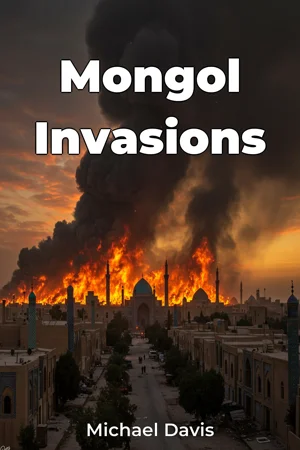
"Mongol Invasions" explores the dramatic impact of the Mongol Empire's military campaigns on the Middle East during the 13th and 14th centuries. This period of intense military history witnessed the Mongols, under leaders like Genghis Khan, sweep across the region, leading to the fall of Baghdad and significant political transformations. The book argues that these invasions were not just destructive raids but catalysts for reshaping Islamic empires and fostering cultural exchange. The book uniquely examines the Mongol impact by detailing the initial incursions, the establishment of the Ilkhanate, and the broader cultural and intellectual consequences. Readers will gain insights into how the Mongol conquests influenced the decline of some empires and the rise of others. The approach is chronological and thematic, starting with the rise of the Mongol Empire and the state of the Middle East, then progressing through military events and cultural shifts. By drawing on primary and secondary sources, the book offers a balanced perspective on the Mongol conquests. It highlights both the devastation and the transformative effects on trade, urbanization, and social structures. Ultimately, this study provides a comprehensive understanding of a pivotal era in world history and its lasting effects on the Middle East, even influencing today's geopolitical landscape.
Book Details
ISBN
9788235230706
Publisher
Publifye AS
Your Licenses
You don't own any licenses for this book
Purchase a license below to unlock this book and download the EPUB.
Purchase License
Select a tier to unlock this book
Need bulk licensing?
Contact us for enterprise agreements.