
About This Book
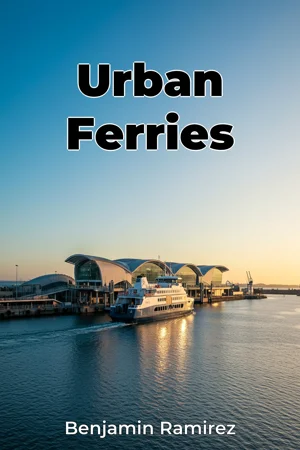
Imagine a world where urban congestion is significantly reduced, commute times are shorter, and cities are more sustainable. This is the promise of urban ferries, a mode of transportation increasingly recognized for its potential to revolutionize urban mobility. *Urban Ferries* explores the resurgence of water transport as a viable and essential component of modern urban infrastructure. This book delves into three core themes: the history and evolution of urban ferry systems, their economic and environmental impacts, and their integration into existing urban landscapes. Understanding these aspects is crucial for urban planners, policymakers, and anyone interested in sustainable urban development. The historical context illuminates the cyclical nature of transportation trends, demonstrating how ferries, once a dominant mode of transport, were largely supplanted by road and rail. The economic analysis examines the cost-effectiveness of ferry systems compared to traditional infrastructure projects, considering factors such as construction costs, operational expenses, and potential revenue generation. The environmental assessment investigates the ecological footprint of ferries, weighing their emissions, noise pollution, and impact on aquatic ecosystems against the benefits of reduced road traffic and congestion. *Urban Ferries* argues that well-designed and strategically implemented ferry systems can significantly alleviate urban congestion, reduce carbon emissions, and enhance the quality of life for city dwellers. This argument is developed through a structured exploration. First, the book introduces the fundamental principles of ferry system design, route planning, and terminal construction. Next, it presents detailed case studies of successful ferry implementations in cities worldwide, from the well-established systems of Istanbul and Sydney to the emerging networks in New York City and Bangkok. These case studies provide concrete examples of different approaches to ferry integration, highlighting both successes and challenges. The book considers technological advancements in vessel design, propulsion systems, and navigation technology, offering insights into the future of urban ferry transport. Finally, the book culminates in a discussion of policy recommendations and best practices for fostering the growth of sustainable urban ferry systems. The evidence presented in *Urban Ferries* draws from a variety of sources, including government reports, academic studies, industry data, and on-site observations. Unique data sets on passenger ridership, fuel consumption, and emissions levels are analyzed to provide a comprehensive assessment of the performance of different ferry systems. The book intersects with several disciplines, including urban planning, transportation engineering, and environmental science. The integration of these perspectives allows for a holistic understanding of the challenges and opportunities associated with urban ferries. *Urban Ferries* distinguishes itself by providing a balanced and data-driven analysis of the potential of water transport. This book aims to cut through the hype and offer a realistic assessment of the costs, benefits, and limitations of urban ferry systems. The book adopts a professional and accessible writing style, making it suitable for both academic researchers and general readers with an interest in urban transportation. It is geared towards urban planners, policymakers, transportation engineers, architects, and anyone involved in urban development. It will appeal to readers interested in innovative solutions to urban challenges and sustainable transportation alternatives. As an architecture-focused book, *Urban Ferries* emphasizes the design and integration of ferry terminals and infrastructure within the urban fabric, considering aesthetic and functional aspects. The travel genre elements shine through in the case studies of cities that have embraced ferry transport, showcasing the unique experiences and opportunities that these systems offer to both residents and tourists. The scope of *Urban Ferries* is intentionally broad, encompassing a global perspective on urban ferry systems. However, it focuses primarily on passenger ferries, rather than cargo or freight transport, and it does not delve into the technical details of naval architecture or marine engineering. The information presented in *Urban Ferries* can be applied in practice by urban planners and policymakers seeking to develop or improve their city's water transport infrastructure. Developers can use the insights to design more efficient and attractive ferry terminals. The book acknowledges the debates surrounding the environmental impact of ferries, particularly concerning emissions and the disturbance of aquatic ecosystems. It explores the potential for mitigating these impacts through the adoption of cleaner technologies and sustainable operating practices.
Imagine a world where urban congestion is significantly reduced, commute times are shorter, and cities are more sustainable. This is the promise of urban ferries, a mode of transportation increasingly recognized for its potential to revolutionize urban mobility. *Urban Ferries* explores the resurgence of water transport as a viable and essential component of modern urban infrastructure. This book delves into three core themes: the history and evolution of urban ferry systems, their economic and environmental impacts, and their integration into existing urban landscapes. Understanding these aspects is crucial for urban planners, policymakers, and anyone interested in sustainable urban development. The historical context illuminates the cyclical nature of transportation trends, demonstrating how ferries, once a dominant mode of transport, were largely supplanted by road and rail. The economic analysis examines the cost-effectiveness of ferry systems compared to traditional infrastructure projects, considering factors such as construction costs, operational expenses, and potential revenue generation. The environmental assessment investigates the ecological footprint of ferries, weighing their emissions, noise pollution, and impact on aquatic ecosystems against the benefits of reduced road traffic and congestion. *Urban Ferries* argues that well-designed and strategically implemented ferry systems can significantly alleviate urban congestion, reduce carbon emissions, and enhance the quality of life for city dwellers. This argument is developed through a structured exploration. First, the book introduces the fundamental principles of ferry system design, route planning, and terminal construction. Next, it presents detailed case studies of successful ferry implementations in cities worldwide, from the well-established systems of Istanbul and Sydney to the emerging networks in New York City and Bangkok. These case studies provide concrete examples of different approaches to ferry integration, highlighting both successes and challenges. The book considers technological advancements in vessel design, propulsion systems, and navigation technology, offering insights into the future of urban ferry transport. Finally, the book culminates in a discussion of policy recommendations and best practices for fostering the growth of sustainable urban ferry systems. The evidence presented in *Urban Ferries* draws from a variety of sources, including government reports, academic studies, industry data, and on-site observations. Unique data sets on passenger ridership, fuel consumption, and emissions levels are analyzed to provide a comprehensive assessment of the performance of different ferry systems. The book intersects with several disciplines, including urban planning, transportation engineering, and environmental science. The integration of these perspectives allows for a holistic understanding of the challenges and opportunities associated with urban ferries. *Urban Ferries* distinguishes itself by providing a balanced and data-driven analysis of the potential of water transport. This book aims to cut through the hype and offer a realistic assessment of the costs, benefits, and limitations of urban ferry systems. The book adopts a professional and accessible writing style, making it suitable for both academic researchers and general readers with an interest in urban transportation. It is geared towards urban planners, policymakers, transportation engineers, architects, and anyone involved in urban development. It will appeal to readers interested in innovative solutions to urban challenges and sustainable transportation alternatives. As an architecture-focused book, *Urban Ferries* emphasizes the design and integration of ferry terminals and infrastructure within the urban fabric, considering aesthetic and functional aspects. The travel genre elements shine through in the case studies of cities that have embraced ferry transport, showcasing the unique experiences and opportunities that these systems offer to both residents and tourists. The scope of *Urban Ferries* is intentionally broad, encompassing a global perspective on urban ferry systems. However, it focuses primarily on passenger ferries, rather than cargo or freight transport, and it does not delve into the technical details of naval architecture or marine engineering. The information presented in *Urban Ferries* can be applied in practice by urban planners and policymakers seeking to develop or improve their city's water transport infrastructure. Developers can use the insights to design more efficient and attractive ferry terminals. The book acknowledges the debates surrounding the environmental impact of ferries, particularly concerning emissions and the disturbance of aquatic ecosystems. It explores the potential for mitigating these impacts through the adoption of cleaner technologies and sustainable operating practices.
"Urban Ferries" explores the growing relevance of water transport in modern cities, offering solutions to urban congestion and promoting sustainable urban development. It examines the history, economic viability, and environmental impact of ferry systems, crucial for policymakers and urban planners. The book reveals how these systems, once dominant, are making a comeback due to advancements in technology and growing concerns about sustainability. One intriguing insight is the cost-effectiveness of ferries compared to traditional infrastructure, alongside their potential to reduce carbon emissions. The book uniquely balances data-driven analysis with real-world case studies, highlighting successful implementations in cities like Istanbul, Sydney, New York City and Bangkok. It considers how ferry terminals integrate aesthetically and functionally within the urban fabric. By investigating passenger ridership, fuel consumption, and emissions, the book offers a comprehensive assessment of ferry system performance. It progresses from fundamental design principles to policy recommendations, providing a structured exploration of urban mobility solutions.
Book Details
ISBN
9788235230492
Publisher
Publifye AS
Your Licenses
You don't own any licenses for this book
Purchase a license below to unlock this book and download the EPUB.
Purchase License
Select a tier to unlock this book
Need bulk licensing?
Contact us for enterprise agreements.