
About This Book
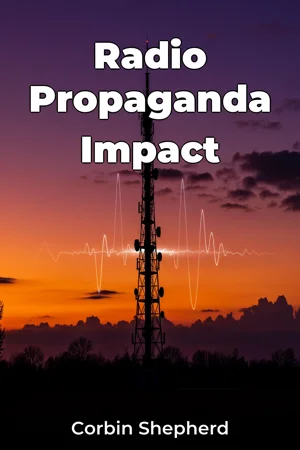
How has a seemingly innocuous device, the radio, wielded power to reshape nations and ignite global conflicts? "Radio Propaganda Impact" explores the multifaceted role of radio broadcasting as a tool for disseminating propaganda, shaping public perception, and influencing pivotal events throughout history. This book provides a comprehensive analysis of how radio has been strategically employed to manipulate beliefs, mobilize populations, and even instigate international crises. The book primarily delves into three key areas. First, it examines the techniques and strategies used in radio propaganda, dissecting how subtle linguistic cues, emotional appeals, and carefully curated narratives are utilized to influence listeners. Second, it explores the impact of radio on shaping public opinion, focusing on how it cultivates specific attitudes, reinforces existing biases, and constructs collective identities. Finally, it analyzes historical case studies, demonstrating how radio propaganda has been instrumental in shaping national policies, fueling wars, and driving social movements. Understanding the historical context is crucial. The book traces the evolution of radio propaganda from its early use in World War I through its prominent role in World War II, the Cold War, and even contemporary conflicts. It examines the social and political conditions that made populations susceptible to radio's influence, and the technological advancements that amplified its reach. No prior technical expertise is required. The central argument of this book is that radio propaganda has been a potent force in shaping the 20th and 21st centuries, often with devastating consequences. Understanding its mechanisms and impact is vital for fostering media literacy, promoting critical thinking, and safeguarding against manipulation in an increasingly interconnected world. The book is structured logically. Initially, it introduces the core concepts of propaganda and mass communication, setting the theoretical groundwork. It then moves into a detailed examination of various radio propaganda techniques, illustrating them with specific historical examples. Key chapters will focus on the use of radio by Nazi Germany, the Soviet Union, and the United States during periods of conflict. The conclusion analyzes the legacy of radio propaganda and its relevance in the digital age, discussing its evolution into new forms of media manipulation. The arguments presented are supported by extensive research, drawing on primary sources such as radio broadcasts, government documents, and personal accounts from the eras studied. It incorporates quantitative data, such as listenership statistics and public opinion polls, as well as qualitative analysis of broadcast content. Existing literature on propaganda, media studies, and history are also utilized. This book also connects to other fields, such as political science, sociology, and psychology. It examines how propaganda intersects with political ideologies, social dynamics, and individual cognitive processes. The book offers a fresh perspective by comparing propaganda strategies across different nations and historical periods, identifying common patterns and unique approaches. The tone is academic but accessible, aiming to present complex information in a clear and engaging manner. The writing style emphasizes objectivity and factual accuracy, avoiding sensationalism or biased interpretations. The target audience includes students and scholars in media studies, history, and political science, as well as general readers interested in understanding the power of propaganda and its impact on the world. The book will appeal to anyone seeking a deeper understanding of how media shapes our perceptions and influences our decisions. As a work of non-fiction, the book presents a fact-based analysis, rigorously scrutinizing sources and avoiding unsubstantiated claims. It acknowledges the limitations of its scope, focusing primarily on radio as a propaganda tool and not delving into other forms of media in depth. The lessons learned from radio propaganda have real-world applications today. By understanding how radio was used to manipulate populations, we can become more vigilant against contemporary forms of misinformation and disinformation spread through social media and other online platforms. Analyzing the patterns and strategies used in the past offers insights into how to identify and counter propaganda in the present. While there’s a general consensus that radio was a powerful tool for propaganda, there are ongoing debates about the extent of its influence and the effectiveness of different propaganda techniques. This book examines these debates, presenting different perspectives and offering a nuanced analysis of the complexities involved.
How has a seemingly innocuous device, the radio, wielded power to reshape nations and ignite global conflicts? "Radio Propaganda Impact" explores the multifaceted role of radio broadcasting as a tool for disseminating propaganda, shaping public perception, and influencing pivotal events throughout history. This book provides a comprehensive analysis of how radio has been strategically employed to manipulate beliefs, mobilize populations, and even instigate international crises. The book primarily delves into three key areas. First, it examines the techniques and strategies used in radio propaganda, dissecting how subtle linguistic cues, emotional appeals, and carefully curated narratives are utilized to influence listeners. Second, it explores the impact of radio on shaping public opinion, focusing on how it cultivates specific attitudes, reinforces existing biases, and constructs collective identities. Finally, it analyzes historical case studies, demonstrating how radio propaganda has been instrumental in shaping national policies, fueling wars, and driving social movements. Understanding the historical context is crucial. The book traces the evolution of radio propaganda from its early use in World War I through its prominent role in World War II, the Cold War, and even contemporary conflicts. It examines the social and political conditions that made populations susceptible to radio's influence, and the technological advancements that amplified its reach. No prior technical expertise is required. The central argument of this book is that radio propaganda has been a potent force in shaping the 20th and 21st centuries, often with devastating consequences. Understanding its mechanisms and impact is vital for fostering media literacy, promoting critical thinking, and safeguarding against manipulation in an increasingly interconnected world. The book is structured logically. Initially, it introduces the core concepts of propaganda and mass communication, setting the theoretical groundwork. It then moves into a detailed examination of various radio propaganda techniques, illustrating them with specific historical examples. Key chapters will focus on the use of radio by Nazi Germany, the Soviet Union, and the United States during periods of conflict. The conclusion analyzes the legacy of radio propaganda and its relevance in the digital age, discussing its evolution into new forms of media manipulation. The arguments presented are supported by extensive research, drawing on primary sources such as radio broadcasts, government documents, and personal accounts from the eras studied. It incorporates quantitative data, such as listenership statistics and public opinion polls, as well as qualitative analysis of broadcast content. Existing literature on propaganda, media studies, and history are also utilized. This book also connects to other fields, such as political science, sociology, and psychology. It examines how propaganda intersects with political ideologies, social dynamics, and individual cognitive processes. The book offers a fresh perspective by comparing propaganda strategies across different nations and historical periods, identifying common patterns and unique approaches. The tone is academic but accessible, aiming to present complex information in a clear and engaging manner. The writing style emphasizes objectivity and factual accuracy, avoiding sensationalism or biased interpretations. The target audience includes students and scholars in media studies, history, and political science, as well as general readers interested in understanding the power of propaganda and its impact on the world. The book will appeal to anyone seeking a deeper understanding of how media shapes our perceptions and influences our decisions. As a work of non-fiction, the book presents a fact-based analysis, rigorously scrutinizing sources and avoiding unsubstantiated claims. It acknowledges the limitations of its scope, focusing primarily on radio as a propaganda tool and not delving into other forms of media in depth. The lessons learned from radio propaganda have real-world applications today. By understanding how radio was used to manipulate populations, we can become more vigilant against contemporary forms of misinformation and disinformation spread through social media and other online platforms. Analyzing the patterns and strategies used in the past offers insights into how to identify and counter propaganda in the present. While there’s a general consensus that radio was a powerful tool for propaganda, there are ongoing debates about the extent of its influence and the effectiveness of different propaganda techniques. This book examines these debates, presenting different perspectives and offering a nuanced analysis of the complexities involved.
"Radio Propaganda Impact" delves into the profound influence of radio broadcasting as a tool for propaganda throughout the 20th and 21st centuries. Examining historical case studies, the book analyzes how radio was strategically employed to shape public opinion, mobilize populations, and even instigate international crises. From subtle linguistic cues to emotional appeals, the book dissects propaganda techniques used by nations like Nazi Germany, the Soviet Union, and the United States. It reveals how radio cultivated specific attitudes, reinforced biases, and constructed collective identities during pivotal moments, such as World War II and the Cold War, demonstrating its power to manipulate beliefs on a mass scale. The book progresses logically, beginning with core concepts of propaganda and mass communication before delving into historical examples. By drawing on primary sources like radio broadcasts and government documents, it offers a comprehensive historical analysis of political influence and media manipulation. A key insight is that understanding radio propaganda's mechanisms is vital for fostering media literacy and safeguarding against manipulation in our interconnected world. The conclusion analyzes radio propaganda's legacy and its relevance in the digital age, discussing its evolution into new forms of media manipulation.
Book Details
ISBN
9788235230393
Publisher
Publifye AS
Your Licenses
You don't own any licenses for this book
Purchase a license below to unlock this book and download the EPUB.
Purchase License
Select a tier to unlock this book
Need bulk licensing?
Contact us for enterprise agreements.