
About This Book
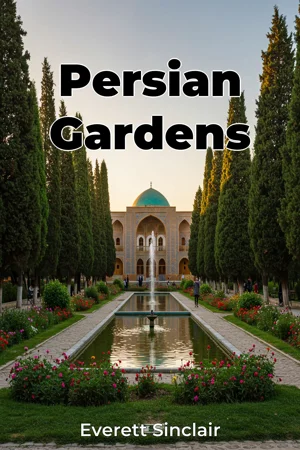
Have you ever wondered how the concept of paradise has been physically manifested across cultures and time? This book, "Persian Gardens," delves into the intricate design, profound symbolism, and enduring influence of these horticultural masterpieces, demonstrating how they represent more than just gardens; they are earthly reflections of paradise. We explore the evolution and significance of Persian Gardens, their indelible mark on Islamic and European landscaping traditions, and their cultural context, offering a comprehensive understanding of these historical landscapes. This book focuses on three key areas. First, it explores the architectural principles and design elements inherent in Persian Gardens, such as the charbagh (four-part garden) layout, water features (pools, canals, and fountains), and the strategic use of plants to create shade, fragrance, and visual appeal. Second, it examines the symbolic meanings interwoven into these designs, including their representation of the four Zoroastrian elements (water, earth, fire, air) and their association with Islamic concepts of paradise. Third, the book traces the influence of Persian Gardens on later garden design traditions, particularly within the Islamic world and Europe, highlighting how Persian concepts were adapted and reinterpreted in different cultural contexts. Understanding the historical backdrop against which these gardens flourished is crucial. The book provides an overview of the Achaemenid, Sasanian, and Islamic empires that shaped Persian culture and landscape architecture. We explore the socio-political factors that influenced garden design, including royal patronage, religious beliefs, and technological advancements in irrigation and horticulture. The central argument of "Persian Gardens" is that these spaces served as powerful symbols of power, faith, and cultural identity. The book demonstrates how Persian Gardens, beyond their aesthetic beauty, functioned as microcosms of the cosmos, reflecting the values and aspirations of Persian society, and later, broader global societies. The book’s structure is designed to guide the reader through a comprehensive exploration of Persian Gardens. Beginning with an introduction to the core principles and elements, we progress to examine specific examples of gardens from different historical periods, illustrating their evolution and adaptation. Subsequent chapters delve into the symbolic meanings and cultural significance of these spaces, drawing on textual sources, archaeological evidence, and comparative analysis. Finally, the book culminates with an exploration of the legacy of Persian Gardens, examining their impact on garden design traditions in other parts of the world. The evidence presented in this book draws on a variety of sources, including historical texts (such as descriptions of gardens in Persian literature and travelogues), archaeological findings (excavations of garden sites and analysis of garden features), and comparative studies of garden design traditions. Unique methodologies, such as spatial analysis and landscape archaeology, are employed to reconstruct the original layouts and features of these gardens. "Persian Gardens" sits at the intersection of several disciplines, including architecture, history, art history, and landscape architecture. Its exploration of symbolic meanings also connects it to religious studies and cultural studies. By examining the exchange of ideas between Persia and other cultures, the book also contributes to the field of intercultural studies. This book offers a unique perspective by combining a detailed analysis of the architectural and horticultural aspects of Persian Gardens with an in-depth exploration of their symbolic meanings and cultural significance. Rather than simply describing these gardens as aesthetic objects, it treats them as complex cultural landscapes that reflect the values, beliefs, and aspirations of Persian society. The tone of the book is academic yet accessible, aiming to engage both scholars and general readers with an interest in garden design, history, and culture. The book is intended for a broad audience, including students and scholars of architecture, history, landscape architecture, and cultural studies, as well as garden enthusiasts, travelers, and anyone interested in the history and symbolism of gardens. "Persian Gardens" conforms to the conventions of academic non-fiction by providing a rigorous analysis of its subject matter, supported by scholarly research and documentation. The scope of the book is limited to the history and design of Persian Gardens, with a focus on their evolution and influence within the Islamic world and Europe. While it acknowledges the existence of gardens in other cultures, it does not attempt to provide a comprehensive overview of garden history. The information in the book can be applied practically by garden designers, landscape architects, and anyone interested in creating gardens that are both aesthetically pleasing and culturally meaningful. It offers insights into the principles of Persian garden design that can be adapted to contemporary contexts. While not a primary focus, the book touches on debates surrounding the interpretation of garden symbolism and the cultural appropriation of design elements.
Have you ever wondered how the concept of paradise has been physically manifested across cultures and time? This book, "Persian Gardens," delves into the intricate design, profound symbolism, and enduring influence of these horticultural masterpieces, demonstrating how they represent more than just gardens; they are earthly reflections of paradise. We explore the evolution and significance of Persian Gardens, their indelible mark on Islamic and European landscaping traditions, and their cultural context, offering a comprehensive understanding of these historical landscapes. This book focuses on three key areas. First, it explores the architectural principles and design elements inherent in Persian Gardens, such as the charbagh (four-part garden) layout, water features (pools, canals, and fountains), and the strategic use of plants to create shade, fragrance, and visual appeal. Second, it examines the symbolic meanings interwoven into these designs, including their representation of the four Zoroastrian elements (water, earth, fire, air) and their association with Islamic concepts of paradise. Third, the book traces the influence of Persian Gardens on later garden design traditions, particularly within the Islamic world and Europe, highlighting how Persian concepts were adapted and reinterpreted in different cultural contexts. Understanding the historical backdrop against which these gardens flourished is crucial. The book provides an overview of the Achaemenid, Sasanian, and Islamic empires that shaped Persian culture and landscape architecture. We explore the socio-political factors that influenced garden design, including royal patronage, religious beliefs, and technological advancements in irrigation and horticulture. The central argument of "Persian Gardens" is that these spaces served as powerful symbols of power, faith, and cultural identity. The book demonstrates how Persian Gardens, beyond their aesthetic beauty, functioned as microcosms of the cosmos, reflecting the values and aspirations of Persian society, and later, broader global societies. The book’s structure is designed to guide the reader through a comprehensive exploration of Persian Gardens. Beginning with an introduction to the core principles and elements, we progress to examine specific examples of gardens from different historical periods, illustrating their evolution and adaptation. Subsequent chapters delve into the symbolic meanings and cultural significance of these spaces, drawing on textual sources, archaeological evidence, and comparative analysis. Finally, the book culminates with an exploration of the legacy of Persian Gardens, examining their impact on garden design traditions in other parts of the world. The evidence presented in this book draws on a variety of sources, including historical texts (such as descriptions of gardens in Persian literature and travelogues), archaeological findings (excavations of garden sites and analysis of garden features), and comparative studies of garden design traditions. Unique methodologies, such as spatial analysis and landscape archaeology, are employed to reconstruct the original layouts and features of these gardens. "Persian Gardens" sits at the intersection of several disciplines, including architecture, history, art history, and landscape architecture. Its exploration of symbolic meanings also connects it to religious studies and cultural studies. By examining the exchange of ideas between Persia and other cultures, the book also contributes to the field of intercultural studies. This book offers a unique perspective by combining a detailed analysis of the architectural and horticultural aspects of Persian Gardens with an in-depth exploration of their symbolic meanings and cultural significance. Rather than simply describing these gardens as aesthetic objects, it treats them as complex cultural landscapes that reflect the values, beliefs, and aspirations of Persian society. The tone of the book is academic yet accessible, aiming to engage both scholars and general readers with an interest in garden design, history, and culture. The book is intended for a broad audience, including students and scholars of architecture, history, landscape architecture, and cultural studies, as well as garden enthusiasts, travelers, and anyone interested in the history and symbolism of gardens. "Persian Gardens" conforms to the conventions of academic non-fiction by providing a rigorous analysis of its subject matter, supported by scholarly research and documentation. The scope of the book is limited to the history and design of Persian Gardens, with a focus on their evolution and influence within the Islamic world and Europe. While it acknowledges the existence of gardens in other cultures, it does not attempt to provide a comprehensive overview of garden history. The information in the book can be applied practically by garden designers, landscape architects, and anyone interested in creating gardens that are both aesthetically pleasing and culturally meaningful. It offers insights into the principles of Persian garden design that can be adapted to contemporary contexts. While not a primary focus, the book touches on debates surrounding the interpretation of garden symbolism and the cultural appropriation of design elements.
"Persian Gardens" explores the rich history and profound influence of these meticulously designed landscapes, revealing them as earthly representations of paradise. Persian Gardens, originating in ancient Persia, are more than just beautiful spaces; they are cultural statements reflecting power, faith, and identity. Intriguingly, these gardens often incorporate the charbagh layout, a four-part design symbolizing the Zoroastrian elements of water, earth, fire, and air, demonstrating a deep connection to ancient beliefs. The book progresses from the core design principles to specific examples across historical periods, examining their evolution and adaptation. It then delves into the symbolism and cultural significance of these gardens, drawing from textual and archaeological evidence. Ultimately, "Persian Gardens" traces their impact on global garden design, particularly in Islamic and European traditions. By combining architectural analysis with cultural history, the book offers a unique perspective on these historical landscapes.
Book Details
ISBN
9788235230324
Publisher
Publifye AS
Your Licenses
You don't own any licenses for this book
Purchase a license below to unlock this book and download the EPUB.
Purchase License
Select a tier to unlock this book
Need bulk licensing?
Contact us for enterprise agreements.