
About This Book
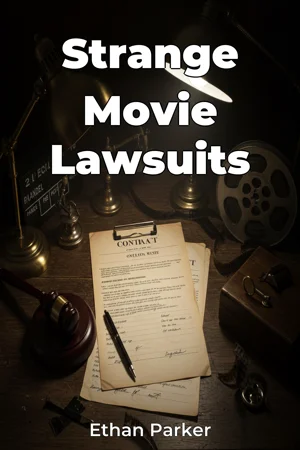
Have you ever wondered how much of your own life story you truly own, and whether Hollywood can legally adapt it without your permission? "Strange Movie Lawsuits" delves into the often-bizarre world where entertainment law meets the silver screen, exploring copyright disputes, right of publicity claims, and the murky waters of life rights. These legal battles are not just about money; they test the boundaries of creativity, ownership, and the very definition of "truth" in storytelling, making them pivotal for anyone interested in the film industry and intellectual property. This book examines two central pillars of movie-related legal disputes. The first involves copyright infringement, where filmmakers stand accused of unlawfully borrowing from existing works, ranging from novels and plays to other films. These cases highlight the complexities of distinguishing between inspiration and outright theft, forcing courts to dissect plot points, character archetypes, and even the "feel" of a movie. The second significant area is right of publicity and life rights, where individuals claim that Hollywood has exploited their personal narratives without consent or compensation. These lawsuits raise fundamental questions about who owns a life story and the extent to which filmmakers can fictionalize real events. The legal landscape surrounding film is constantly evolving, shaped by landmark cases and changing social norms. Understanding this context requires knowledge of intellectual property law, contract law, and First Amendment principles. Further, a familiarity with the history of Hollywood and its treatment of source material is crucial for appreciating the significance of these disputes. The core argument of "Strange Movie Lawsuits" is that these legal battles are not mere isolated incidents but critical indicators of the tensions inherent in commercial storytelling. They expose the inherent conflict between artistic freedom, corporate interests, and individual rights, often resulting in unpredictable outcomes that can reshape the industry's practices. Understanding these cases is crucial for filmmakers, writers, legal professionals, and anyone interested in the creative process. The book unfolds in a structured manner. It begins with an introduction to the relevant legal principles, clarifying key concepts such as copyright, fair use, and right of publicity. The subsequent sections then dissect several high-profile lawsuits, examining the specific facts, legal arguments, and eventual rulings. These cases serve as practical illustrations of the legal concepts. The book culminates with an analysis of the broader implications of these lawsuits, exploring their impact on the film industry and offering insights into potential future developments. The arguments presented are supported by a thorough review of court documents, legal scholarship, and industry publications. Detailed case studies analyze the evidence presented by both sides, providing a balanced and nuanced perspective. In addition, it incorporates interviews with legal experts and industry insiders. "Strange Movie Lawsuits" connects to several other fields. It relates to media studies by examining how legal constraints shape creative expression. It touches upon ethical considerations by analyzing the moral implications of adapting real-life stories. Furthermore, it intersects with business and economics by investigating the financial stakes involved in these legal battles. This book offers a unique perspective by combining legal analysis with a narrative approach. By presenting the cases as stories, it makes complex legal concepts accessible to a broader audience. The conversational style aims to be engaging and informative, avoiding jargon while maintaining legal accuracy. The target audience includes film students, legal professionals, screenwriters, filmmakers, and anyone with an interest in the intersection of law and entertainment. It would also appeal to true crime enthusiasts due to its exploration of real-life conflicts and legal drama. As a work of true crime and film & television, the book prioritizes accuracy and objectivity. Each case is presented with meticulous attention to detail. The scope is limited to lawsuits directly related to movies, excluding other forms of media, focusing on US legal precedents while acknowledging international influences. The information can be applied practically by filmmakers seeking to avoid legal pitfalls, writers crafting stories based on real-life events, and legal professionals advising clients in the entertainment industry. Some of the cases examined involve ongoing debates about the balance between creative freedom and individual rights. The book addresses these controversies by presenting multiple perspectives and encouraging readers to form their own informed opinions.
Have you ever wondered how much of your own life story you truly own, and whether Hollywood can legally adapt it without your permission? "Strange Movie Lawsuits" delves into the often-bizarre world where entertainment law meets the silver screen, exploring copyright disputes, right of publicity claims, and the murky waters of life rights. These legal battles are not just about money; they test the boundaries of creativity, ownership, and the very definition of "truth" in storytelling, making them pivotal for anyone interested in the film industry and intellectual property. This book examines two central pillars of movie-related legal disputes. The first involves copyright infringement, where filmmakers stand accused of unlawfully borrowing from existing works, ranging from novels and plays to other films. These cases highlight the complexities of distinguishing between inspiration and outright theft, forcing courts to dissect plot points, character archetypes, and even the "feel" of a movie. The second significant area is right of publicity and life rights, where individuals claim that Hollywood has exploited their personal narratives without consent or compensation. These lawsuits raise fundamental questions about who owns a life story and the extent to which filmmakers can fictionalize real events. The legal landscape surrounding film is constantly evolving, shaped by landmark cases and changing social norms. Understanding this context requires knowledge of intellectual property law, contract law, and First Amendment principles. Further, a familiarity with the history of Hollywood and its treatment of source material is crucial for appreciating the significance of these disputes. The core argument of "Strange Movie Lawsuits" is that these legal battles are not mere isolated incidents but critical indicators of the tensions inherent in commercial storytelling. They expose the inherent conflict between artistic freedom, corporate interests, and individual rights, often resulting in unpredictable outcomes that can reshape the industry's practices. Understanding these cases is crucial for filmmakers, writers, legal professionals, and anyone interested in the creative process. The book unfolds in a structured manner. It begins with an introduction to the relevant legal principles, clarifying key concepts such as copyright, fair use, and right of publicity. The subsequent sections then dissect several high-profile lawsuits, examining the specific facts, legal arguments, and eventual rulings. These cases serve as practical illustrations of the legal concepts. The book culminates with an analysis of the broader implications of these lawsuits, exploring their impact on the film industry and offering insights into potential future developments. The arguments presented are supported by a thorough review of court documents, legal scholarship, and industry publications. Detailed case studies analyze the evidence presented by both sides, providing a balanced and nuanced perspective. In addition, it incorporates interviews with legal experts and industry insiders. "Strange Movie Lawsuits" connects to several other fields. It relates to media studies by examining how legal constraints shape creative expression. It touches upon ethical considerations by analyzing the moral implications of adapting real-life stories. Furthermore, it intersects with business and economics by investigating the financial stakes involved in these legal battles. This book offers a unique perspective by combining legal analysis with a narrative approach. By presenting the cases as stories, it makes complex legal concepts accessible to a broader audience. The conversational style aims to be engaging and informative, avoiding jargon while maintaining legal accuracy. The target audience includes film students, legal professionals, screenwriters, filmmakers, and anyone with an interest in the intersection of law and entertainment. It would also appeal to true crime enthusiasts due to its exploration of real-life conflicts and legal drama. As a work of true crime and film & television, the book prioritizes accuracy and objectivity. Each case is presented with meticulous attention to detail. The scope is limited to lawsuits directly related to movies, excluding other forms of media, focusing on US legal precedents while acknowledging international influences. The information can be applied practically by filmmakers seeking to avoid legal pitfalls, writers crafting stories based on real-life events, and legal professionals advising clients in the entertainment industry. Some of the cases examined involve ongoing debates about the balance between creative freedom and individual rights. The book addresses these controversies by presenting multiple perspectives and encouraging readers to form their own informed opinions.
"Strange Movie Lawsuits" explores the high-stakes legal battles behind the silver screen, focusing on copyright infringement and right of publicity claims. These cases often determine the extent to which filmmakers can adapt real-life stories or borrow from existing works. For example, lawsuits frequently dissect plot points to distinguish between inspiration and outright theft, highlighting the complexities of entertainment law. The book uniquely combines legal analysis with engaging storytelling, making complex concepts accessible to a broad audience interested in film, true crime, and the ever-evolving world of Hollywood. The book's narrative approach dissects several high-profile lawsuits, presenting specific facts, legal arguments, and rulings to illustrate key legal principles like fair use. Disputes over "life rights" reveal how much of one's personal narrative is truly owned, raising fundamental questions about creative freedom versus individual rights. Understanding these cases is crucial for anyone in the film industry, as they expose the inherent conflict between artistic expression, corporate interests, and personal claims. The book progresses by first introducing relevant legal concepts, then dissecting specific lawsuits, and finally analyzing the broader implications for the film industry. By examining these legal dramas, "Strange Movie Lawsuits" provides valuable insights into the tensions inherent in commercial storytelling and the unpredictable outcomes that can reshape Hollywood's practices.
Book Details
ISBN
9788235230164
Publisher
Publifye AS
Your Licenses
You don't own any licenses for this book
Purchase a license below to unlock this book and download the EPUB.
Purchase License
Select a tier to unlock this book
Need bulk licensing?
Contact us for enterprise agreements.