
About This Book
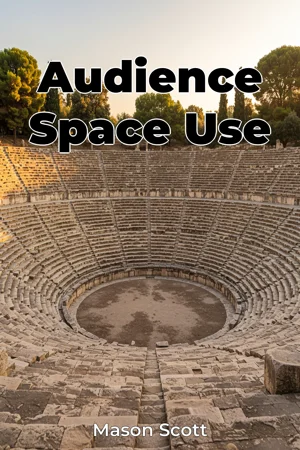
How has the evolution of performance spaces shaped the very nature of audience interaction and engagement? "Audience Space Use" explores this question by charting the history and impact of architectural innovations in audience placement, from the traditional proscenium arch to contemporary immersive layouts. This book focuses on two central topics: the architectural evolution of performance spaces and the reciprocal relationship between space design and audience behavior. Understanding these elements provides valuable insights for architects, performing artists, and anyone interested in the dynamics of live performance. The book’s context stems from a historical overview of theatre and performance spaces, beginning with ancient Greek amphitheatres. It examines how social, economic, and technological shifts influenced architectural designs, leading to variations like the Roman Colosseum, the Renaissance opera house, and modern black box theaters. No prior knowledge is strictly required, but familiarity with the history of theatre or architecture will enrich the reader's understanding. "Audience Space Use" argues that the architectural design of a performance space directly influences audience behavior, perception, and overall engagement with the performance. This argument is crucial because it challenges the notion that performance quality is the sole determinant of audience experience; it posits that the physical environment plays an equally significant role. The book is structured in three parts. The first part introduces the core concepts, defining different audience space configurations and their architectural characteristics. The second section develops these ideas through case studies, examining specific theaters and performance venues to illustrate how design choices impact audience interaction. These case studies represent diverse architectural styles and cultural contexts. The third section culminates in a discussion of practical applications, providing guidelines and considerations for designing audience spaces that optimize engagement. The arguments presented in "Audience Space Use" draw upon diverse sources: historical records, architectural plans, performance reviews, and ethnographic studies. Specifically, the book incorporates data from audience surveys and observational studies conducted in various performance spaces. This multi-method approach enriches the analysis and strengthens the book's conclusions. This work connects to the fields of sociology, examining crowd behavior and group dynamics within performance settings. It also intersects with psychology, looking at how spatial arrangements affect perception and emotional responses. The integration of these interdisciplinary perspectives provides a more nuanced understanding of audience space use. A unique aspect of this book is its emphasis on the feedback loop between audience behavior and architectural design. It moves beyond a purely architectural analysis to consider how audience responses, in turn, influence subsequent design innovations. The tone is academic yet accessible, aiming to be informative and engaging for a broad audience. While relying on scholarly research, the writing clarifies complex concepts and avoids unnecessary jargon. The target audience includes architecture students and professionals, set designers, theater directors, performing arts administrators, and academics interested in the intersection of space and performance. The book offers valuable insights for anyone involved in creating or studying live performance environments. As a work in architectural studies and performing arts, this book provides detailed descriptions of architectural features, supported by visual aids such as architectural plans and photographs. It aims to adhere to scholarly standards of research and citation. The scope of "Audience Space Use" is limited to physical performance spaces, excluding virtual or digital environments. This focus allows for a more in-depth examination of the architectural elements and their immediate impact on audience behavior. The information presented in this book can be applied to the design and renovation of performance spaces, informing decisions about seating arrangements, stage configurations, and overall spatial layouts. It can also aid performing artists in understanding how to utilize space effectively to enhance their performances. While the book highlights successful examples of audience space design, it also acknowledges ongoing debates about the optimal balance between tradition and innovation, especially when considering how technology continuously reshapes both performance and audience expectations.
How has the evolution of performance spaces shaped the very nature of audience interaction and engagement? "Audience Space Use" explores this question by charting the history and impact of architectural innovations in audience placement, from the traditional proscenium arch to contemporary immersive layouts. This book focuses on two central topics: the architectural evolution of performance spaces and the reciprocal relationship between space design and audience behavior. Understanding these elements provides valuable insights for architects, performing artists, and anyone interested in the dynamics of live performance. The book’s context stems from a historical overview of theatre and performance spaces, beginning with ancient Greek amphitheatres. It examines how social, economic, and technological shifts influenced architectural designs, leading to variations like the Roman Colosseum, the Renaissance opera house, and modern black box theaters. No prior knowledge is strictly required, but familiarity with the history of theatre or architecture will enrich the reader's understanding. "Audience Space Use" argues that the architectural design of a performance space directly influences audience behavior, perception, and overall engagement with the performance. This argument is crucial because it challenges the notion that performance quality is the sole determinant of audience experience; it posits that the physical environment plays an equally significant role. The book is structured in three parts. The first part introduces the core concepts, defining different audience space configurations and their architectural characteristics. The second section develops these ideas through case studies, examining specific theaters and performance venues to illustrate how design choices impact audience interaction. These case studies represent diverse architectural styles and cultural contexts. The third section culminates in a discussion of practical applications, providing guidelines and considerations for designing audience spaces that optimize engagement. The arguments presented in "Audience Space Use" draw upon diverse sources: historical records, architectural plans, performance reviews, and ethnographic studies. Specifically, the book incorporates data from audience surveys and observational studies conducted in various performance spaces. This multi-method approach enriches the analysis and strengthens the book's conclusions. This work connects to the fields of sociology, examining crowd behavior and group dynamics within performance settings. It also intersects with psychology, looking at how spatial arrangements affect perception and emotional responses. The integration of these interdisciplinary perspectives provides a more nuanced understanding of audience space use. A unique aspect of this book is its emphasis on the feedback loop between audience behavior and architectural design. It moves beyond a purely architectural analysis to consider how audience responses, in turn, influence subsequent design innovations. The tone is academic yet accessible, aiming to be informative and engaging for a broad audience. While relying on scholarly research, the writing clarifies complex concepts and avoids unnecessary jargon. The target audience includes architecture students and professionals, set designers, theater directors, performing arts administrators, and academics interested in the intersection of space and performance. The book offers valuable insights for anyone involved in creating or studying live performance environments. As a work in architectural studies and performing arts, this book provides detailed descriptions of architectural features, supported by visual aids such as architectural plans and photographs. It aims to adhere to scholarly standards of research and citation. The scope of "Audience Space Use" is limited to physical performance spaces, excluding virtual or digital environments. This focus allows for a more in-depth examination of the architectural elements and their immediate impact on audience behavior. The information presented in this book can be applied to the design and renovation of performance spaces, informing decisions about seating arrangements, stage configurations, and overall spatial layouts. It can also aid performing artists in understanding how to utilize space effectively to enhance their performances. While the book highlights successful examples of audience space design, it also acknowledges ongoing debates about the optimal balance between tradition and innovation, especially when considering how technology continuously reshapes both performance and audience expectations.
"Audience Space Use" explores the dynamic relationship between architectural design and audience behavior in performance spaces. It examines how the evolution of theaters, from ancient Greek amphitheatres to modern black box venues, has significantly shaped audience interaction and engagement. The book highlights that performance quality isn't the sole determinant of audience experience; the physical environment plays an equally vital role. One intriguing insight is how architectural innovations, like the proscenium arch, have historically influenced audience placement and viewing perspectives. The book's structure progresses methodically, beginning with defining core concepts and various audience space configurations. Through case studies of specific theaters and performance venues, it illustrates how design choices impact audience interaction. A unique aspect of this work is its emphasis on the feedback loop between audience behavior and architectural design, moving beyond architectural analysis to consider how audience responses influence subsequent design innovations in performance venues. The final section provides practical guidelines for designing audience spaces that optimize engagement, making it a valuable resource for architects, set designers, and performing arts professionals.
Book Details
ISBN
9788235230157
Publisher
Publifye AS
Your Licenses
You don't own any licenses for this book
Purchase a license below to unlock this book and download the EPUB.
Purchase License
Select a tier to unlock this book
Need bulk licensing?
Contact us for enterprise agreements.