
About This Book
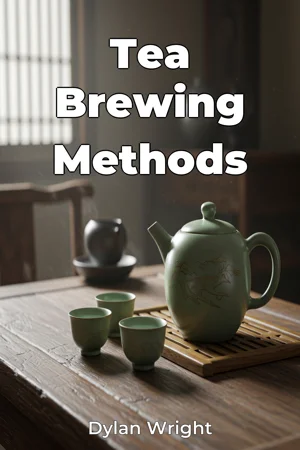
Did you know that the way tea is brewed and consumed reveals deep insights into a culture's history, values, and social structures? "Tea Brewing Methods" explores the fascinating evolution of tea rituals across four distinct cultures: Chinese, Japanese, Indian, and British. This book delves into the historical interplay between tea processing techniques and the corresponding traditions of tea consumption, revealing how these practices have shaped societies over centuries. Two key concepts drive the narrative: firstly, the transformation of tea from a medicinal herb to a social beverage, and secondly, the impact of trade and colonialism on the global spread and adaptation of tea ceremonies. Understanding these themes is crucial because they illuminate how a simple beverage became intertwined with complex aspects of cultural identity, economic power, and international relations. The historical context begins in ancient China, where tea originated as a medicinal drink before evolving into a central element of social and artistic life. The book examines the Tang and Song dynasties' influence on tea preparation and the development of elaborate tea ceremonies. From China, tea cultivation and consumption spread to Japan, where it was refined into the art of Chanoyu, emphasizing harmony, respect, purity, and tranquility. In India, tea's introduction was primarily a result of British colonial efforts in the 19th century, which initially focused on cultivation rather than native consumption rituals. Finally, the book scrutinizes the British adoption of tea, transforming it into a national beverage synonymous with social gatherings and afternoon tea traditions. The central argument of "Tea Brewing Methods" posits that tea consumption is not merely a habitual act, but a reflection of a nation's history, economic circumstances, and cultural values. This argument is significant because it challenges the often-superficial understanding of tea as simply a beverage, instead highlighting its role as a cultural artifact. The book is structured to lead the reader through a chronological and comparative exploration. An introduction lays the groundwork by discussing the origins of tea and its early uses. Subsequent chapters delve into each culture individually, presenting their unique tea processing methods, ceremonial practices, and the social context surrounding tea consumption. Each chapter also examines how historical events and cultural exchanges influenced these traditions. The culmination presents a comparative analysis, highlighting the common threads and unique divergences across the four cultures and how global commerce shaped modern tea culture. The research underpinning the book is drawn from historical texts, travel journals, botanical studies, and anthropological research. Data is presented through documented accounts of tea ceremonies, illustrations depicting historical tea preparation methods, and comparative analyses of tea-related artifacts across different cultures. Interdisciplinary connections are pivotal. Firstly, the book intersects with culinary history, examining the evolution of food and beverage preparation techniques. Secondly, it connects with economic history, analyzing the role of tea in global trade and colonial economies. Thirdly, it engages with anthropology, exploring how cultural practices like tea rituals reflect and reinforce social structures. These connections enrich the argument by placing tea within a broader context of human behavior and societal development. A unique aspect of this book is its comparative approach, which offers a side-by-side examination of tea cultures, revealing both the shared roots and the distinct trajectories of each tradition. The tone is informative yet accessible, aiming to engage both academic readers and tea enthusiasts alike. The target audience includes history buffs, culinary students, tea connoisseurs, and cultural studies enthusiasts. The book offers value by providing a comprehensive and insightful exploration of a beloved beverage and its profound cultural implications. As a work of culinary and cultural history, "Tea Brewing Methods" adheres to genre conventions by grounding its arguments in empirical evidence, historical context, and rigorous analysis. The scope is intentionally limited to four major cultures to allow for in-depth exploration, acknowledging that other tea-consuming regions also possess rich traditions. The book's information can be applied practically by tea enthusiasts seeking to deepen their understanding of tea origins and brewing techniques, as well as by culinary professionals looking to incorporate historically accurate practices into their tea service. While the cultural significance of tea is widely acknowledged, debates continue regarding the impact of colonialism on tea production and consumption, as well as the authenticity of modern tea ceremonies. The book addresses these controversies by presenting diverse perspectives and encouraging critical engagement with the historical record.
Did you know that the way tea is brewed and consumed reveals deep insights into a culture's history, values, and social structures? "Tea Brewing Methods" explores the fascinating evolution of tea rituals across four distinct cultures: Chinese, Japanese, Indian, and British. This book delves into the historical interplay between tea processing techniques and the corresponding traditions of tea consumption, revealing how these practices have shaped societies over centuries. Two key concepts drive the narrative: firstly, the transformation of tea from a medicinal herb to a social beverage, and secondly, the impact of trade and colonialism on the global spread and adaptation of tea ceremonies. Understanding these themes is crucial because they illuminate how a simple beverage became intertwined with complex aspects of cultural identity, economic power, and international relations. The historical context begins in ancient China, where tea originated as a medicinal drink before evolving into a central element of social and artistic life. The book examines the Tang and Song dynasties' influence on tea preparation and the development of elaborate tea ceremonies. From China, tea cultivation and consumption spread to Japan, where it was refined into the art of Chanoyu, emphasizing harmony, respect, purity, and tranquility. In India, tea's introduction was primarily a result of British colonial efforts in the 19th century, which initially focused on cultivation rather than native consumption rituals. Finally, the book scrutinizes the British adoption of tea, transforming it into a national beverage synonymous with social gatherings and afternoon tea traditions. The central argument of "Tea Brewing Methods" posits that tea consumption is not merely a habitual act, but a reflection of a nation's history, economic circumstances, and cultural values. This argument is significant because it challenges the often-superficial understanding of tea as simply a beverage, instead highlighting its role as a cultural artifact. The book is structured to lead the reader through a chronological and comparative exploration. An introduction lays the groundwork by discussing the origins of tea and its early uses. Subsequent chapters delve into each culture individually, presenting their unique tea processing methods, ceremonial practices, and the social context surrounding tea consumption. Each chapter also examines how historical events and cultural exchanges influenced these traditions. The culmination presents a comparative analysis, highlighting the common threads and unique divergences across the four cultures and how global commerce shaped modern tea culture. The research underpinning the book is drawn from historical texts, travel journals, botanical studies, and anthropological research. Data is presented through documented accounts of tea ceremonies, illustrations depicting historical tea preparation methods, and comparative analyses of tea-related artifacts across different cultures. Interdisciplinary connections are pivotal. Firstly, the book intersects with culinary history, examining the evolution of food and beverage preparation techniques. Secondly, it connects with economic history, analyzing the role of tea in global trade and colonial economies. Thirdly, it engages with anthropology, exploring how cultural practices like tea rituals reflect and reinforce social structures. These connections enrich the argument by placing tea within a broader context of human behavior and societal development. A unique aspect of this book is its comparative approach, which offers a side-by-side examination of tea cultures, revealing both the shared roots and the distinct trajectories of each tradition. The tone is informative yet accessible, aiming to engage both academic readers and tea enthusiasts alike. The target audience includes history buffs, culinary students, tea connoisseurs, and cultural studies enthusiasts. The book offers value by providing a comprehensive and insightful exploration of a beloved beverage and its profound cultural implications. As a work of culinary and cultural history, "Tea Brewing Methods" adheres to genre conventions by grounding its arguments in empirical evidence, historical context, and rigorous analysis. The scope is intentionally limited to four major cultures to allow for in-depth exploration, acknowledging that other tea-consuming regions also possess rich traditions. The book's information can be applied practically by tea enthusiasts seeking to deepen their understanding of tea origins and brewing techniques, as well as by culinary professionals looking to incorporate historically accurate practices into their tea service. While the cultural significance of tea is widely acknowledged, debates continue regarding the impact of colonialism on tea production and consumption, as well as the authenticity of modern tea ceremonies. The book addresses these controversies by presenting diverse perspectives and encouraging critical engagement with the historical record.
"Tea Brewing Methods" explores the rich cultural history woven into the simple act of brewing and consuming tea. Delving into Chinese, Japanese, Indian, and British traditions, the book reveals how tea evolved from a medicinal herb to a central element of social and artistic life. The narrative highlights the impact of global trade and colonialism on the spread and adaptation of tea ceremonies, illustrating how a beverage became intertwined with cultural identity and economic power. The book examines how each culture uniquely embraced tea. For instance, in Japan, tea was refined into Chanoyu, an art form emphasizing harmony and respect, while in India, tea cultivation was driven by British colonial efforts. Structured chronologically and comparatively, "Tea Brewing Methods" begins with tea's origins in ancient China and progresses through each culture's unique practices, culminating in an analysis of common threads and divergences. Ultimately, the approach emphasizes tea consumption as a mirror reflecting a nation's history, economic status, and cultural values. By examining historical texts, travel journals, and anthropological research, the book offers a comprehensive exploration valuable to both academic readers and tea enthusiasts, revealing the profound cultural implications hidden within a beloved beverage.
Book Details
ISBN
9788235229960
Publisher
Publifye AS
Your Licenses
You don't own any licenses for this book
Purchase a license below to unlock this book and download the EPUB.
Purchase License
Select a tier to unlock this book
Need bulk licensing?
Contact us for enterprise agreements.