
About This Book
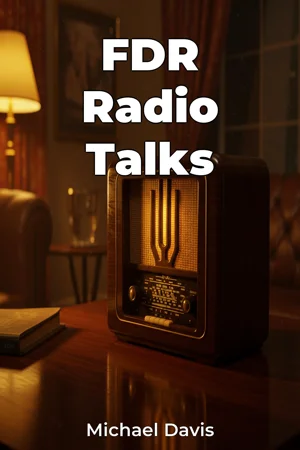
How did a president, utilizing a relatively new technology, manage to calm a nation gripped by economic despair and looming global conflict? "FDR Radio Talks" explores the power and impact of Franklin Delano Roosevelt's fireside chats, analyzing how these broadcasts shaped public opinion, bolstered national morale, and redefined the relationship between the president and the American people from 1933 onward. This book examines three key topics: the historical context of the Great Depression and the rise of radio, the rhetorical strategies employed by Roosevelt in his addresses, and the long-term consequences of these broadcasts on American politics and society. Understanding these topics is crucial for appreciating the challenges Roosevelt faced and the innovative methods he used to overcome them. The book provides the socio-political background of a nation in crisis and the emerging influence of mass media, particularly radio, as a tool for communication and persuasion. The central argument of "FDR Radio Talks" is that Roosevelt’s fireside chats were not merely informative broadcasts, but carefully crafted performances designed to inspire confidence, foster unity, and legitimize his New Deal policies. This argument challenges traditional views of presidential communication and emphasizes the importance of emotional connection and persuasive rhetoric in leadership. The book begins by introducing the dire circumstances of the early 1930s, detailing the economic collapse, widespread unemployment, and social unrest that plagued the United States. It then delves into the emergence of radio as a dominant form of mass communication, exploring its potential for reaching a vast audience and shaping public discourse. The core of the book analyzes specific fireside chats, dissecting Roosevelt's use of language, tone, and narrative structure to create a sense of intimacy and trust with his listeners. For example, his calming reassurance during the banking crisis, or his explanations of complex policies in simple terms. The book culminates by assessing the lasting impact of the fireside chats on American political culture, including their influence on subsequent presidential communication strategies and the relationship between government and the governed. It also covers the controversies and criticisms leveled at Roosevelt and his policies, offering a balanced perspective on the complex legacy of the New Deal. The analysis relies on primary sources, including transcripts and recordings of the fireside chats, as well as secondary scholarship on Roosevelt's presidency, the history of radio, and the field of rhetoric. Unique data sources include listener mail and public opinion polls from the era, providing insights into the immediate impact of the broadcasts on the American public. "FDR Radio Talks" connects to several other fields of study, including media studies, political science, and sociology. Media studies benefit from the analysis of radio as a powerful communication tool, while political science gains insight into the dynamics of presidential leadership and public persuasion. Sociology benefits by understanding how mass communications can shape a collective social experience. These connections enhance the book’s argument by demonstrating the multifaceted nature of Roosevelt’s influence. This book adopts an interdisciplinary approach, combining historical analysis with rhetorical criticism and media theory. The writing style is accessible and engaging, aimed at a broad audience interested in American history, political communication, and the legacy of Franklin Delano Roosevelt. The target audience includes students, scholars, and general readers interested in American history, political science, and media studies. It would be valuable to anyone seeking to understand the power of communication in shaping public opinion and the role of leadership in times of crisis. As a work of history, "FDR Radio Talks" adheres to the conventions of rigorous scholarship, including thorough research, accurate citation, and balanced interpretation. The scope of the book is limited to Roosevelt’s fireside chats and their immediate historical context, focusing primarily on the period from 1933 to 1945. While the book acknowledges the broader impact of the New Deal, it does not provide an exhaustive account of all of Roosevelt's policies and programs. The information in this book can be applied practically by readers seeking to improve their own communication skills, understand the dynamics of public persuasion, and appreciate the importance of leadership in shaping public discourse. "FDR Radio Talks" acknowledges the ongoing debates surrounding Roosevelt's New Deal policies, including criticisms of government intervention in the economy and concerns about the expansion of presidential power. The book addresses these controversies by presenting a balanced perspective on Roosevelt's legacy, acknowledging both his achievements and his limitations.
How did a president, utilizing a relatively new technology, manage to calm a nation gripped by economic despair and looming global conflict? "FDR Radio Talks" explores the power and impact of Franklin Delano Roosevelt's fireside chats, analyzing how these broadcasts shaped public opinion, bolstered national morale, and redefined the relationship between the president and the American people from 1933 onward. This book examines three key topics: the historical context of the Great Depression and the rise of radio, the rhetorical strategies employed by Roosevelt in his addresses, and the long-term consequences of these broadcasts on American politics and society. Understanding these topics is crucial for appreciating the challenges Roosevelt faced and the innovative methods he used to overcome them. The book provides the socio-political background of a nation in crisis and the emerging influence of mass media, particularly radio, as a tool for communication and persuasion. The central argument of "FDR Radio Talks" is that Roosevelt’s fireside chats were not merely informative broadcasts, but carefully crafted performances designed to inspire confidence, foster unity, and legitimize his New Deal policies. This argument challenges traditional views of presidential communication and emphasizes the importance of emotional connection and persuasive rhetoric in leadership. The book begins by introducing the dire circumstances of the early 1930s, detailing the economic collapse, widespread unemployment, and social unrest that plagued the United States. It then delves into the emergence of radio as a dominant form of mass communication, exploring its potential for reaching a vast audience and shaping public discourse. The core of the book analyzes specific fireside chats, dissecting Roosevelt's use of language, tone, and narrative structure to create a sense of intimacy and trust with his listeners. For example, his calming reassurance during the banking crisis, or his explanations of complex policies in simple terms. The book culminates by assessing the lasting impact of the fireside chats on American political culture, including their influence on subsequent presidential communication strategies and the relationship between government and the governed. It also covers the controversies and criticisms leveled at Roosevelt and his policies, offering a balanced perspective on the complex legacy of the New Deal. The analysis relies on primary sources, including transcripts and recordings of the fireside chats, as well as secondary scholarship on Roosevelt's presidency, the history of radio, and the field of rhetoric. Unique data sources include listener mail and public opinion polls from the era, providing insights into the immediate impact of the broadcasts on the American public. "FDR Radio Talks" connects to several other fields of study, including media studies, political science, and sociology. Media studies benefit from the analysis of radio as a powerful communication tool, while political science gains insight into the dynamics of presidential leadership and public persuasion. Sociology benefits by understanding how mass communications can shape a collective social experience. These connections enhance the book’s argument by demonstrating the multifaceted nature of Roosevelt’s influence. This book adopts an interdisciplinary approach, combining historical analysis with rhetorical criticism and media theory. The writing style is accessible and engaging, aimed at a broad audience interested in American history, political communication, and the legacy of Franklin Delano Roosevelt. The target audience includes students, scholars, and general readers interested in American history, political science, and media studies. It would be valuable to anyone seeking to understand the power of communication in shaping public opinion and the role of leadership in times of crisis. As a work of history, "FDR Radio Talks" adheres to the conventions of rigorous scholarship, including thorough research, accurate citation, and balanced interpretation. The scope of the book is limited to Roosevelt’s fireside chats and their immediate historical context, focusing primarily on the period from 1933 to 1945. While the book acknowledges the broader impact of the New Deal, it does not provide an exhaustive account of all of Roosevelt's policies and programs. The information in this book can be applied practically by readers seeking to improve their own communication skills, understand the dynamics of public persuasion, and appreciate the importance of leadership in shaping public discourse. "FDR Radio Talks" acknowledges the ongoing debates surrounding Roosevelt's New Deal policies, including criticisms of government intervention in the economy and concerns about the expansion of presidential power. The book addresses these controversies by presenting a balanced perspective on Roosevelt's legacy, acknowledging both his achievements and his limitations.
"FDR Radio Talks" examines Franklin Delano Roosevelt's innovative use of radio, specifically his "fireside chats," to connect with the American public during the Great Depression and World War II. These broadcasts were more than just presidential addresses; they were carefully constructed to inspire confidence and garner support for the New Deal. Roosevelt masterfully used the emerging medium of mass communication to bridge the gap between the government and the governed, creating a sense of unity and trust during times of crisis. The book highlights how FDR's rhetorical strategies, including his tone and simple language, shaped public opinion and bolstered national morale. Roosevelt's approach was particularly effective in reassuring citizens during the banking crisis and explaining complex policies in accessible terms. By analyzing transcripts, recordings, and listener responses, the book illustrates the immediate impact of these radio talks on American society and political discourse. The book progresses chronologically, beginning with the socio-political backdrop of the 1930s and concluding with an assessment of the long-term impact of fireside chats on presidential communication and American political culture. This exploration also acknowledges the criticisms and controversies surrounding Roosevelt's policies, offering a balanced perspective on his complex legacy and his lasting influence on American politics.
Book Details
ISBN
9788235229779
Publisher
Publifye AS
Your Licenses
You don't own any licenses for this book
Purchase a license below to unlock this book and download the EPUB.
Purchase License
Select a tier to unlock this book
Need bulk licensing?
Contact us for enterprise agreements.