
About This Book
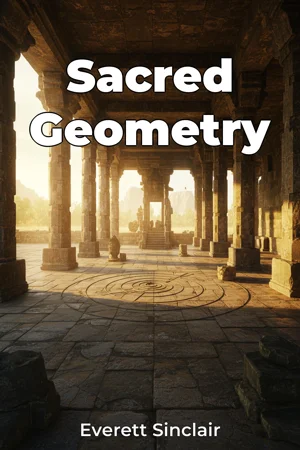
Have you ever looked at the intricate patterns of a cathedral's rose window or the layout of an ancient temple and wondered if there was a deeper meaning hidden within their design? "Sacred Geometry" explores the profound connections between mathematical principles, geometric forms, religious beliefs, architectural design, and the symbolic language of storytelling across cultures and throughout history. This book delves into how these seemingly disparate fields intersect to reveal underlying patterns that reflect humanity's enduring quest for meaning and order in the universe. The primary focus is to illuminate the significance of sacred geometry as a bridge between the material world and the spiritual realm. We will examine key geometric concepts such as the Golden Ratio, Fibonacci sequence, Platonic solids, and various tessellations, and their manifestations in sacred spaces and artistic creations. The study will present how these geometric ratios and patterns were deliberately incorporated into religious architecture and art to evoke specific emotional and spiritual responses. The influence each had on crafting narratives and conveying profound symbolic meaning will also be investigated. Understanding the historical context is crucial. The book will trace the origins of sacred geometry from ancient civilizations like Egypt, Greece, and India, highlighting how specific cultures integrated these principles into their cosmologies and religious practices. This includes a look at the social and intellectual environments that fostered the development and transmission of geometric knowledge. The central argument posits that sacred geometry serves as a universal language, expressing fundamental truths about the nature of reality and humanity's place within it. By deciphering this language, we gain a deeper understanding of the intentions and beliefs of those who created these sacred spaces and symbols, and we can also potentially enrich our own spiritual and aesthetic experiences. The book is structured to progressively build the reader's understanding. It begins by introducing the foundational principles of geometry and their historical development. Subsequent chapters explore specific examples of sacred geometry in different cultures and religious traditions, examining architectural marvels like the Great Pyramid of Giza, Gothic cathedrals, and Hindu temples. Later sections analyze the symbolic use of geometric forms in art, mythology, and storytelling, revealing how these patterns reinforce cultural values and spiritual beliefs. The book culminates by exploring the practical applications of sacred geometry in contemporary design, art, and spiritual practices. The evidence presented throughout the book is drawn from a variety of sources, including architectural surveys, historical texts, mathematical treatises, and comparative studies of religious iconography. It synthesizes existing research and presents it in a clear and accessible manner, supported by detailed illustrations and diagrams. "Sacred Geometry" forges connections between mathematics, art history, religious studies, and architectural theory. The exploration into how mathematical relationships influenced artistic expression will be relevant from an art history point of view. Analyzing religious beliefs in the context of their architecture connects religious studies to the topic. Presenting the application of particular mathematical constants will connect to general mathematical concepts. This book offers a unique perspective by integrating mathematical precision with spiritual and artistic interpretation. It avoids esoteric speculation, instead emphasizing the observable evidence and the historical context that supports the claims. The writing style is both informative and engaging, making complex concepts accessible to a broad audience. While maintaining academic rigor, the book avoids overly technical jargon and presents the information in a clear, narrative-driven style. The intended audience includes students of architecture, art history, religious studies, and mathematics, as well as anyone interested in the intersection of science, art, and spirituality. The book will be valuable to readers seeking a deeper understanding of the symbolism and meaning embedded in sacred spaces and artistic creations. While the book aims to provide a comprehensive overview of sacred geometry, it acknowledges that the topic is vast and multifaceted. The scope is intentionally limited to focus on well-documented examples and established theories, avoiding fringe or unsubstantiated claims. The principles of sacred geometry can be applied practically in various fields, from architectural design and urban planning to artistic creation and personal spiritual practice. Understanding the underlying mathematical harmonies can inform aesthetic choices and create more resonant and meaningful designs. By exploring these connections, "Sacred Geometry" endeavors to unlock the hidden language of the universe and reveal the profound wisdom encoded in the world around us.
Have you ever looked at the intricate patterns of a cathedral's rose window or the layout of an ancient temple and wondered if there was a deeper meaning hidden within their design? "Sacred Geometry" explores the profound connections between mathematical principles, geometric forms, religious beliefs, architectural design, and the symbolic language of storytelling across cultures and throughout history. This book delves into how these seemingly disparate fields intersect to reveal underlying patterns that reflect humanity's enduring quest for meaning and order in the universe. The primary focus is to illuminate the significance of sacred geometry as a bridge between the material world and the spiritual realm. We will examine key geometric concepts such as the Golden Ratio, Fibonacci sequence, Platonic solids, and various tessellations, and their manifestations in sacred spaces and artistic creations. The study will present how these geometric ratios and patterns were deliberately incorporated into religious architecture and art to evoke specific emotional and spiritual responses. The influence each had on crafting narratives and conveying profound symbolic meaning will also be investigated. Understanding the historical context is crucial. The book will trace the origins of sacred geometry from ancient civilizations like Egypt, Greece, and India, highlighting how specific cultures integrated these principles into their cosmologies and religious practices. This includes a look at the social and intellectual environments that fostered the development and transmission of geometric knowledge. The central argument posits that sacred geometry serves as a universal language, expressing fundamental truths about the nature of reality and humanity's place within it. By deciphering this language, we gain a deeper understanding of the intentions and beliefs of those who created these sacred spaces and symbols, and we can also potentially enrich our own spiritual and aesthetic experiences. The book is structured to progressively build the reader's understanding. It begins by introducing the foundational principles of geometry and their historical development. Subsequent chapters explore specific examples of sacred geometry in different cultures and religious traditions, examining architectural marvels like the Great Pyramid of Giza, Gothic cathedrals, and Hindu temples. Later sections analyze the symbolic use of geometric forms in art, mythology, and storytelling, revealing how these patterns reinforce cultural values and spiritual beliefs. The book culminates by exploring the practical applications of sacred geometry in contemporary design, art, and spiritual practices. The evidence presented throughout the book is drawn from a variety of sources, including architectural surveys, historical texts, mathematical treatises, and comparative studies of religious iconography. It synthesizes existing research and presents it in a clear and accessible manner, supported by detailed illustrations and diagrams. "Sacred Geometry" forges connections between mathematics, art history, religious studies, and architectural theory. The exploration into how mathematical relationships influenced artistic expression will be relevant from an art history point of view. Analyzing religious beliefs in the context of their architecture connects religious studies to the topic. Presenting the application of particular mathematical constants will connect to general mathematical concepts. This book offers a unique perspective by integrating mathematical precision with spiritual and artistic interpretation. It avoids esoteric speculation, instead emphasizing the observable evidence and the historical context that supports the claims. The writing style is both informative and engaging, making complex concepts accessible to a broad audience. While maintaining academic rigor, the book avoids overly technical jargon and presents the information in a clear, narrative-driven style. The intended audience includes students of architecture, art history, religious studies, and mathematics, as well as anyone interested in the intersection of science, art, and spirituality. The book will be valuable to readers seeking a deeper understanding of the symbolism and meaning embedded in sacred spaces and artistic creations. While the book aims to provide a comprehensive overview of sacred geometry, it acknowledges that the topic is vast and multifaceted. The scope is intentionally limited to focus on well-documented examples and established theories, avoiding fringe or unsubstantiated claims. The principles of sacred geometry can be applied practically in various fields, from architectural design and urban planning to artistic creation and personal spiritual practice. Understanding the underlying mathematical harmonies can inform aesthetic choices and create more resonant and meaningful designs. By exploring these connections, "Sacred Geometry" endeavors to unlock the hidden language of the universe and reveal the profound wisdom encoded in the world around us.
"Sacred Geometry" reveals the interconnectedness of mathematics, religious beliefs, and architectural design through the lens of geometric forms. It explores how concepts like the Golden Ratio and Platonic solids manifest in sacred spaces, acting as a symbolic language that conveys profound meaning. By examining how ancient civilizations integrated these principles into their architecture, we gain insights into their cosmologies and spiritual practices. The book uniquely bridges the gap between the material and spiritual realms, presenting evidence from architectural surveys, historical texts, and mathematical treatises. It avoids esoteric speculation, focusing instead on observable evidence. For instance, the book might discuss how specific tessellations were deliberately incorporated into religious architecture to evoke certain emotional responses. The book is structured to progressively build the reader's understanding, beginning with foundational principles and historical development. It then explores examples of sacred geometry in different cultures and religious traditions, before delving into the symbolic use of geometric forms in art and mythology. Finally, it culminates by exploring the practical applications of sacred geometry in contemporary design and spiritual practices.
Book Details
ISBN
9788235229670
Publisher
Publifye AS
Your Licenses
You don't own any licenses for this book
Purchase a license below to unlock this book and download the EPUB.
Purchase License
Select a tier to unlock this book
Need bulk licensing?
Contact us for enterprise agreements.