
About This Book
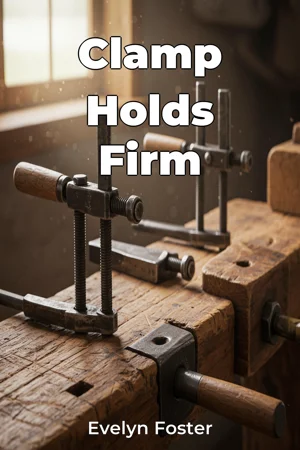
Have you ever considered the unsung hero of woodworking – the clamp? 'Clamp Holds Firm' delves into the history and mechanics of this essential tool, exploring its evolution from rudimentary devices to the sophisticated clamping systems used today. This book examines not just the function of the clamp, but also its profound impact on craftsmanship, the development of woodworking techniques, and the very materials themselves, revealing that holding things together is far more complex and fascinating than one might initially assume. At its core, 'Clamp Holds Firm' explores three key topics: the historical development of clamps, the mechanics of gripping force, and the clamp's role in shaping woodworking practices. Understanding the progression of clamp design provides insight into the ingenuity of craftspeople across centuries. Analyzing the physics of clamping reveals the subtle interplay of pressure, friction, and material properties. Examining the impact of the clamp on woodworking demonstrates how tool innovation drives artistic and functional possibilities. These areas are crucial because they underscore the clamp’s unrecognized importance and its role as a catalyst for advancement within the field. The book provides historical context by tracing the clamp’s lineage from ancient civilizations to the present day. Early forms like the hand-screw and the bench vise are examined alongside modern innovations, revealing a continuous process of refinement and adaptation. An understanding of basic mechanics is helpful, but the physics are explained in accessible terms, ensuring that readers from diverse backgrounds can grasp the underlying principles. The central argument of 'Clamp Holds Firm' is that the clamp, often overlooked, is a critical determinant in the quality, precision, and longevity of woodworking projects. By controlling the forces that bind materials, the clamp enables complex joinery, prevents warping, and ensures structural integrity. This argument is significant, as it prompts a reevaluation of the clamp not merely as an accessory but as a fundamental element of the woodworking process. The book begins by introducing the fundamental types of clamps and their basic mechanics. It then proceeds chronologically, examining the evolution of clamp design through various historical periods and woodworking traditions. Key chapters focus on specific clamp types – such as bar clamps, pipe clamps, and spring clamps – analyzing their strengths, weaknesses, and applications. The book culminates in a discussion of modern clamping technologies, including vacuum clamping and pneumatic systems, and their potential to revolutionize woodworking. Practical applications and implications are discussed, offering guidance on selecting the right clamp for specific tasks and optimizing clamping techniques for improved results. Evidence and research are drawn from a variety of sources, including historical woodworking texts, patent records, museum collections, and engineering analyses of clamp performance. The book incorporates photographs and illustrations to visually demonstrate clamping techniques and highlight design features. A unique aspect of the research involves analyzing the impact of different clamping pressures on wood deformation and joint strength, providing quantifiable data to support best practices. 'Clamp Holds Firm' also connects to other fields, such as engineering, material science, and art history. The engineering principles behind clamp design are explored, providing insights into structural mechanics and force distribution. The material properties of wood, and how they interact with clamping forces, are examined from a scientific perspective. The book also considers the aesthetic impact of clamping on woodworking techniques, linking functional tools to artistic expression. What sets this book apart is its comprehensive scope and interdisciplinary approach. It is not just a history of clamps; it is an exploration of how a seemingly simple tool has shaped the world of woodworking. The writing style is both informative and accessible, appealing to a broad audience of woodworkers, craft enthusiasts, and anyone interested in the history of tools and technology. The target audience includes woodworkers of all skill levels, from beginners to experienced professionals, as well as hobbyists, historians of technology, and anyone with an interest in craft traditions. The book would be valuable to them because it provides a wealth of practical knowledge, historical context, and theoretical insights that can enhance their understanding and appreciation of woodworking. As a work of non-fiction in the crafts and hobbies genre, the book provides clear, step-by-step instructions, detailed illustrations, and practical tips for using clamps effectively. As a work of history, it offers a scholarly yet engaging account of the evolution of clamp design and its impact on woodworking practices. The scope of the book is broad, covering a wide range of clamp types and historical periods, but it is intentionally limited to the study of clamps as they relate to woodworking, excluding other industrial applications. The information presented in 'Clamp Holds Firm' can be applied directly to woodworking projects, helping readers to select the right clamps, optimize clamping techniques, and achieve stronger, more durable results. While the book aims to be comprehensive, it acknowledges that there are ongoing debates within the woodworking community regarding the best clamping practices and the relative merits of different clamp types. These debates are addressed in a balanced and objective manner, encouraging readers to form their own informed opinions.
Have you ever considered the unsung hero of woodworking – the clamp? 'Clamp Holds Firm' delves into the history and mechanics of this essential tool, exploring its evolution from rudimentary devices to the sophisticated clamping systems used today. This book examines not just the function of the clamp, but also its profound impact on craftsmanship, the development of woodworking techniques, and the very materials themselves, revealing that holding things together is far more complex and fascinating than one might initially assume. At its core, 'Clamp Holds Firm' explores three key topics: the historical development of clamps, the mechanics of gripping force, and the clamp's role in shaping woodworking practices. Understanding the progression of clamp design provides insight into the ingenuity of craftspeople across centuries. Analyzing the physics of clamping reveals the subtle interplay of pressure, friction, and material properties. Examining the impact of the clamp on woodworking demonstrates how tool innovation drives artistic and functional possibilities. These areas are crucial because they underscore the clamp’s unrecognized importance and its role as a catalyst for advancement within the field. The book provides historical context by tracing the clamp’s lineage from ancient civilizations to the present day. Early forms like the hand-screw and the bench vise are examined alongside modern innovations, revealing a continuous process of refinement and adaptation. An understanding of basic mechanics is helpful, but the physics are explained in accessible terms, ensuring that readers from diverse backgrounds can grasp the underlying principles. The central argument of 'Clamp Holds Firm' is that the clamp, often overlooked, is a critical determinant in the quality, precision, and longevity of woodworking projects. By controlling the forces that bind materials, the clamp enables complex joinery, prevents warping, and ensures structural integrity. This argument is significant, as it prompts a reevaluation of the clamp not merely as an accessory but as a fundamental element of the woodworking process. The book begins by introducing the fundamental types of clamps and their basic mechanics. It then proceeds chronologically, examining the evolution of clamp design through various historical periods and woodworking traditions. Key chapters focus on specific clamp types – such as bar clamps, pipe clamps, and spring clamps – analyzing their strengths, weaknesses, and applications. The book culminates in a discussion of modern clamping technologies, including vacuum clamping and pneumatic systems, and their potential to revolutionize woodworking. Practical applications and implications are discussed, offering guidance on selecting the right clamp for specific tasks and optimizing clamping techniques for improved results. Evidence and research are drawn from a variety of sources, including historical woodworking texts, patent records, museum collections, and engineering analyses of clamp performance. The book incorporates photographs and illustrations to visually demonstrate clamping techniques and highlight design features. A unique aspect of the research involves analyzing the impact of different clamping pressures on wood deformation and joint strength, providing quantifiable data to support best practices. 'Clamp Holds Firm' also connects to other fields, such as engineering, material science, and art history. The engineering principles behind clamp design are explored, providing insights into structural mechanics and force distribution. The material properties of wood, and how they interact with clamping forces, are examined from a scientific perspective. The book also considers the aesthetic impact of clamping on woodworking techniques, linking functional tools to artistic expression. What sets this book apart is its comprehensive scope and interdisciplinary approach. It is not just a history of clamps; it is an exploration of how a seemingly simple tool has shaped the world of woodworking. The writing style is both informative and accessible, appealing to a broad audience of woodworkers, craft enthusiasts, and anyone interested in the history of tools and technology. The target audience includes woodworkers of all skill levels, from beginners to experienced professionals, as well as hobbyists, historians of technology, and anyone with an interest in craft traditions. The book would be valuable to them because it provides a wealth of practical knowledge, historical context, and theoretical insights that can enhance their understanding and appreciation of woodworking. As a work of non-fiction in the crafts and hobbies genre, the book provides clear, step-by-step instructions, detailed illustrations, and practical tips for using clamps effectively. As a work of history, it offers a scholarly yet engaging account of the evolution of clamp design and its impact on woodworking practices. The scope of the book is broad, covering a wide range of clamp types and historical periods, but it is intentionally limited to the study of clamps as they relate to woodworking, excluding other industrial applications. The information presented in 'Clamp Holds Firm' can be applied directly to woodworking projects, helping readers to select the right clamps, optimize clamping techniques, and achieve stronger, more durable results. While the book aims to be comprehensive, it acknowledges that there are ongoing debates within the woodworking community regarding the best clamping practices and the relative merits of different clamp types. These debates are addressed in a balanced and objective manner, encouraging readers to form their own informed opinions.
"Clamp Holds Firm" explores the surprisingly rich history and mechanics of woodworking clamps, demonstrating how these essential tools have shaped craftsmanship over centuries. From ancient hand-screws to modern pneumatic systems, the book traces the evolution of clamp design and highlights the ingenuity of woodworkers. It reveals that the seemingly simple act of holding materials together involves complex physics, impacting the precision and longevity of woodworking projects. The book uniquely connects the history of clamps to practical woodworking techniques, explaining how different clamp types—like bar clamps and pipe clamps—affect joinery and structural integrity. By examining historical woodworking texts and engineering analyses, "Clamp Holds Firm" illustrates how clamping pressures influence wood deformation. The book progresses chronologically, starting with basic clamp mechanics and culminating in discussions of modern clamping technologies. This interdisciplinary approach blends engineering principles, material science, and art history to showcase the clamp's critical role in woodworking. Whether you're a seasoned woodworker or a curious hobbyist, this book provides valuable insights into a tool often overlooked, yet fundamental to the craft.
Book Details
ISBN
9788235229335
Publisher
Publifye AS
Your Licenses
You don't own any licenses for this book
Purchase a license below to unlock this book and download the EPUB.
Purchase License
Select a tier to unlock this book
Need bulk licensing?
Contact us for enterprise agreements.