
About This Book
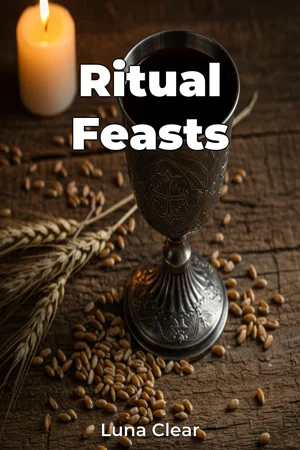
Why have humans, across diverse cultures and epochs, consistently incorporated food and shared meals into their most sacred rituals? "Ritual Feasts" delves into the profound role of feasts and sacred meals within religious ceremonies and traditions, revealing their fundamental importance in shaping communal identity, reinforcing belief systems, and mediating the relationship between the human and divine realms. This book explores how the act of eating together transcends mere sustenance, becoming a powerful vehicle for expressing faith, commemorating pivotal events, and fostering social cohesion. We examine two central interwoven themes: the symbolic significance of specific foods within religious contexts and the social dynamics engendered by shared ritual meals. Understanding these aspects is vital for comprehending the multifaceted ways in which religion influences human behavior and social structures. These topics hold broad relevance, providing insights into the enduring power of ritual, the construction of meaning, and the cross-cultural commonalities that bind humanity. To fully appreciate the role of ritual feasts, the book provides a thorough examination of relevant historical, anthropological, and theological contexts. It explores the origins of ritualized eating in ancient societies, tracing its evolution through various religious traditions, including Judaism, Christianity, Islam, Hinduism, Buddhism, and indigenous belief systems. This historical perspective illuminates how specific foods and their preparation methods acquired sacred meanings over time, often linked to creation myths, ancestral veneration, or agricultural cycles. "Ritual Feasts" posits that shared meals serve as potent symbolic acts, reinforcing religious doctrines and social hierarchies. By analyzing the specific elements of these feasts – the foods consumed, the participants involved, the gestures performed – we uncover the underlying values and beliefs that shape religious communities. The book is structured into three main parts. The first part introduces the theoretical frameworks for understanding ritual meals, drawing upon insights from anthropology, sociology, and religious studies. It defines key concepts such as ritual, symbol, and commensality, establishing a foundation for subsequent analysis. The second part explores specific examples of ritual feasts from diverse religious traditions, highlighting the unique characteristics of each while identifying common themes and patterns. Case studies include the Eucharist in Christianity, the Seder meal in Judaism, and various harvest festivals celebrated across different cultures. The final section synthesizes the findings, examining the broader implications of ritual feasts for understanding religious identity, social cohesion, and the human-divine relationship. This examination culminates in a discussion of how these ancient practices persist in contemporary society, adapting to modern contexts while retaining their core significance. The arguments are supported by a wide range of evidence, including ethnographic accounts, historical texts, archaeological findings, and comparative religious studies. Unique data sources include previously untranslated liturgical texts and recent anthropological fieldwork on contemporary religious feasts. "Ritual Feasts" connects to several other fields of study, including food studies, sociology, and cultural anthropology. By examining the intersection of food, religion, and society, the book offers new perspectives on the ways in which human cultures construct meaning and maintain social order. The book's interdisciplinary approach underscores the complex interplay between religious belief, social practice, and material culture. This book stands out by offering a comparative and interdisciplinary analysis of ritual feasts across diverse religious traditions, revealing their shared characteristics and unique expressions. It moves beyond a purely descriptive approach, delving into the underlying symbolic meanings and social functions of these practices. The writing style is academic yet accessible, aiming to engage both scholars and general readers interested in religion, history, and culture. The book avoids jargon where possible, providing clear explanations of complex concepts. The target audience includes students and scholars of religion, anthropology, sociology, and history, as well as anyone interested in the cultural significance of food and ritual. "Ritual Feasts" offers valuable insights for understanding the role of religion in shaping human societies and the enduring power of shared meals to create community and meaning. The scope of "Ritual Feasts" encompasses a wide range of religious traditions and historical periods, but it focuses primarily on established religions with well-documented ritual practices. While acknowledging the diversity of religious expression, the book intentionally limits its scope to provide a more in-depth analysis of specific examples. The insights from "Ritual Feasts" can be applied to various real-world contexts, including interfaith dialogue, cultural heritage preservation, and culinary tourism. By understanding the symbolic meanings and social functions of ritual feasts, we can promote greater cross-cultural understanding and appreciation for the diversity of human religious experience. One ongoing debate in the field concerns the extent to which ritual practices are consciously designed or emerge organically from social interactions. "Ritual Feasts" addresses this debate by exploring both the intentional and unintentional aspects of ritual meal creation, acknowledging the complex interplay between tradition and innovation.
Why have humans, across diverse cultures and epochs, consistently incorporated food and shared meals into their most sacred rituals? "Ritual Feasts" delves into the profound role of feasts and sacred meals within religious ceremonies and traditions, revealing their fundamental importance in shaping communal identity, reinforcing belief systems, and mediating the relationship between the human and divine realms. This book explores how the act of eating together transcends mere sustenance, becoming a powerful vehicle for expressing faith, commemorating pivotal events, and fostering social cohesion. We examine two central interwoven themes: the symbolic significance of specific foods within religious contexts and the social dynamics engendered by shared ritual meals. Understanding these aspects is vital for comprehending the multifaceted ways in which religion influences human behavior and social structures. These topics hold broad relevance, providing insights into the enduring power of ritual, the construction of meaning, and the cross-cultural commonalities that bind humanity. To fully appreciate the role of ritual feasts, the book provides a thorough examination of relevant historical, anthropological, and theological contexts. It explores the origins of ritualized eating in ancient societies, tracing its evolution through various religious traditions, including Judaism, Christianity, Islam, Hinduism, Buddhism, and indigenous belief systems. This historical perspective illuminates how specific foods and their preparation methods acquired sacred meanings over time, often linked to creation myths, ancestral veneration, or agricultural cycles. "Ritual Feasts" posits that shared meals serve as potent symbolic acts, reinforcing religious doctrines and social hierarchies. By analyzing the specific elements of these feasts – the foods consumed, the participants involved, the gestures performed – we uncover the underlying values and beliefs that shape religious communities. The book is structured into three main parts. The first part introduces the theoretical frameworks for understanding ritual meals, drawing upon insights from anthropology, sociology, and religious studies. It defines key concepts such as ritual, symbol, and commensality, establishing a foundation for subsequent analysis. The second part explores specific examples of ritual feasts from diverse religious traditions, highlighting the unique characteristics of each while identifying common themes and patterns. Case studies include the Eucharist in Christianity, the Seder meal in Judaism, and various harvest festivals celebrated across different cultures. The final section synthesizes the findings, examining the broader implications of ritual feasts for understanding religious identity, social cohesion, and the human-divine relationship. This examination culminates in a discussion of how these ancient practices persist in contemporary society, adapting to modern contexts while retaining their core significance. The arguments are supported by a wide range of evidence, including ethnographic accounts, historical texts, archaeological findings, and comparative religious studies. Unique data sources include previously untranslated liturgical texts and recent anthropological fieldwork on contemporary religious feasts. "Ritual Feasts" connects to several other fields of study, including food studies, sociology, and cultural anthropology. By examining the intersection of food, religion, and society, the book offers new perspectives on the ways in which human cultures construct meaning and maintain social order. The book's interdisciplinary approach underscores the complex interplay between religious belief, social practice, and material culture. This book stands out by offering a comparative and interdisciplinary analysis of ritual feasts across diverse religious traditions, revealing their shared characteristics and unique expressions. It moves beyond a purely descriptive approach, delving into the underlying symbolic meanings and social functions of these practices. The writing style is academic yet accessible, aiming to engage both scholars and general readers interested in religion, history, and culture. The book avoids jargon where possible, providing clear explanations of complex concepts. The target audience includes students and scholars of religion, anthropology, sociology, and history, as well as anyone interested in the cultural significance of food and ritual. "Ritual Feasts" offers valuable insights for understanding the role of religion in shaping human societies and the enduring power of shared meals to create community and meaning. The scope of "Ritual Feasts" encompasses a wide range of religious traditions and historical periods, but it focuses primarily on established religions with well-documented ritual practices. While acknowledging the diversity of religious expression, the book intentionally limits its scope to provide a more in-depth analysis of specific examples. The insights from "Ritual Feasts" can be applied to various real-world contexts, including interfaith dialogue, cultural heritage preservation, and culinary tourism. By understanding the symbolic meanings and social functions of ritual feasts, we can promote greater cross-cultural understanding and appreciation for the diversity of human religious experience. One ongoing debate in the field concerns the extent to which ritual practices are consciously designed or emerge organically from social interactions. "Ritual Feasts" addresses this debate by exploring both the intentional and unintentional aspects of ritual meal creation, acknowledging the complex interplay between tradition and innovation.
"Ritual Feasts" explores the pervasive role of shared meals in religious traditions, highlighting how these feasts shape communal identity and reinforce belief systems. It examines how eating together transcends mere sustenance, becoming a powerful expression of faith. Consider, for example, how harvest festivals celebrate agricultural cycles or how specific foods acquire sacred meanings tied to creation myths. The book reveals that shared meals serve as potent symbolic acts, reinforcing religious doctrines and social hierarchies. The book adopts a historical, anthropological, and theological lens to examine ritualized eating across diverse religions, from Judaism and Christianity to Islam and indigenous belief systems. It moves through theoretical frameworks, then explores specific examples like the Eucharist and the Seder meal, and culminates in a synthesis of findings on religious identity and social cohesion. By analyzing the foods consumed, participants involved, and gestures performed, the book uncovers the values and beliefs that shape religious communities.
Book Details
ISBN
9788235229267
Publisher
Publifye AS
Your Licenses
You don't own any licenses for this book
Purchase a license below to unlock this book and download the EPUB.
Purchase License
Select a tier to unlock this book
Need bulk licensing?
Contact us for enterprise agreements.