
About This Book
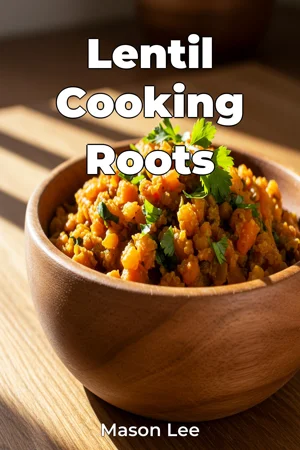
Have you ever considered the journey of the humble lentil from field to family meal, or appreciated its significant role in sustaining rural communities? "Lentil Cooking Roots" delves into the preparation techniques and the dietary value of lentils within rural homes, revealing not just a culinary practice, but a tradition deeply intertwined with health, culture, and economic survival. This book explores the nutritional importance of lentils as a dietary staple for rural populations around the globe and analyzes the traditional and evolving methods of lentil preparation passed down through generations. The book is structured around three core themes: the nutritional profile of lentils and its impact on health, traditional lentil preparation methods and their evolution, and the socio-economic significance of lentils in rural communities. Understanding these aspects is crucial in a world increasingly focused on sustainable food systems and addressing nutritional disparities. Historically, lentils have been a cornerstone of diets in many cultures, particularly in regions where access to diverse food sources is limited. They provide a rich source of protein, fiber, iron, and other essential nutrients, making them an indispensable component of a balanced diet. However, the full potential of lentils is often unrealized due to limited knowledge of optimal preparation techniques that maximize nutrient absorption and minimize anti-nutritional factors. The central argument of "Lentil Cooking Roots" is that the preservation and adaptation of traditional lentil preparation methods are crucial for ensuring food security and improving nutritional outcomes in rural areas. By understanding the science behind these practices and promoting their sustainable adaptation, we can enhance the dietary value of lentils and empower communities to thrive. The book unfolds in three parts. The first part introduces the fundamental nutritional properties of lentils and their health benefits. It examines the specific nutrients found in lentils, their bioavailability, and how lentil consumption can address common nutritional deficiencies. The second part delves into the diverse array of traditional lentil preparation techniques employed in rural homes across different cultures. It documents these methods with a focus on how practices like soaking, sprouting, fermenting, and cooking affect the lentil's nutritional composition and digestibility. The third part investigates the socio-economic dimensions of lentil cultivation and consumption, exploring its role in local economies, food security, and cultural identity. It analyzes how factors such as market access, agricultural policies, and changing lifestyles impact lentil production and dietary habits. The information presented in "Lentil Cooking Roots" is grounded in extensive research, drawing upon both scientific literature and field studies conducted in rural communities. The book integrates nutritional analysis with ethnographic observations and interviews, providing a holistic understanding of lentil consumption patterns and their impact on rural livelihoods. The book will appeal to food scientists, nutritionists, anthropologists, public health professionals, and anyone interested in sustainable food systems and traditional diets. It is written in an accessible style, bridging the gap between scientific research and practical applications. The genre fits within the conventions of both cooking and food writing by not only presenting factual information but also providing a cultural and historical background that enrich the reader's understanding. While the book covers a broad range of lentil preparation methods and their nutritional implications, it is primarily focused on rural communities and does not delve extensively into industrial processing techniques. The emphasis is on empowering individuals and communities to make informed choices about lentil preparation and consumption. The practical applications of the information presented are significant. By promoting awareness of optimal lentil preparation techniques, the book aims to improve nutritional outcomes, reduce food waste, and strengthen local food systems. It seeks to contribute to a more sustainable and equitable food future, where the humble lentil plays a pivotal role in nourishing communities around the world.
Have you ever considered the journey of the humble lentil from field to family meal, or appreciated its significant role in sustaining rural communities? "Lentil Cooking Roots" delves into the preparation techniques and the dietary value of lentils within rural homes, revealing not just a culinary practice, but a tradition deeply intertwined with health, culture, and economic survival. This book explores the nutritional importance of lentils as a dietary staple for rural populations around the globe and analyzes the traditional and evolving methods of lentil preparation passed down through generations. The book is structured around three core themes: the nutritional profile of lentils and its impact on health, traditional lentil preparation methods and their evolution, and the socio-economic significance of lentils in rural communities. Understanding these aspects is crucial in a world increasingly focused on sustainable food systems and addressing nutritional disparities. Historically, lentils have been a cornerstone of diets in many cultures, particularly in regions where access to diverse food sources is limited. They provide a rich source of protein, fiber, iron, and other essential nutrients, making them an indispensable component of a balanced diet. However, the full potential of lentils is often unrealized due to limited knowledge of optimal preparation techniques that maximize nutrient absorption and minimize anti-nutritional factors. The central argument of "Lentil Cooking Roots" is that the preservation and adaptation of traditional lentil preparation methods are crucial for ensuring food security and improving nutritional outcomes in rural areas. By understanding the science behind these practices and promoting their sustainable adaptation, we can enhance the dietary value of lentils and empower communities to thrive. The book unfolds in three parts. The first part introduces the fundamental nutritional properties of lentils and their health benefits. It examines the specific nutrients found in lentils, their bioavailability, and how lentil consumption can address common nutritional deficiencies. The second part delves into the diverse array of traditional lentil preparation techniques employed in rural homes across different cultures. It documents these methods with a focus on how practices like soaking, sprouting, fermenting, and cooking affect the lentil's nutritional composition and digestibility. The third part investigates the socio-economic dimensions of lentil cultivation and consumption, exploring its role in local economies, food security, and cultural identity. It analyzes how factors such as market access, agricultural policies, and changing lifestyles impact lentil production and dietary habits. The information presented in "Lentil Cooking Roots" is grounded in extensive research, drawing upon both scientific literature and field studies conducted in rural communities. The book integrates nutritional analysis with ethnographic observations and interviews, providing a holistic understanding of lentil consumption patterns and their impact on rural livelihoods. The book will appeal to food scientists, nutritionists, anthropologists, public health professionals, and anyone interested in sustainable food systems and traditional diets. It is written in an accessible style, bridging the gap between scientific research and practical applications. The genre fits within the conventions of both cooking and food writing by not only presenting factual information but also providing a cultural and historical background that enrich the reader's understanding. While the book covers a broad range of lentil preparation methods and their nutritional implications, it is primarily focused on rural communities and does not delve extensively into industrial processing techniques. The emphasis is on empowering individuals and communities to make informed choices about lentil preparation and consumption. The practical applications of the information presented are significant. By promoting awareness of optimal lentil preparation techniques, the book aims to improve nutritional outcomes, reduce food waste, and strengthen local food systems. It seeks to contribute to a more sustainable and equitable food future, where the humble lentil plays a pivotal role in nourishing communities around the world.
"Lentil Cooking Roots" explores the significant role of lentils in rural diets, delving into traditional preparation methods and their impact on nutrition and food security. This book highlights how lentils, a dietary staple in many cultures, are not just a source of sustenance but a cornerstone of health, culture, and economic stability in rural communities. The book also emphasizes the importance of understanding and preserving these traditional practices to enhance nutritional outcomes and promote sustainable food systems. One intriguing aspect covered is how different preparation techniques, such as soaking and fermenting, can significantly enhance the nutritional value of lentils by improving nutrient absorption. The book also examines how lentils contribute to cultural identity and local economies, revealing their far-reaching impact beyond mere sustenance. Structured around three core themes—nutrition, preparation methods, and socio-economic significance—the book progresses from outlining the nutritional profile of lentils to documenting diverse preparation techniques and investigating the socio-economic dimensions of lentil consumption. By integrating scientific research with ethnographic observations, "Lentil Cooking Roots" offers a holistic understanding of lentil consumption patterns. It appeals to a broad audience, from food scientists to anyone interested in sustainable food systems, providing practical insights into how the humble lentil can play a crucial role in nourishing communities worldwide.
Book Details
ISBN
9788235229144
Publisher
Publifye AS
Your Licenses
You don't own any licenses for this book
Purchase a license below to unlock this book and download the EPUB.
Purchase License
Select a tier to unlock this book
Need bulk licensing?
Contact us for enterprise agreements.